Auto body repair for Los Angeles drivers with adaptive vehicles
Adaptive-vehicle auto body repair is collision repair planned around your vehicle’s mobility modifications, with the aim of restoring damaged bodywork without overlooking the equipment you depend on. For Los Angeles drivers using hand controls, wheelchair ramps, lifts, or modified seating, choosing a shop also means confirming who will inspect those systems and how you will manage drop-off and pickup.
TL;DR
- For auto body shop los angeles searches, prioritize repair procedures and clear responsibility for adaptive equipment.
- Crashfix offers collision repair; confirm support for your specific conversion before booking.
- Separate vehicle-manufacturer requirements from conversion-manufacturer instructions and insurance coverage decisions.
- Document access equipment before drop-off and agree on functional checks before pickup.
Why collision repair matters for adaptive-vehicle drivers
An adaptive vehicle serves two connected purposes: transportation and access. A repaired door opening is not the complete handover if your wheelchair ramp cannot deploy correctly or your transfer seat cannot reach its intended position.
Choose a repair plan that accounts for both the original vehicle and its conversion. The vehicle manufacturer’s body repair procedures address the original vehicle; conversion equipment brings separate instructions, components, and responsibilities.
Crashfix operates OEM-certified collision repair centers across Los Angeles County, but certification for a vehicle brand does not establish expertise with every mobility conversion. Verify the relevant location’s credentials and the proposed division of work before authorizing repairs.
For your 2026 repair file, request evidence rather than a general promise that everything will be checked. This guide to how body shops document repair quality explains the documentation questions to bring to an estimate.
Plan your adaptive-vehicle repair
1. Record your equipment and access needs
Start with your own equipment list and photographs. You do not need specialized software: a phone album and a written note give the estimator a useful starting point without asking you to diagnose damage.
Identify the conversion company and equipment manufacturer from your records or labels. Describe what you use and how it normally operates, including any existing faults. Keep personal medical information separate; the shop needs your operational requirements, not your medical history.
Prepare 3 record groups for your 2026 repair file: vehicle identification, conversion information, and collision evidence. Photograph damaged areas only when you can do so safely; do not crawl beneath the vehicle or operate damaged equipment for a better picture.
- Vehicle identification: Record the VIN, model, and relevant ownership or lease information.
- Conversion information: Gather equipment names, manuals, installer details, and prior service records.
- Collision evidence: Save photographs and describe which functions changed after the accident.
- Access needs: Explain the space, assistance, and communication arrangements you require.
2. Identify damage without testing unsafe equipment
Describe the impact location and any new symptoms before discussing cosmetic repairs. A side impact near a ramp opening raises different inspection questions from a scratch on a panel away from the conversion.
Do not repeatedly cycle a ramp, lift, or transfer seat that binds, moves unexpectedly, or has visible damage. Ask the equipment provider or repair professional for handling instructions instead. Likewise, do not assume the vehicle is suitable to drive because the engine starts.
Distinguish adaptive equipment from advanced driver-assistance systems, or ADAS. Hand controls help you operate the vehicle; ADAS includes features such as collision warnings and lane assistance. Both deserve attention when the damage or required repair procedures involve them.
- Report changes in ramp movement, seat travel, control operation, and door clearance.
- Identify warning lights and messages without clearing them yourself.
- Ask whether towing or another transport arrangement is appropriate.
- Tell the shop about damaged wheelchair securement points or occupant-restraint attachments.
3. Confirm who handles each part of the repair
Call the body shop and your conversion provider before authorizing work. Ask each business to identify what it will inspect, repair, remove, reinstall, and verify. Do not settle for an undefined promise to coordinate later.
Crashfix is an option for Los Angeles drivers seeking collision repair; confirm adaptive-equipment support before booking. You can start a Crashfix inquiry with photographs, the vehicle details, and your conversion information, then ask which location can assess the proposed work.
Use 2 written scopes where responsibilities differ: one for collision repairs and one for conversion-related work. They can sit within a coordinated plan, but each task needs an identified owner. Confirm any proposed vehicle transfer before it happens.
- Assign bodywork: Identify who handles panels, paint, structural repairs, and vehicle diagnostics.
- Assign equipment: Identify who handles controls, ramps, lifts, modified seating, and conversion wiring.
- Confirm transfers: Agree on transport, handover contacts, and responsibility for keys and records.
- Verify handover: Identify who documents the required final checks.
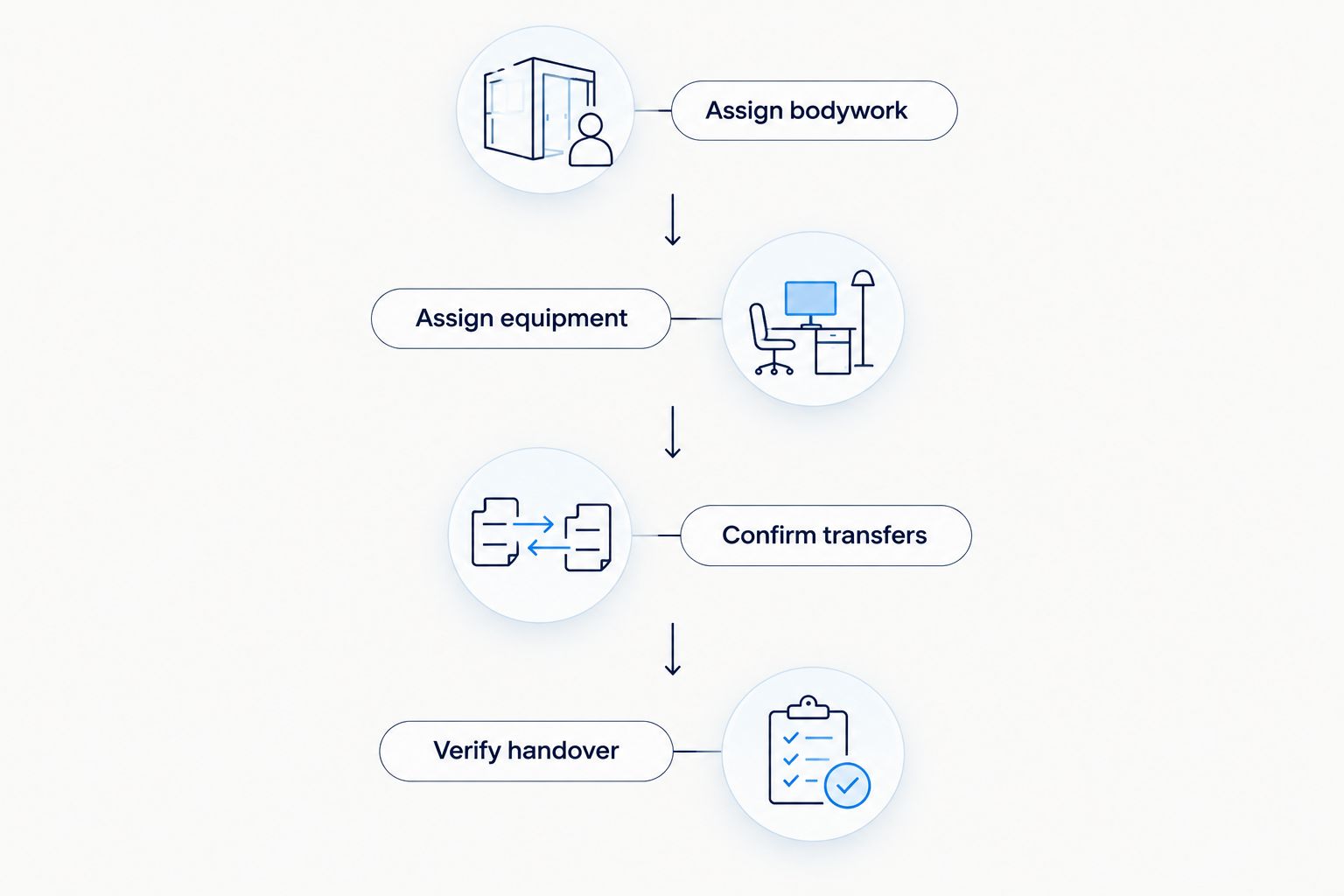
Name the responsible provider before approving work that crosses between the vehicle and its conversion.
4. Review the repair method and parts plan
Ask the estimator to explain the proposed repair in plain language. OEM means original equipment manufacturer; manufacturer-approved procedures specify how the vehicle maker requires particular repairs to be performed. A conversion manufacturer’s instructions address the equipment or modifications it supplies.
For a 2026 repair authorization, request the applicable procedures rather than relying on a generic statement about certification. Ask how the team will address modified floors, equipment mounting areas, wiring, and access openings where the collision or repair affects them.
Discuss genuine OEM parts for the original vehicle and the specified components for the conversion separately. A part described as fitting the base vehicle does not, by itself, answer questions about interference with mobility equipment.
- Ask which damaged components require repair, replacement, or further inspection.
- Request the basis for decisions affecting modified structures or equipment attachments.
- Confirm proposed parts sources and how substitutions will be discussed.
- Ask which scans, measurements, alignments, or calibrations the applicable procedures require.
5. Separate repair requirements from insurance decisions
Keep a written record of what the repair requires and what the insurer has authorized. They are different questions. A documented repair need does not guarantee that a particular policy covers the work, equipment, transport, or replacement mobility arrangements.
Give the claim handler your conversion information early. Ask how the policy treats permanently installed adaptive equipment and what documentation is needed to review related damage. If additional damage becomes visible during disassembly, request an explanation of the revised scope before approving added work.
For your 2026 claim, use one running list of unresolved decisions. Record the issue, responsible contact, and next action rather than trying to reconstruct conversations at pickup.
- Identify who submits conversion-related documentation to the insurer.
- Ask about policy terms affecting adaptive equipment and replacement transportation.
- Request written clarification of disputed or excluded work.
- Confirm how additional damage and revised authorizations will be communicated.
6. Arrange accessible drop-off and transportation
Plan the handover around how you actually enter, exit, and travel. A conventional passenger car is not an adequate substitute if you need wheelchair access or specialized driving controls.
Before choosing a West Los Angeles, Burbank, or El Segundo location, describe your access needs and ask about the physical handover arrangement. Confirm the unloading space, meeting point, and any assistance you require rather than assuming a reception area answers those questions.
Keep transport planning separate from a promised completion date. Ask how schedule changes will be communicated and what happens if the vehicle needs a separate equipment inspection before collection.
- Confirm space to deploy your ramp or lift at the agreed meeting point.
- Identify who will move the vehicle and explain any special operating instructions.
- Arrange suitable onward transport before surrendering your keys.
- Agree on handling for removable equipment and personal belongings.
7. Verify access functions and collect records
Before pickup, ask for a summary of completed work and outstanding items. The handover should distinguish repaired bodywork, conversion-related work, and any work performed by another provider.
Check 3 function areas with the responsible provider: entry equipment, driving adaptations, and seating or securement systems. The exact checks depend on your conversion and the work performed; do not substitute an improvised test for the manufacturer’s required inspection.
Your familiar operation of the vehicle adds useful information, but it does not replace technical verification. If a ramp catches, a seat stops short, or a control feels different, report it before accepting an unexplained change as normal.
- Request the itemized repair record and documentation of applicable checks.
- Ask who verified equipment removed, disturbed, or repaired during the work.
- Confirm any remaining restrictions, follow-up work, or operating instructions.
- Save the records with your conversion manuals and equipment history.
Compare your repair-coordination options
Choose the arrangement by the work required, not by a broad claim that one provider handles everything. For adaptive-vehicle repairs in 2026, a clearly divided scope is more useful than an unsupported promise of complete capability.
Crashfix collision center
- Best for: Drivers seeking assessment of accident-related body damage
- Practical advantage: Provides a starting point for body, paint, structural, or EV body repair inquiries
- Key limitation: Confirm location-specific certification and responsibility for conversion equipment
Conversion specialist
- Best for: Drivers needing assessment of their mobility equipment or modifications
- Practical advantage: Focuses the inquiry on the conversion and its instructions
- Key limitation: Confirm whether the provider performs collision bodywork or needs a separate shop
Coordinated body shop and conversion specialist
- Best for: Repairs involving both body damage and adaptive equipment
- Practical advantage: Assigns each part of the repair to an identified provider
- Key limitation: Requires explicit responsibility for transfers, approvals, and final verification
A coordinated plan is the appropriate choice when no single provider confirms responsibility for the full scope. Ask who is your main contact and who resolves a problem that falls between the body repair and the conversion.
Common mistakes adaptive-vehicle drivers make
Treating vehicle certification as conversion approval
A vehicle-manufacturer credential does not establish approval for every aftermarket mobility system. Verify the certification relevant to your vehicle and separately confirm who is qualified to work on your specific conversion.
Accepting a paint-focused estimate without access questions
A visible dent can sit near an important opening, attachment, or wiring route. Ask whether the impact area or repair process involves your access equipment, rather than assuming the visible damage defines the full scope.
Assuming replacement transportation will meet your needs
Confirm the actual access and control requirements before accepting an arrangement. Also confirm who authorizes it; an ordinary rental provision does not answer whether suitable transportation is covered.
Waiting until pickup to discuss equipment checks
Agree on verification before work begins. Otherwise, you risk reaching handover without a clear answer about who inspected the ramp, controls, or seating affected by the repair.
FAQ
What's the best auto body shop for an adaptive vehicle in Los Angeles?
Choose a shop that confirms responsibility for both the collision work and any affected adaptive equipment. Crashfix offers collision repair in Los Angeles County; verify the relevant location's credentials and conversion-related scope before booking.
Can a regular body shop repair a wheelchair-accessible vehicle?
A body shop can assess collision damage, but adaptive-equipment work needs separate confirmation. Ask who will follow the conversion manufacturer's instructions and verify any equipment disturbed during repair.
Does OEM certification cover my hand controls or wheelchair lift?
OEM certification alone does not establish competence for your specific hand controls or wheelchair lift. Confirm the equipment manufacturer's requirements and the proposed provider's qualifications separately.
Will insurance cover damage to my wheelchair conversion?
Coverage depends on your policy and claim circumstances. Give the insurer your conversion records and request written clarification about equipment repairs, related inspections, and suitable replacement transportation.
Should I test my ramp after a collision?
Do not repeatedly operate a visibly damaged, binding, or unexpectedly moving ramp. Contact the equipment provider or repair professional for handling instructions and explain what changed after the impact.
Is adaptive equipment the same as ADAS?
No. Adaptive equipment changes how you access or operate the vehicle, while ADAS refers to driver-assistance features such as collision warnings; repair planning must address whichever systems are involved.
What should I bring to an adaptive-vehicle repair estimate?
Bring the vehicle identification, conversion and equipment records, collision photographs, and a description of changed functions. Explain your drop-off, transport, and pickup requirements before scheduling the visit.
One last thing
A ramp that deploys is not the same as a documented inspection of everything the repair affected. Ask the responsible provider to connect each affected component to its completed work and verification record.
Before requesting an estimate, gather your conversion details and write down your access needs. Ask Crashfix to confirm the collision-repair scope, the relevant location, and who will handle adaptive-equipment checks before you book.