How to Pick a Body Shop After an Accident
How to Pick a Body Shop After an Accident
Choosing the right auto body shop after an accident starts with choosing a repairer with certified technicians, OEM repair procedures, clear written estimates, and a warranty—and with knowing you can choose the shop you trust, not just an insurer’s preferred option. If you’ve been in a crash and need to decide where to take your car, this guide helps you compare shops, handle insurance claims, and avoid repair decisions that can affect safety, resale value, and long-term performance.
You’ll learn what to check in the first 72 hours through final pickup, including your right to select a repair shop, how estimates and claims work, what certifications and equipment matter, when OEM vs. aftermarket parts make a difference, why ADAS calibration matters, how to read a repair estimate, what warranties to ask for, which common repair services may be needed, what mistakes to avoid, and how long repairs typically take so your car is repaired safely and correctly.
Key Takeaways
- You generally have the legal right to choose your own repair shop, not just the insurer's preferred shop.
- Safety-focused collision repair-including ADAS calibration and structural integrity-matters more than the cheapest estimate.
- Certifications like I-CAR Gold Class, ASE credentials, and OEM repair procedures are key signs of a quality collision repair shop.
- Quality repairs protect resale value and vehicle safety over the long term.
- Getting your insurance claim and estimates started happens in the first 24–72 hours after the car accident.
What To Do in the First 24–72 Hours After an Accident
This is your "do this first" checklist right after a crash. Acting quickly protects your claim and gives you more control over repair decisions.
- Document the scene on the day of the accident: photos of all sides of both vehicles, VIN, dash lights, road conditions, and police report number.
- Contact your insurance company to open the insurance claim and get your claim number.
- Research and choose a collision repair shop before the insurance adjuster writes an estimate so the car can go directly there.
- Arrange towing straight to your chosen body shop rather than automatically using the insurer's preferred shop.
- Keep copies of all documents-police report, photos, estimates, medical reports-to simplify the claims process.
Your Right to Choose a Body Shop (Not Just a Direct Repair Program Shop)
In most U.S. states, including in California many drivers don't realize they can legally pick their own body shop for repairs, and understanding how to choose the best insurance body shop helps you avoid pressure toward options that don’t prioritize repair quality.
- Insurance companies cannot force you to use their preferred shop. You can select a body shop outside your insurer's recommendations, and your insurance must cover repairs at any chosen body shop.
- California law requires insurers to allow any repair facility choice.
- Direct repair programs are networks of pre-approved shops with pre-negotiated labor rates. They help insurers manage claims quickly, but those benefits mainly serve the insurance company.
- Using a DRP shop can streamline paperwork, but repairs must still follow OEM repair procedures and not be rushed to save costs.
- Insurance companies may pressure drivers toward preferred shops. Politely insist on your own shop and confirm in writing that the insurer will pay prevailing rates for your area.
Understanding Insurance, Estimates, and the Claims Process
Here's how the process typically works after you file your claim.
- File the claim → get a claim number → schedule inspection → receive estimate → authorize repairs → pay your deductible → insurer pays the balance.
- The insurance adjuster's initial estimate often covers only visible damage. Once the vehicle is disassembled, supplemental damage is common-roughly 40% of collision repairs require supplements.
- You can bring the car directly to your chosen shop and have them communicate with the adjuster for supplements and photos.
- Your insurance must cover repairs at any shop you choose. You pay the deductible; insurance covers approved collision repair costs above that amount.
- Recommend getting at least two written estimates if the car is still drivable. Ask for a written estimate before repairs begin-California law requires a written estimate before repairs start. Detailed written estimates should explain expected repairs and labor costs.
Essential Qualities of a Trusted Collision Repair Shop
Look for these key things when evaluating repair facilities, especially when you’re finding quality body shops near you.
- Experienced technicians should hold I-CAR, ASE, or manufacturer certifications for structural and auto body repairs. Certified technicians indicate a shop's professionalism.
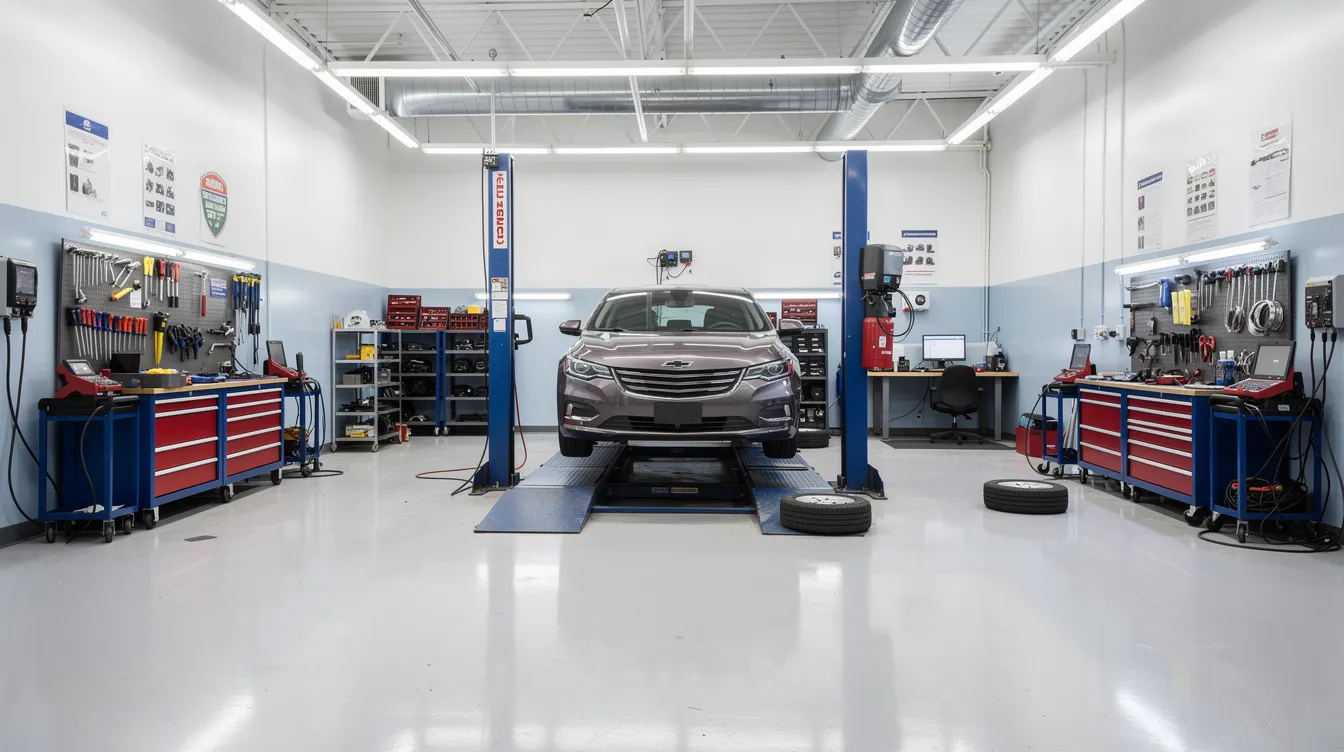
- A clean, organized facility with modern frame straightening equipment and computerized measuring systems signals quality standards.
- Look for consistent positive feedback in online reviews-recent Google reviews, before/after photos, and detailed customer feedback about communication.
- The shop should offer written repair warranties-lifetime or multi-year-on paint, workmanship, and structural repairs.
- Look for shops that follow OEM repair procedures. A reputable shop will clarify the types of parts used in repairs. Seek recommendations from friends or local dealerships for trustworthy shops.
- Choose a shop experienced in dealing with your insurance company to smooth the process.
Checking Certifications, Training, and Experience
Certifications tell you whether a shop has the training to handle modern vehicles correctly, and the I-CAR Gold Class standard in collision repair explains why an I-CAR Gold Class certified body shop is often the safest choice.
- Look for I-CAR Gold Class status or manufacturer certifications displayed in the lobby or website. Fewer than 10% of shops nationwide hold Gold Class status.
- Look for I-CAR Gold Class or automotive service excellence certifications among technicians. ASE-certified techs matter especially for mechanical and electrical work tied to collision repair.
- Manufacturer certifications ensure that a shop meets OEM repair standards for brands like Ford, Toyota, GM, or Tesla.
- Ask how often the team completes continuing education, especially for high-strength steel, aluminum, and EV repairs, and whether they stay involved in industry collaboration through events such as the Inter-Industry Conference.
- Shops with stable ownership for at least 10 years are often more reliable, indicating stable processes and consistent repair quality.
OEM Parts, Aftermarket Parts, and What They Mean for Your Car
The parts used in your repair directly affect safety, fit, and long term value. Inquire about the quality of replacement parts used before authorizing any work, and consider getting a free collision repair estimate that clearly spells out which parts will be used.
- OEM parts are components made or approved by the original equipment manufacturer, designed to match exact specifications. OEM parts ensure better repair quality and vehicle performance.
- Aftermarket parts are third-party components that may be cheaper but can vary in fit, corrosion protection, and durability. Recent data shows OEM parts have seen 4.3% inflation while aftermarket inflation stays below 1%.
- Recycled OEM parts-original components from salvage vehicles-may be allowed by insurers for older models.
- Ask the body shop and insurer to document which parts will be OEM, aftermarket, or recycled, panel by panel on the estimate.
- Choosing all OEM parts may require you to pay the price difference unless your policy includes an OEM endorsement.
Evaluating Repair Technology and Equipment
Modern vehicles demand modern tools. A shop that hasn't invested in current technology cannot guarantee proper repair work on recent models, so look for OEM-certified collision repair services that highlight their equipment and training.
- Modern repairs often require specialized tools and computerized diagnostics. A good auto collision repair shop uses computerized frame measuring systems to restore structural dimensions to factory specs.
- Vehicles with aluminum body panels need dedicated aluminum repair bays and tools to prevent contamination.
- Manufacturer-approved welders, rivet guns, and bonding adhesives are essential for high-strength steel and mixed-material structural repairs.
- Quality paint materials improve durability and color accuracy. Look for digital paint-matching systems and downdraft paint booths.
- Ask whether scan tools and software are updated for 2023–2026 model-year vehicles, including hybrids and EVs.
Why ADAS Calibration and Electronic Scans Matter
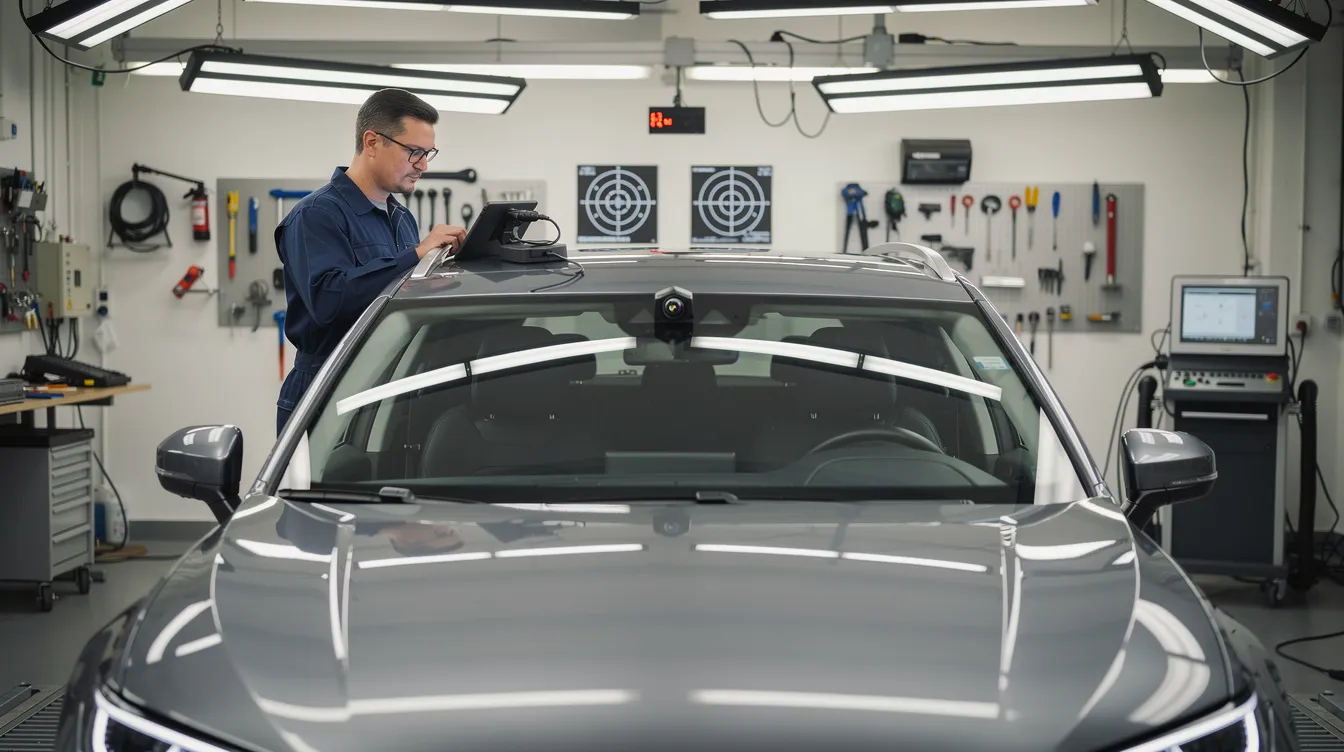
Advanced driver assistance systems-lane-keep assist, automatic emergency braking, adaptive cruise control, blind-spot monitoring-rely on sensors that even minor collisions can displace, which is why understanding when and why ADAS calibration is crucial is so important after a crash.
- Advanced driver assistance systems may require recalibration after repairs. Radar, cameras, and ultrasonic sensors sit behind bumpers, grilles, and windshields.
- The repair plan should include pre-repair and post-repair electronic scans to catch diagnostic trouble codes.
- Confirm who handles ADAS calibration (in-house or sublet) and that documentation will be provided, especially if you’re considering a specialist in ADAS calibration in Burbank and Los Angeles.
- Skipping calibration can leave safety systems unreliable-something you may not discover until an emergency.
How to Read and Compare Collision Repair Estimates
Don't pick a shop after an accident based on price alone. Reliable shops provide clear written estimates before starting work. Focus on what's included, not just the bottom line, and use guides to collision repair estimate jargon and understanding your collision repair estimate so you can spot red flags.
- Estimates should be written, itemized, and include labor hours, parts type (OEM or aftermarket), paint materials, and shop fees.
- Compare how each auto body shop plans to repair versus replace specific panels-this reveals repair quality differences.
- Very low estimates may leave out necessary operations like corrosion protection, blend panels, or ADAS calibration.
- Ask shops to explain large scope differences, especially for frame work and structural pulls.
- Choose the estimate that best protects safety and long term value, even if it's not the cheapest. Getting multiple estimates helps you compare repair approaches.
Questions to Ask Before You Authorize Repairs
Bring this checklist to the right shop before signing anything.
- What certifications do your technicians hold? How many vehicles like mine have you repaired this year? Do you follow oem repair procedures?
- What mix of OEM, aftermarket, and recycled parts will you use? What options do I have if I prefer all oem parts?
- How long will repairs take? What could delay the timeline (parts backorders, supplements)? How will you communicate updates?
- Do you offer written repair warranties on paint, frame, and structural collision repairs? How long does coverage last?
- Will you coordinate directly with my insurance company and handle any supplements discovered after disassembly?
Warranties, Guarantees, and What They Really Cover
A warranty tells you how confident a shop is in their work. A well-repaired vehicle should meet the manufacturer's safety standards, and the guarantee should back that up.
- A shop's workmanship warranty covers labor, fit, and finish. Manufacturer warranties cover parts and paint materials separately.
- A lifetime warranty indicates confidence in repair quality. A quality shop offers a lifetime warranty on repairs-ask for it in writing.
- Check whether the warranty is honored only at that location or through a network arrangement.
- Confirm that warranty coverage transfers if you sell the vehicle, which directly affects resale value.
- Misuse, new accidents, or lack of maintenance usually void collision repair warranties-keep your records.
Signs of a Professional, Customer-Focused Body Shop
Walk through the facility before committing. Shop cleanliness and organization reflect professionalism, especially when comparing options while finding the best auto body shops near you.
- Look for a clean lobby, clear signage, and professional written intake forms capturing contact, insurance, and vehicle details.
- Reputable shops offer photo updates by text or email and proactively call with status reports.
- Organized bays, labeled parts carts, and vehicles covered to protect interiors indicate attention to detail.
- Transparent explanations of the repair plan without jargon-and patience answering questions-show a customer-first approach.
- Posted business licenses, certifications, and safety information show pride in compliance.
How Local Experience and Climate Affect Collision Repairs
A shop familiar with your region's driving conditions understands damage patterns most drivers in the area encounter.
- In hail-prone regions, experienced repair facilities often specialize in paintless dent repair (PDR) to preserve factory paint and door panel integrity.
- Areas with road salt or coastal humidity demand extra attention to seam sealer, undercoating, and corrosion protection.
- Choose a shop that frequently works with the major insurers writing policies in your state-it smooths the claims process.
- Ask how the shop handles seasonal surges from storms and whether that will affect your repair timeline.
Timeline: From Drop-Off to Getting Your Car Back
Here's what to expect in the repair process for 2024–2026 model vehicles from check-in to pickup.
- Main stages: check-in, insurer approval, parts ordering, disassembly, structural repair, body work, paint, reassembly, ADAS calibration, and final quality check.
- Minor repairs: 3–7 business days. Moderate damage: 1–3 weeks. Major structural repairs: 4–6 weeks or more.
- Parts availability is the biggest source of delay. OEM collision parts average about 9 days delivery; aftermarket parts average about 3 days.
- Ask when the shop will contact you about delays and what temporary transportation is available (rental car, loaner, rideshare credit).
- Schedule a walk-around inspection at pickup to verify panel gaps, paint match, and that all electronics and ADAS features work properly.
Common Collision Repair Services You Might Need
Most accident repair work falls into a handful of categories. Here are the services you're most likely to encounter.
- Bumper repair and replacement-sensor-equipped bumpers require careful handling and recalibration of parking and collision-avoidance systems.
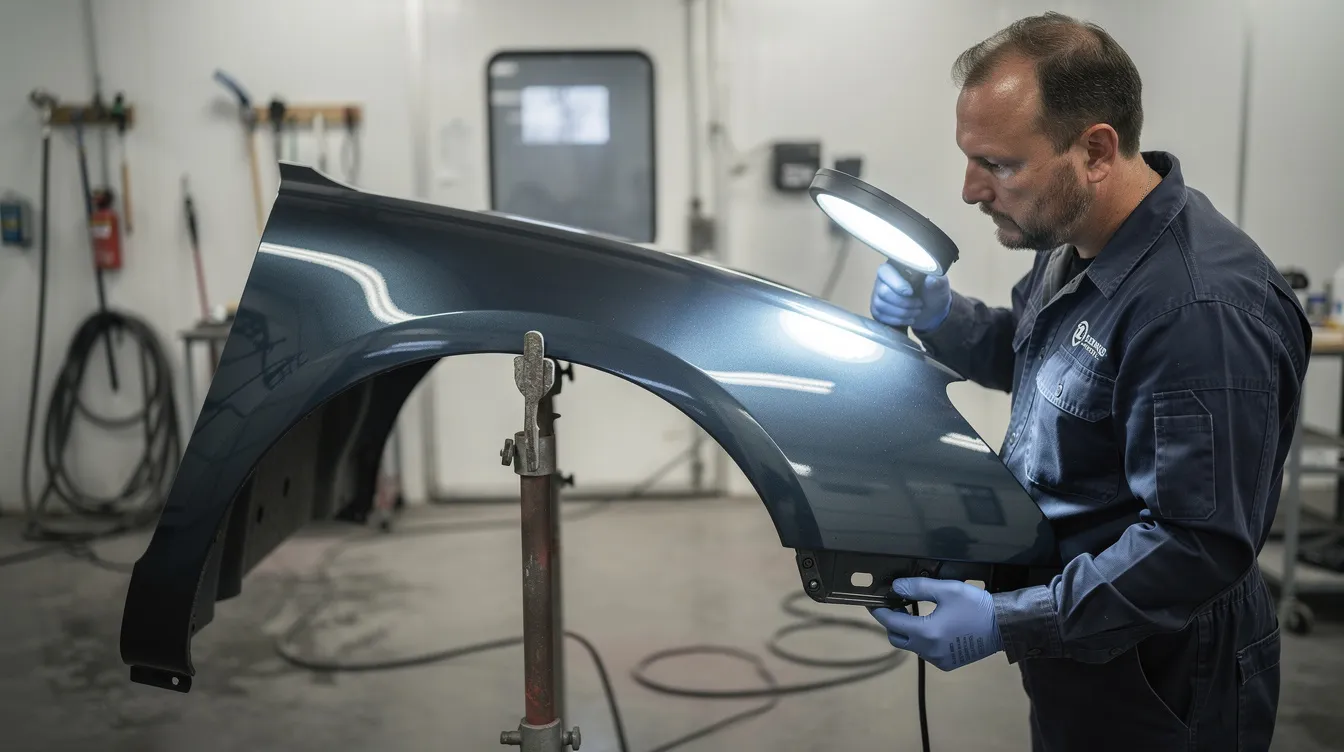
- Fender and door repair or replacement, with emphasis on proper alignment to avoid wind noise, water leaks, and uneven panel gaps.
- Frame straightening and structural pulls-critical for crash energy management and structural integrity in any future accident.
- Hail damage and paintless dent repair, especially relevant after severe hail seasons across several states in 2023–2025.
- Glass replacement and calibration of windshield-mounted cameras, plus wheel alignment and suspension checks after curb impacts.
How to Avoid Common Mistakes When Picking a Body Shop
Poor repairs can lead to safety risks and extra costs later. Avoid these pitfalls.
- Don't choose only based on the lowest estimate without understanding what's left out of the repair plan.
- Never authorize repairs verbally-always get a detailed, signed, written estimate describing parts and procedures.
- Don't ignore ADAS calibration or assume "it's just cosmetic" when sensors and structural components may be affected.
- Don't rely solely on an insurer's preferred list without doing independent research on online reviews and certifications.
- Don't delay repairs for months. Rust, hidden damage, and expired claim deadlines create problems. Act within your policy's time frames.
- Avoid shops that refuse to answer questions, won't show estimate details, or decline to discuss warranty coverage.
When a Car Might Be Totaled Instead of Repaired
Sometimes repair costs push a vehicle beyond what insurance will fix. Understanding total loss thresholds helps you plan and recognize when a car might be truly totaled.
- Insurers compare repair costs (including supplements) to actual cash value (ACV). If repair costs hit roughly 70–80% of ACV, the insurer may declare a total loss.
- A thorough body shop estimate can reveal structural damage that pushes the vehicle into total-loss territory.
- Ask both the insurance adjuster and the collision repair shop if they suspect the car is close to being totaled before repairs start.
- Consider safety, future reliability, and diminished value when deciding whether to keep or replace a borderline vehicle.
FAQs About Choosing a Body Shop After an Accident
Understanding the full collision repair process from damage to delivery and what a trusted collision repair partner like CrashFix offers can make these decisions less stressful.
Do I need multiple estimates before choosing a collision repair shop?
Most insurers don't legally require multiple estimates, but getting two can help you compare repair approaches and parts choices. If the car isn't safe to drive, it's often better to pick a trusted shop and let them work directly with the adjuster instead of moving the vehicle repeatedly.
Can I have my car repaired at a different shop than the one that towed it?
Yes-you can usually have your vehicle repaired at any body shop you choose, not just the one that initially towed it, though you may owe storage or a second towing fee. Arrange the transfer within a few days to avoid accumulating storage charges. Call both the tow yard and new shop to coordinate release paperwork and towing authorization.
What if the body shop finds more damage after repairs begin?
Hidden or supplemental damage is common and should be documented with photos and updated estimates. The shop will typically submit a supplement to the insurance company for approval before continuing. Ask to be notified when supplements are filed and whether they'll affect repair timelines or the total-loss decision.
Will collision repairs show up on a vehicle history report?
Many significant accidents appear on reports like Carfax or AutoCheck if police reports, insurance claims, or shop data are reported. High-quality repairs using OEM procedures and parts can reduce the impact on resale value. Keep all repair documentation and warranties to show future buyers exactly how the vehicle was restored.
Should I repair minor cosmetic damage through insurance or pay out of pocket?
For small dents and scratches near or below the deductible amount, many drivers pay out of pocket to avoid a claim on their record. Compare a written estimate to your deductible and discuss with your agent how a claim might affect future premiums. Any damage affecting safety systems, lights, or structural components should always be repaired properly regardless of who pays.