Best insurer-approved collision repair shops in Los Angeles
Best first assessment: Crashfix for an OEM-focused collision repair discussion. Best for insurer-network coordination: a location USAA confirms for your claim. Best for specialized damage: a manufacturer-confirmed specialist. When comparing USAA approved body shops in Los Angeles in 2026, verify insurance participation separately from the shop’s qualifications for your vehicle.
TL;DR
- USAA approved body shops need location-specific confirmation from USAA; manufacturer certification answers a different question.
- Crashfix offers collision repair assessments; confirm the selected location’s manufacturer credentials and insurance arrangements before authorizing work.
- Compare repair procedures, parts specifications, calibration requirements and written documentation—not insurer affiliation alone.
- Choose the location that can explain both your vehicle’s repair requirements and your claim responsibilities.
Why this matters
Insurer participation is not manufacturer certification. An insurer’s repair network concerns its relationship with a shop; manufacturer certification concerns a vehicle maker’s repair program. Neither label replaces a written repair plan for your specific damage.
Crashfix operates OEM-certified collision repair centers across Los Angeles County and offers body, paint, structural and EV body repair services. OEM means original equipment manufacturer. Confirm the relevant manufacturer certification at the location you plan to use; a company-wide description does not establish every location’s credentials.
For a West Los Angeles commuter, Burbank family or El Segundo driver, the decision has 2 separate parts: who can perform the required repairs, and how the claim will handle those repairs. Settle both before authorizing work. This guide ranks selection routes, not individual locations as verified USAA participants.
What makes the best insurer-approved collision repair shop?
Use these criteria to compare shops in 2026:
- Current network confirmation: Ask USAA whether the exact location participates in the repair program relevant to your claim. Confirm the street address, not just the business name.
- Vehicle-specific qualifications: Ask which manufacturer credentials apply to your make and the repair being proposed. Verify credentials with the manufacturer’s current directory or program contact.
- Manufacturer procedures: Ask how the shop identifies repair instructions for your model, materials and damaged components. A general promise to “fix everything” is not a repair plan.
- Parts transparency: Request an estimate identifying proposed parts and their categories. Genuine OEM parts, aftermarket parts and recycled parts are different descriptions, not interchangeable labels.
- Diagnostics and documentation: Ask how the shop determines scanning, measurement and calibration requirements, then records completed work. Calibration means checking or adjusting a system against specified requirements.
Treat these as gates, not a points contest. A convenient location does not compensate for an unexplained structural repair, and manufacturer credentials do not establish your insurance coverage.
Repair options at a glance
Crashfix assessment
- Best for: Drivers seeking an OEM-focused collision repair discussion
- Standout consideration: Body, paint, structural and EV body repair services
- Key limitation: USAA participation and make-specific certification require location-level confirmation
USAA-confirmed network location
- Best for: Drivers prioritizing insurer-network coordination
- Standout consideration: USAA can confirm participation for the exact location and claim
- Key limitation: Network participation does not establish manufacturer certification
Manufacturer-confirmed specialist
- Best for: Drivers whose repair requires particular vehicle or material expertise
- Standout consideration: Credentials can be checked against the relevant manufacturer program
- Key limitation: Certification does not establish USAA participation or policy coverage
The strongest choice can fit more than one row. A manufacturer-certified location can also participate in an insurer network, but verify each status independently rather than assuming one proves the other.
1. Crashfix: best for an OEM-focused repair assessment
Crashfix offers collision and auto body repair across Los Angeles County, including structural and EV body repair services. That makes an assessment a relevant starting point when you need to understand whether damage involves more than paint or an exterior panel.
Crashfix is best for Los Angeles County drivers seeking an OEM-focused collision repair assessment. Before selecting a location, ask which manufacturer certification covers your vehicle and how the proposed repair follows the applicable procedures. Do not interpret this recommendation as confirmation of USAA approval.
Crashfix pros:
- Offers body and paint repair services for accident damage.
- Offers structural repair services when the repair assessment identifies structural concerns.
- Offers EV body repair services for electric-vehicle owners.
Crashfix cons:
- USAA network participation is not established here for any location.
- Certification for your exact make and selected location requires separate confirmation.
- Service categories alone do not establish the repair requirements for your vehicle.
Best for: Drivers who want to discuss vehicle repair requirements before making an authorization decision.
Bring your vehicle identification number, accident photographs and any existing estimate to the conversation. Ask the location to distinguish what it can assess initially from what requires disassembly or further inspection.
Verdict: Hold authorization until the location confirms vehicle fit and claim arrangements.
2. USAA-confirmed network location: best for claim coordination
A USAA-confirmed network location is the appropriate selection route when insurer-network participation is your priority. Ask USAA to identify the exact participating facility and explain what that participation means for your claim.
Do not select a shop from a search snippet alone. For a 2026 claim, get current confirmation rather than relying on an older directory entry, review or business description.
USAA-confirmed network location pros:
- Lets you establish network participation directly with the insurer.
- Gives you a specific location to discuss when reviewing claim arrangements.
- Creates an opportunity to clarify authorization and documentation responsibilities before work begins.
USAA-confirmed network location cons:
- Network status does not establish certification for your vehicle’s manufacturer.
- Participation does not establish which proposed operations your policy covers.
- A network label does not explain how the shop handles specialized damage.
Best for: Drivers who want to understand the insurer’s repair-program arrangements before choosing a facility.
Ask who handles additional damage discovered during repair. A supplement is an addition or revision to the initial estimate; knowing who submits it and who approves additional work prevents confusion about authorization.
Verdict: Hold selection until USAA confirms participation and the shop explains its repair plan.
3. Manufacturer-confirmed specialist: best for specialized damage
A manufacturer-confirmed specialist is the selection route for repairs that require particular vehicle knowledge, equipment or material-handling procedures. Examples include damage involving aluminum structures, EV components or driver-assistance sensors.
ADAS means advanced driver-assistance systems, such as features that use cameras or radar to support driving functions. Whether a repair requires calibration depends on the vehicle manufacturer’s instructions and the work performed—not simply whether a warning light appears.
Manufacturer-confirmed specialist pros:
- Gives you a manufacturer program against which to verify credentials.
- Focuses the selection conversation on the vehicle and damaged systems.
- Helps you ask specific questions about equipment, procedures and repair records.
Manufacturer-confirmed specialist cons:
- Manufacturer certification does not establish USAA network participation.
- Credentials for one make do not establish credentials for another.
- Certification alone does not explain who performs every operation in your repair.
Best for: Drivers whose damage assessment identifies a need for specialized vehicle, material or system expertise.
Ask whether another provider performs any diagnostic, glass or calibration work. Then ask which business supplies the results and includes them in your completed repair records.
Verdict: Hold authorization until the specialist’s credentials match your vehicle and repair scope.
How these options are ranked
The order starts with an assessment, then separates insurer coordination from specialized repair qualifications. It is a decision sequence, not a claim that one shop outperforms every Los Angeles competitor.
For 2026, the criteria remain practical: verified location status, vehicle-specific qualifications, manufacturer procedures, parts transparency and documented completion. No position in this guide establishes USAA approval for an unconfirmed location.
Verify your choice before authorizing repairs
Use these 3 checks before signing a repair authorization. Keep the answers with your claim records so you can distinguish the insurer’s decisions from the shop’s proposed work.
Confirm participation
Ask USAA: Does this exact location participate in the repair program for my claim? What arrangements apply if I choose another facility?
Record the location, the answer and any written claim instructions. Do not substitute a shop’s description of its insurance relationships for confirmation from your insurer.
Confirm procedures
Ask the shop to explain the proposed repair approach, parts categories and manufacturer-required inspections. Request clarification when an estimate uses an abbreviation you do not understand.
For structural damage, ask how measurement and repair decisions will be documented. For sensor-related work, ask how the shop determines whether scanning or calibration is required.
Confirm responsibility
Ask who authorizes additional work, who communicates with the insurer and who explains any disputed operation. Request written clarification before agreeing to work outside the existing authorization.
Insurance coverage and repair requirements are separate questions. A repair operation needs a technical explanation; payment needs a policy and claim explanation.
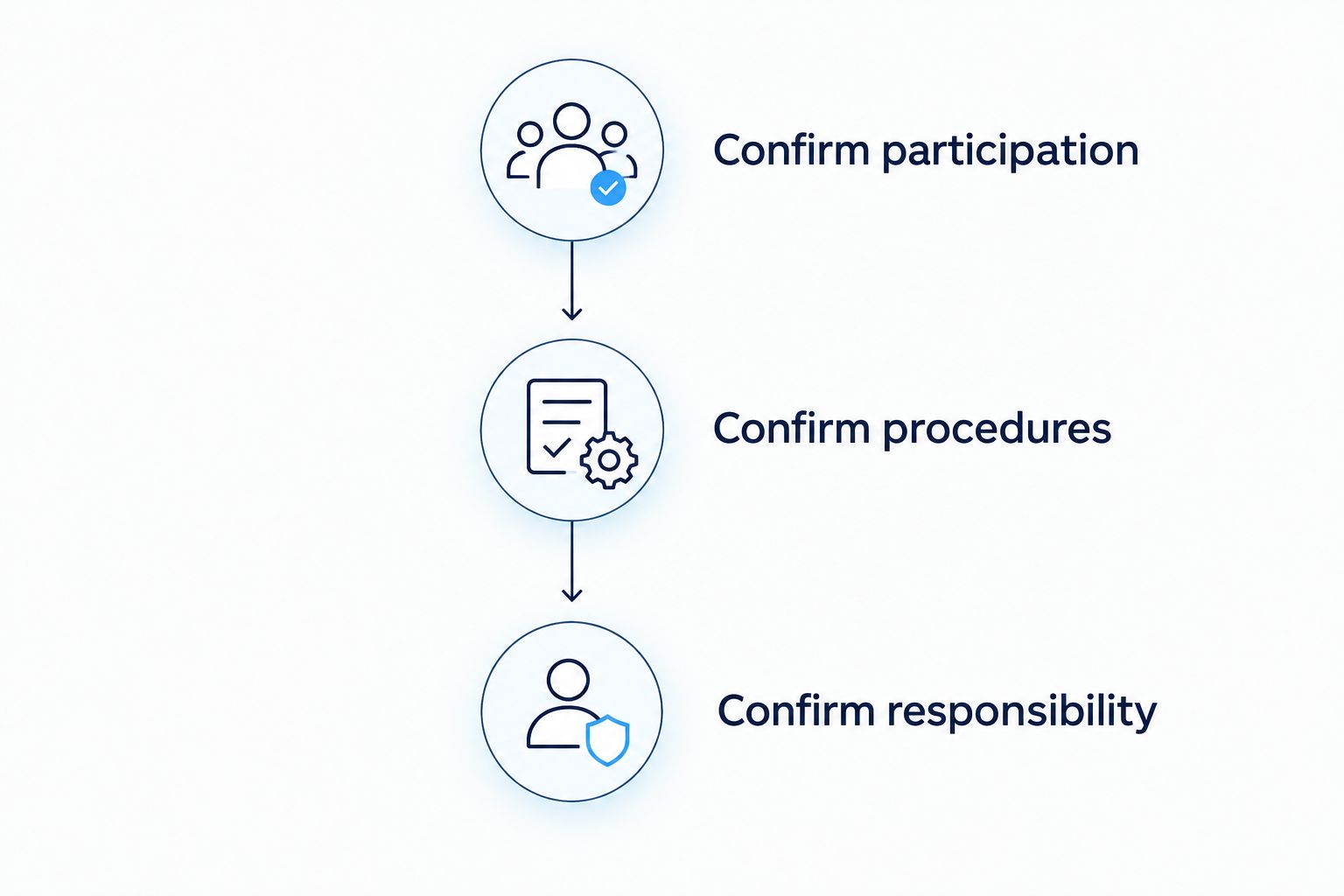
Verify insurance arrangements and repair requirements separately before authorizing work.
Keep accident records separate from repair approval
Your accident file and repair file serve different purposes. Photographs, other-driver details and insurer communications describe the incident; estimates, authorizations and completion records describe the repair.
The practical steps after a California accident belong alongside your repair planning, not in place of it. Preserve the incident details while you separately establish who will inspect the vehicle, what work you authorize and how the claim handles that work.
If damage makes you question whether the vehicle is drivable, ask for qualified guidance before moving it. Do not treat a scheduled estimate as confirmation that driving is appropriate.
Ask about parts and completion records
A repair estimate should make proposed parts understandable. Ask which items are genuine OEM, aftermarket or recycled, and request an explanation of any proposed substitution before authorization.
Do not assume an insurer-network relationship establishes a genuine-parts policy. Likewise, do not assume manufacturer certification settles what your insurer will pay. Ask the shop about repair requirements and ask the insurer about coverage.
Before collection, request the final invoice and the supporting records relevant to the completed work. Depending on the repair, those records include measurement, diagnostic or calibration documentation. Ask the shop to explain differences between the initial estimate and final repair scope.
Which repair option should you choose?
Choose the location that can explain both its vehicle-specific repair plan and its insurance arrangements. Start with an assessment when you do not yet know the damage scope; prioritize a manufacturer-confirmed specialist when the assessment identifies specialized requirements.
If USAA network participation matters to your decision, confirm it directly before authorization. Do not let the phrase “approved body shop” stand in for answers about parts, procedures or completed-work records.
For a 2026 repair decision, ask these 4 questions:
- Is this exact location confirmed for my claim?
- Which credentials apply to my vehicle here?
- What manufacturer procedures guide the proposed work?
- What documentation will explain the completed repair?
FAQ
How do I find USAA approved body shops near me?
Ask USAA to confirm participating locations for your specific claim. Verify the exact address, then separately ask the shop about manufacturer credentials and the proposed repair approach.
Is Crashfix a USAA approved body shop?
USAA participation is not confirmed here for any Crashfix location. Ask USAA about the exact facility before treating it as a participating shop.
Does insurer approval mean a shop is OEM-certified?
No. Insurer participation and manufacturer certification are separate relationships, so verify each independently for the location you are considering.
Can I choose a repair shop outside an insurer network in California?
California drivers have the right to choose their repair shop. Your choice does not establish what your policy covers, so discuss claim handling and any payment questions with your insurer before authorization.
Will USAA cover genuine OEM parts?
Coverage for genuine OEM parts depends on your policy and claim. Ask the shop to identify proposed parts and ask USAA for a coverage explanation before authorizing disputed items.
Does every collision repair need ADAS calibration?
No. Calibration requirements depend on the vehicle manufacturer’s procedures, affected components and repair operations; ask the shop to explain the requirements for your vehicle.
Should I choose the nearest participating body shop?
Choose a shop that can address your vehicle’s repair requirements, then consider location. A nearby address does not establish manufacturer credentials, specialized capabilities or the scope of your insurance coverage.
One last thing
A familiar business name is not enough to verify a location. Confirm the exact address with both the insurer and the relevant manufacturer program; those checks answer different questions.
Before requesting an assessment, gather your vehicle identification number, photographs, claim details and existing estimate. That gives the repair discussion a specific starting point rather than an unsupported promise.
Related guides
- How body shops document repair quality
- EV-certified body shops in Los Angeles County
- Collision repair records to request in Los Angeles
Request an assessment and ask the selected location to confirm its vehicle-specific credentials and insurance arrangements before you authorize repairs.
Request a repair assessment
Discuss your vehicle, damage and repair questions before authorizing work.