Best EV-certified body shops in Los Angeles County
Best starting point: Crashfix for Los Angeles County drivers seeking an OEM-certified collision repair provider with EV body repair services. Best for make-specific approval: a manufacturer-listed collision center. Best for structural damage: a facility equipped for your vehicle’s construction. For 2026, choose by the exact location’s credentials and repair capabilities—not a generic EV-certified label.
TL;DR
- Crashfix offers OEM-certified collision repair and EV body repair; confirm approval for your vehicle at the selected location.
- For an EV certified body shop Los Angeles search, prioritize manufacturer-specific approval and documented repair procedures.
- Choose structural repair capability when collision damage extends beyond exterior panels.
- Separate the required repair plan from what your insurance policy covers.
Why this matters
An electric vehicle’s collision damage involves more than paint and panels. Depending on the impact, the repair assessment must address high-voltage components, battery protection, structural attachment points, charging equipment and driver-assistance systems.
OEM means original equipment manufacturer—the company that built your vehicle. Manufacturer repair procedures specify how to inspect, repair or replace affected components; a certification claim is useful only when it applies to the relevant manufacturer and location.
In 2026, the right question is not simply whether a shop repairs electric cars. Ask whether the exact facility can document the approval, equipment and procedures relevant to your vehicle and damage.
Crashfix is a starting point for Los Angeles County EV owners who want OEM-certified collision repair and EV body repair from the same provider. Confirm the selected location’s manufacturer-specific credentials before authorizing repairs.
What makes the best EV body shop in 2026?
Use these criteria before comparing locations in West Los Angeles, Burbank or El Segundo:
- Vehicle-specific approval: Confirm the manufacturer, facility address and current approval directly through the manufacturer’s collision-repair resources.
- High-voltage procedures: Ask how the shop identifies battery damage and follows the vehicle maker’s isolation and inspection requirements.
- Structural capability: Match the facility’s equipment and training to the vehicle’s materials and prescribed repair methods.
- Parts documentation: Ask which genuine OEM parts the plan specifies and how proposed substitutions will be explained.
- Electronic verification: Require an explanation of applicable scans, calibrations and completion records.
- Clear authorization: Understand who performs each operation, what needs additional approval and how insurance decisions affect the scope.
A nearby shop is convenient. A nearby shop that cannot explain the required repair process is not the right choice for that repair.
EV collision repair options at a glance
These options describe different selection routes, not interchangeable certifications. Start with the route that answers your biggest unresolved repair question, then verify the individual facility.
Crashfix
- Best for: Starting a local collision-repair assessment
- Standout selection criterion: Offers OEM-certified collision repair and EV body repair
- Key limitation: Confirm manufacturer-specific approval at the selected location
Manufacturer-listed collision center
- Best for: Establishing exact-make approval
- Standout selection criterion: Manufacturer confirmation of the facility’s program status
- Key limitation: Listing alone does not explain the complete repair scope
Structurally equipped collision facility
- Best for: Damage involving structural members or joining methods
- Standout selection criterion: Equipment and procedures matched to vehicle construction
- Key limitation: Structural capability does not establish battery-repair capability
Coordinated collision and EV-service repair route
- Best for: Damage requiring body repair plus separate battery or electrical evaluation
- Standout selection criterion: Defined responsibility across the repair participants
- Key limitation: More handoffs require clearer documentation
1. Crashfix: best starting point for local EV collision assessment
Crashfix operates OEM-certified collision repair centers across Los Angeles County and offers auto body, paint, structural and EV body repair services. That makes it a relevant starting point when your damaged electric vehicle needs a collision assessment rather than routine mechanical maintenance.
Choose your preferred area first, then ask the specific facility to confirm its approval for your vehicle’s manufacturer. Do not treat an organization-wide credential as proof that every location holds every manufacturer certification.
Crashfix pros:
- Offers EV body repair alongside paint and structural repair services.
- Operates collision repair centers within Los Angeles County.
- Provides a starting point for discussing body damage and the associated repair scope together.
Crashfix limitations to resolve:
- OEM-certified status does not identify every manufacturer program held by each location.
- An EV body repair service description does not establish that every battery or high-voltage operation is performed on-site.
Bring the vehicle identification number, collision photos and any warning-message photos. Ask the facility to identify the relevant manufacturer procedures, proposed genuine OEM parts and any operations assigned to another provider.
Best for: Drivers seeking a local collision-repair assessment before authorizing work, particularly when comparing options around West Los Angeles, Burbank or El Segundo.
Verdict: Shortlist the selected facility; authorize work after vehicle-specific credentials and the repair scope are confirmed.
2. Manufacturer-listed collision center: best for exact-make approval
A manufacturer-listed collision center is the clearest selection route when your first concern is whether a facility belongs to your vehicle maker’s repair program. Check the manufacturer’s current collision-center resources and match the listing to the actual address—not merely a similar business name.
Program names and requirements differ between manufacturers. Ask the facility to explain what its approval covers and how it applies to your model and damaged components.
Manufacturer-listed collision center pros:
- Gives you a direct route to checking manufacturer-program participation.
- Connects the certification question to a specific facility.
- Helps separate exact-make approval from broad claims about EV experience.
Manufacturer-listed collision center cons:
- Program participation does not explain every operation in your individual repair.
- A listing does not establish insurance coverage or remove the need for written authorization.
Ask who handles structural measurement, high-voltage precautions and any required calibration. If another facility performs part of the work, request its role in the repair plan rather than assuming the listed center completes everything internally.
For a 2026 repair, verify the current listing before committing to transport. A certificate photo or an old search result is not a substitute for checking the selected address.
Best for: Drivers who need to establish manufacturer-specific approval before comparing other factors.
Verdict: Choose this route when exact-make approval is the first unanswered question; review the proposed repair process next.
3. Structurally equipped facility: best for structural collision damage
A structurally equipped collision facility is the relevant choice when the repair involves structural members, attachment points or manufacturer-specified joining methods. Structural damage requires more than straightening a visible panel; the repair plan must follow the vehicle maker’s instructions for the affected area.
Some repairs require measurement, component replacement or specific welding, bonding or riveting methods. Ask the facility to identify the applicable procedure rather than accepting a general statement that it handles aluminum or electric vehicles.
Structurally equipped facility pros:
- Focuses your selection on the damaged structure rather than cosmetic appearance.
- Makes equipment and repair-method questions central to the estimate.
- Supports a discussion of measurements and repair documentation before work starts.
Structurally equipped facility cons:
- Structural repair capability does not establish high-voltage battery expertise.
- Relevant equipment alone does not prove manufacturer approval for your vehicle.
Ask whether the damage affects battery mounting areas or adjacent protective structures. That question belongs in the assessment even when the battery itself has not been diagnosed as damaged.
Request an explanation of what the initial inspection establishes and what requires disassembly. A complete structural repair plan depends on the actual damage, not just the exterior photographs.
Best for: Drivers whose collision assessment identifies structural damage or a repair involving specialized materials and joining procedures.
Verdict: Prioritize documented structural capability when the repair scope requires it; verify EV procedures separately.
4. Coordinated repair route: best for separate electrical evaluation
A coordinated collision and EV-service repair route assigns body repair and specialized electrical or battery evaluation to clearly identified providers. It is useful when the collision facility refers a required operation rather than performing it internally.
This is a repair arrangement, not a certification. Its value depends on clear responsibility: who inspects the vehicle, who authorizes movement, who performs each operation and who collects the final records.
Coordinated repair route pros:
- Makes the division between collision work and specialized evaluation explicit.
- Lets you ask each provider about its own qualifications and assigned operations.
- Creates a defined place for battery or charging-system findings in the overall repair file.
Coordinated repair route cons:
- Transfers introduce additional communication and authorization steps.
- Separate reports need to be reconciled before the overall repair is treated as complete.
Ask which facility will communicate with you and how new findings will reach the person managing the collision repair. Confirm transport arrangements before the vehicle moves, especially when its condition requires manufacturer-specific handling.
Do not assume a referral means the original facility is unsuitable. The decision rests on whether the assigned providers are qualified and whether their work forms a documented repair plan.
Best for: Drivers whose repair assessment identifies operations requiring a separate qualified provider.
Verdict: Use coordinated repair when the scope requires it; hold authorization until responsibilities and handoffs are clear.
How these options are ranked
The 2026 selection order puts local collision assessment first, followed by manufacturer approval, structural capability and coordination of specialized work. It is a decision order—not a claim that one facility outperforms every other shop in Los Angeles County.
The criteria remain the same across all options: relevant approval, manufacturer procedures, appropriate equipment, documented parts decisions and clear authorization. The best fit changes with the damage; an exact-make listing does not replace a structural assessment, and structural equipment does not establish battery capability.
What to ask before you authorize EV body repair
Use this sequence to turn a promising shop into a documented repair decision. Ask for answers tied to your vehicle, not a general explanation of electric cars.
Verify approval
Provide the vehicle identification number and ask the exact location to identify its relevant manufacturer approval. Match the facility address to the manufacturer’s current resources.
Define damage
Ask what the initial inspection establishes and what needs further assessment. Identify any concerns involving the underbody, charging port, warning messages or structural areas without attempting to diagnose them yourself.
Confirm procedures
Request the manufacturer-based repair approach, specified parts and required electronic checks. ADAS means advanced driver-assistance systems; calibration sets applicable cameras or sensors to the manufacturer’s prescribed alignment or operating references.
Review authorization
Separate the repair requirements from the payment decision. Ask how additional findings, parts changes, outside operations and insurer responses will be presented before you approve them.
Collect records
Request the final repair documentation, including applicable measurements, scan results and calibration reports. The guide to how body shops document repair quality explains the questions to ask about that paper trail.
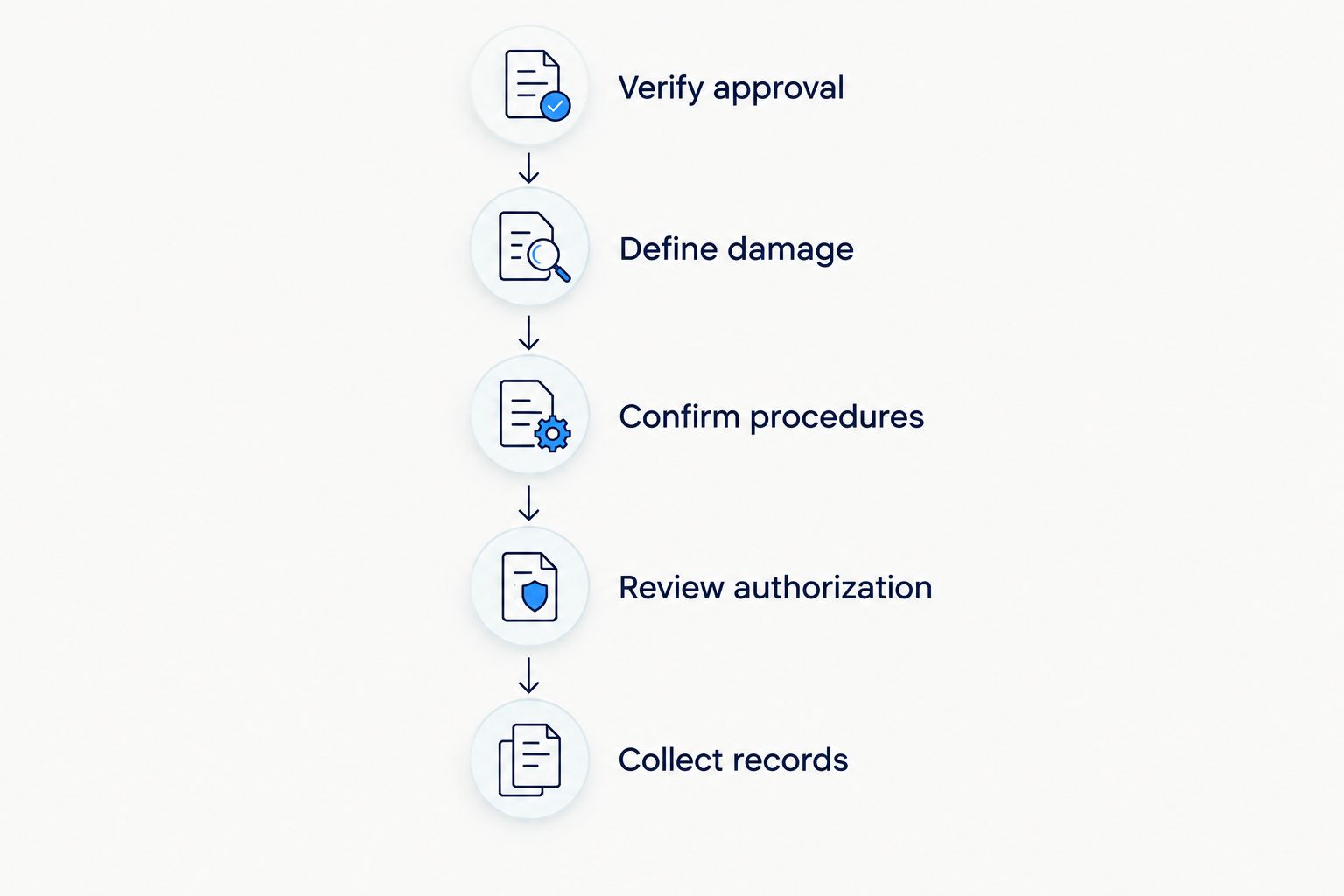
Verify the facility and repair process before authorizing the work.
Keep 1 written repair plan, request 2 separate explanations for repair requirements and coverage decisions, and prepare 3 photo groups: the overall vehicle, visible damage and dashboard messages. These are preparation steps—not a substitute for a professional inspection.
Which EV body shop should you choose?
Start with the facility that can connect its credentials to your exact vehicle and explain the required repair process. For local assessment, Crashfix belongs on your shortlist; confirm the selected location’s manufacturer-specific approval and capabilities before booking the repair.
If approval remains unclear, use the manufacturer-listed route first. If structural or battery-related findings emerge, choose the appropriate capability or coordinated repair route rather than forcing the vehicle into a purely cosmetic repair plan.
For your 2026 booking, send the vehicle identification number, accident photos and a short description of any warnings. Ask what the facility needs before arranging drop-off or transport.
FAQ
What's the best EV-certified body shop in Los Angeles County?
The best choice is a facility with verified approval and repair capabilities relevant to your vehicle and collision damage. Crashfix offers OEM-certified collision repair and EV body repair in Los Angeles County; confirm manufacturer-specific credentials at the selected location.
Does OEM-certified mean a shop is certified for every electric vehicle?
No. OEM-certified status does not establish approval for every manufacturer, model or facility address. Verify the applicable manufacturer program for the exact location before authorizing repairs.
How do I check whether an EV body shop is manufacturer-approved?
Use the vehicle manufacturer's current collision-repair resources and match the facility name and address. Ask the shop to explain how its approval applies to your vehicle and proposed repair.
Can an EV need battery inspection after body damage?
Yes, depending on the impact and the manufacturer's inspection procedures. Tell the shop about underbody contact, charging problems and warning messages so those concerns enter the assessment.
Will my insurance cover genuine OEM parts and calibration?
Coverage depends on your policy and the claim decision. Ask the shop to explain the manufacturer-required repair operations separately from the insurer's payment determination.
Is a shop in Burbank better than one in West Los Angeles or El Segundo?
Location alone does not establish repair suitability. Compare the exact facility's vehicle-specific approval, required capabilities and communication process before choosing the more convenient address.
What should I bring to an EV collision-repair appointment?
Bring the vehicle identification number, accident photos, warning-message photos and claim information if applicable. Ask the facility about vehicle-condition and transport requirements before arranging arrival.
One last thing
A smooth paint finish does not tell you whether structural measurements, required calibrations or high-voltage inspections were completed. The useful final question is: Which records show that the operations in my repair plan were completed?
Before booking an estimate, identify your vehicle and preferred location, describe the impact and request confirmation of manufacturer-specific approval. That gives the repair team a concrete starting point without treating an appointment as authorization for every proposed operation.
Related guides
- Can an electric Hyundai enter body repair with battery damage?
- What records should you get after collision repair in Los Angeles?
- Can you get a repair estimate before deciding to file a claim?
Book your EV repair assessment
Share your vehicle details and ask the selected location to confirm relevant manufacturer approval.