Can an electric Hyundai enter body repair with battery damage?
Yes—an electric Hyundai with suspected or confirmed battery damage can enter a collision-repair assessment, but bodywork must wait until qualified personnel evaluate the battery hazard and establish the required precautions. A Hyundai certified body shop should confirm whether it can receive, store and assess that specific vehicle before you arrange towing. Acceptance for assessment does not mean the battery is repairable or that ordinary body repairs can begin.
TL;DR
- A Hyundai certified body shop must evaluate battery concerns before authorizing ordinary collision repairs.
- Hyundai certification and high-voltage battery capability are separate questions; verify both for the receiving location.
- Do not drive or charge an electric Hyundai with suspected crash-related battery damage.
- Crashfix offers EV body repair in Los Angeles County; confirm Hyundai-specific credentials and battery handling before booking.
Why this matters
A dented panel and a damaged high-voltage battery require different decisions. Body damage needs a repair plan; a battery concern first needs a receiving and safety plan. Treating both as routine cosmetic work skips the question that determines where the vehicle belongs.
For a 2026 repair booking, identify the exact Hyundai model and explain where the impact occurred before arranging transport. Crashfix serves Los Angeles County vehicle owners seeking EV body repair. Confirm the receiving location’s Hyundai certification, battery-assessment capability and acceptance instructions rather than assuming every collision center handles the same work.
Choose the receiving shop by the vehicle’s condition and required procedures—not simply by the nearest open appointment.
Can an electric Hyundai enter body repair with battery damage?
Yes, but assessment, battery work and body repair are separate stages. The receiving facility needs to establish what it can safely accept, which inspections the manufacturer requires and whether another qualified facility must handle battery-related work.
These scenarios describe different starting points, not diagnoses you should make yourself:
Body damage with no identified battery concern
- Best for: Beginning collision assessment at an appropriately equipped shop
- What must happen first: Review the impact, warnings and vehicle-specific inspection requirements
- Main limitation: Exterior appearance alone cannot rule out concealed damage
Suspected battery or underbody damage
- Best for: Arranging a receiving plan before towing
- What must happen first: Tell the shop what happened and obtain acceptance instructions
- Main limitation: A preliminary body estimate does not resolve battery condition
Confirmed battery damage
- Best for: Coordinating battery assessment with collision planning
- What must happen first: Establish handling precautions and responsibility for battery-related work
- Main limitation: The body shop might not perform the battery work itself
Do not interpret the first row as permission to drive. A vehicle’s roadworthiness requires its own assessment, and a damaged electric vehicle can have concerns beyond the battery, including steering, suspension and restraint-system damage.
In 2026, ask for the repair plan applicable to your vehicle identification number, or VIN. The VIN identifies the vehicle; it does not replace inspection or establish that the battery is safe.
Suspected battery damage: arrange assessment before arrival
Tell the receiving shop about an underbody strike, impact near the floor, dashboard warnings, unusual odors, fluid leakage or changes in charging behavior. Describe observations rather than naming a failed component.
This distinction matters because a warning message alone does not identify the damaged part. Likewise, a scrape underneath the vehicle does not establish the battery’s internal condition. Give the shop enough information to decide how to receive the vehicle without asking you to inspect high-voltage components.
Confirmed battery damage: separate battery work from bodywork
Ask who confirmed the damage, what inspection supports that finding and what work is proposed. Battery enclosure damage, electrical faults and internal battery damage are not interchangeable descriptions.
A qualified team must use the applicable manufacturer procedures to determine the next step. Do not assume that battery replacement is inevitable, or that enclosure damage can be repaired like an ordinary body panel. The repair decision belongs to the vehicle-specific procedure and documented findings.
What should you do before towing your Hyundai?
Give the receiving shop the facts before the tow operator departs. In Los Angeles County, avoiding an unnecessary transfer between facilities starts with confirming that the destination accepts the vehicle in its current condition.
- Describe the impact. Explain whether the collision involved the side, rear, front or underside. Mention a curb, road debris or another object that contacted the floor area.
- Report warning signs. Relay dashboard messages and any smoke, heat, unusual sounds, odors or leakage. Do not approach the vehicle to collect more evidence if conditions appear hazardous.
- Confirm acceptance. Ask whether the location can receive an electric Hyundai with the reported battery concern, including any restrictions on arrival or storage.
- Coordinate transport. Tell the tow provider that the vehicle is electric and has suspected battery damage. The operator should follow the applicable towing instructions rather than treating it as a conventional disabled car.
- Preserve information. Share existing photographs, the collision description and available claim information. Do not crawl underneath the vehicle or touch damaged cables to improve the record.
The sequence is simple: describe the condition, confirm the destination, then arrange transport. That order gives the receiving facility an opportunity to identify handling needs before the vehicle arrives.
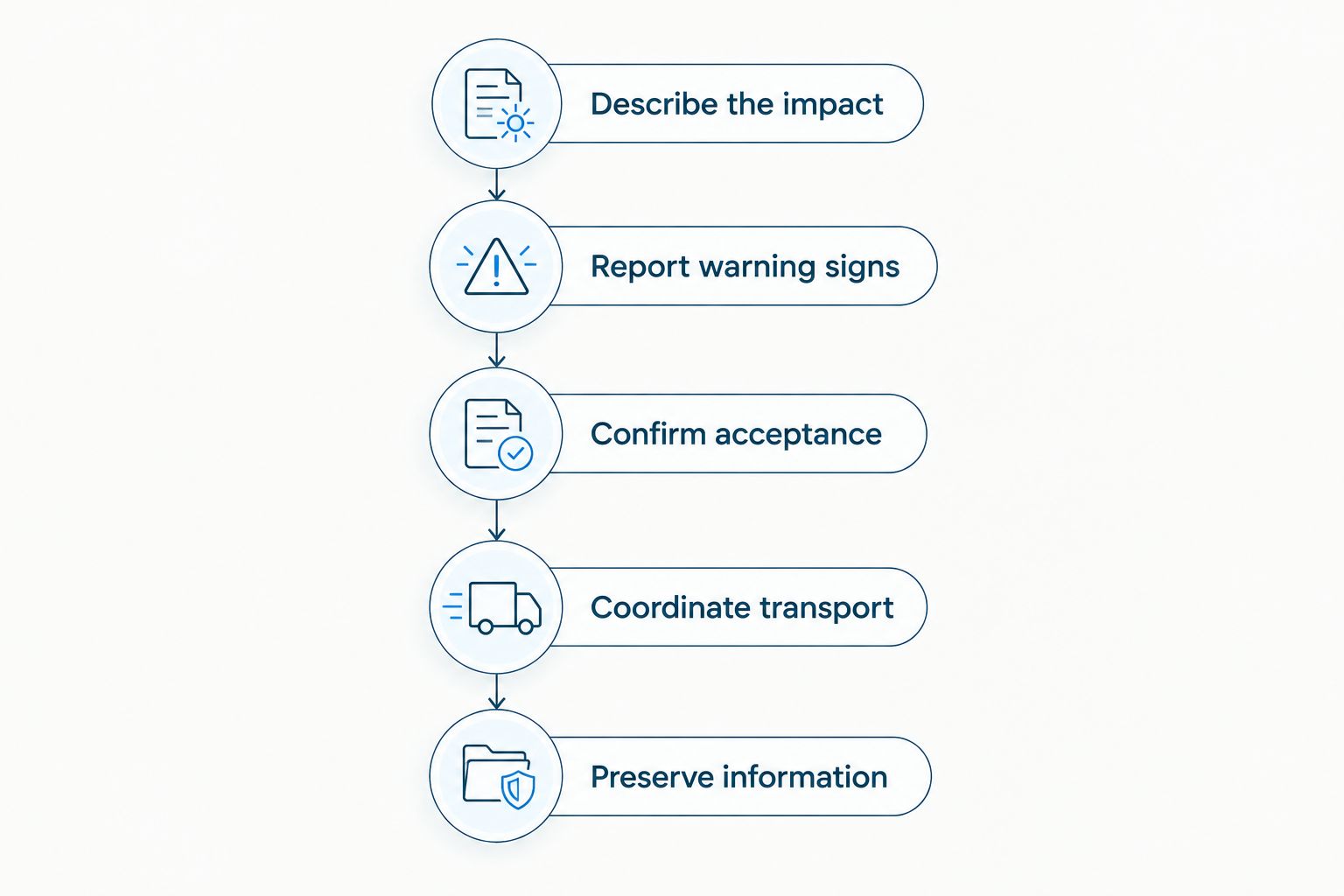
Confirm that the receiving facility accepts the vehicle before arranging transport.
If the vehicle is smoking, burning or showing signs of an immediate battery emergency, move away, keep others away and call 911. Do not attempt to charge it, open the battery enclosure or move it yourself to make the repair appointment.
Why the repair path varies
The same visible dent can lead to different repair requirements. Your 2026 estimate should explain which findings drive the work rather than treating every electric Hyundai collision as the same job.
- Impact location. Damage around the floor or battery area raises different inspection questions from an isolated exterior panel dent.
- Vehicle configuration. The exact model and equipment determine which manufacturer procedures apply.
- Battery findings. An unresolved concern requires assessment; a documented fault requires a plan addressing that finding.
- Structural damage. Distortion in the body structure can affect the sequence of inspection, measurement and repair.
- Facility capability. Receiving a damaged EV, performing bodywork and carrying out battery work require different capabilities.
- Insurance decisions. Repair requirements and claim coverage are separate matters. Your policy and claim determination govern what the insurer pays.
For a side collision, read about what a Hyundai repair plan should include after a side impact. Use that discussion to ask about the complete impact area, not just the panel you can see.
What should a Hyundai certified body shop verify?
A manufacturer credential matters, but it is not a blanket answer to every battery question. Verify the exact location’s current Hyundai certification and ask what the credential covers for your vehicle and proposed work.
A Hyundai certified body shop should explain its scope before accepting a battery-damaged vehicle—not after unloading it. Ask whether the location performs the required battery assessment itself, coordinates with another qualified facility or needs a different destination from the outset.
Manufacturer procedures and genuine parts
Ask the estimator to identify the manufacturer-approved procedures governing the affected area. These should guide the repair plan, including any required high-voltage precautions, component replacement, structural work and post-repair checks.
For replacement components, ask which parts are specified and how they will be identified on the estimate. A genuine part is not a substitute for correct installation, and correct installation does not remove the need to verify the required part. Request an explanation if the proposed parts differ from the manufacturer-directed repair approach.
High-voltage precautions
High-voltage isolation means following a defined process to control electrical hazards before specified work. It is not the same as switching off the ignition or disconnecting a 12-volt battery.
Do not ask a tow operator or general repair worker to improvise that process. Ask who is qualified to perform it and how the shop establishes the conditions needed for the next repair operation. A battery can remain hazardous even when the vehicle is not running.
Structural and electronic checks
Body repair can involve more than restoring appearance. Depending on the damage and applicable procedures, the plan can include structural measurements, diagnostic scans and calibration of driver-assistance systems.
A scan reads electronic information; it does not physically inspect the battery enclosure. A calibration adjusts or verifies a specified system; it does not certify the entire vehicle. Ask what each operation establishes and what other inspection remains necessary.
How should battery concerns appear on the estimate?
A useful estimate distinguishes observed damage, work already authorized and findings that still require assessment. An early estimate is not proof that concealed damage has been ruled out.
For your 2026 repair file, ask the estimator to separate these items clearly:
- Observed damage: what the inspection has actually identified.
- Further assessment: what remains unresolved and why additional access or expertise is needed.
- Battery-related work: which facility is responsible and which operations require separate authorization.
- Body and structural work: how the collision damage will be addressed after the required precautions are established.
- Completion records: which inspection, measurement, diagnostic or calibration documents apply to the completed work.
Keep insurance approval separate from technical necessity. An insurer’s payment decision does not establish that a repair operation is unnecessary, and a shop’s recommendation does not guarantee policy coverage. Ask both parties to explain unresolved differences before authorizing disputed work.
Can you drive or charge the Hyundai before inspection?
Do not drive or charge an electric Hyundai with suspected crash-related battery damage. Tell the receiving facility what happened and arrange transport according to the vehicle’s condition and applicable instructions.
A vehicle that starts or displays a normal charge level has not passed a battery-damage assessment. Do not use a short drive or a charging attempt as a test. If the vehicle is already parked somewhere unsuitable, ask the receiving facility or emergency responders for direction rather than moving it yourself.
Does Hyundai certification mean the shop repairs batteries onsite?
No—Hyundai certification alone does not establish that a particular location performs every high-voltage battery operation onsite. Ask about the exact task your vehicle needs and who will perform it.
Confirming capability has a practical benefit: it clarifies responsibility before transport and authorization. The limitation is that a credential check alone cannot replace a conversation about the damaged vehicle. Verify both the certification and the actual work plan.
FAQ
Can a Hyundai certified body shop accept my EV if the battery might be damaged?
Yes, if the specific location confirms it can receive the vehicle in that condition and establish the required precautions. Call before towing and describe the impact, warnings and any signs of battery damage.
Does a damaged Hyundai EV battery always need replacement?
No—suspected damage alone does not establish that battery replacement is required. Qualified personnel must assess the findings against the applicable manufacturer procedures before determining the repair path.
Can I charge my electric Hyundai after an accident?
Do not charge an electric Hyundai with suspected crash-related battery damage. Have qualified personnel assess the vehicle instead of using charging as a test of battery condition.
Is a diagnostic scan enough to clear the battery for body repair?
No—a diagnostic scan does not replace physical inspection or the manufacturer-required battery assessment. Ask what the scan establishes and which additional inspections or precautions apply.
Will insurance cover battery damage and body repair together?
Coverage depends on your policy and the claim determination. Ask for separate explanations of the required repair operations and the insurer’s coverage decision; neither guarantees the other.
Can Crashfix repair my electric Hyundai after a collision?
Crashfix offers EV body repair in Los Angeles County. Before booking, confirm the receiving location’s current Hyundai certification and ability to handle your vehicle’s specific battery concern.
One last thing
A clean-looking exterior is not a battery inspection, and a completed paint repair is not a battery clearance. Before collecting the vehicle, ask which battery concerns were identified, how they were resolved and which records support the completed work.
For a 2026 booking in West Los Angeles, Burbank or El Segundo, start with the exact Hyundai model, impact location and any warning messages. Ask the receiving shop to confirm acceptance and the assessment plan before you authorize transport.
Arrange your EV repair assessment
Discuss your Hyundai’s collision damage and confirm the receiving location’s battery-handling capability.