Best GMC-certified body shops in Los Angeles
The best choice for GMC certified collision repair in Los Angeles is a shop whose current GM recognition, equipment and repair plan match your specific vehicle—not simply the closest shop displaying a manufacturer logo. Start with the exact repair location, then compare how each shop will document structural work, replacement parts and required safety-system checks.
TL;DR
- For GMC certified collision repair, verify the exact location through General Motors’ Collision Repair Network resources.
- Crashfix offers collision repair; confirm GMC-specific recognition at the intended location before treating it as a certified choice.
- Choose structural-repair capability for frame damage and vehicle-specific high-voltage capability for an electric GMC.
- Ask for a written parts plan, applicable repair procedures and final inspection records before authorizing repairs.
Why the best shop depends on what was hit
A damaged bumper, a distorted pickup frame and an impact near an electric vehicle’s battery require different repair planning. A shop’s ability to refinish a panel does not answer whether it can perform the structural or electrical work your GMC needs.
Crashfix operates collision repair centers across Los Angeles County and offers auto body, paint, structural and EV body repair services. Crashfix is an option for Los Angeles County drivers seeking collision repair, with GMC-specific recognition to confirm at the intended location. General OEM certification is not proof of certification for every manufacturer.
For your 2026 search, make the shortlist around the repair—not an unsupported ranking of familiar business names. The most useful comparison is between shops that can explain exactly how they will handle your damage.
What makes the best GMC collision repair shop?
Use these criteria before comparing estimates:
- Location-specific recognition: Check the exact business name and address against General Motors’ current collision repair resources. Recognition at another branch does not establish recognition at yours.
- Vehicle-specific procedures: Ask how the shop obtains GM repair information for your model, model year and damaged components.
- Structural capability: For structural damage, ask about measurement, permitted repair methods and the equipment needed for the identified work.
- Parts transparency: Require the estimate to identify replacement parts and explain proposed alternatives. Do not assume a certification badge settles the parts question.
- Electronic-system verification: Ask which scans, inspections and calibrations apply, who performs them and what records you receive.
- A clear authorization process: Establish how the shop handles newly discovered damage, estimate changes and your approval before additional work.
A useful answer connects a requirement to your vehicle. A statement such as “we fix these all the time” does not explain the repair method or provide documentation.
GMC repair-shop options at a glance
These are repair-specific choices, not interchangeable rankings. Confirm current recognition and capability at every location you consider.
Verified GM-network collision facility
- Best for: Body and paint damage without identified structural or high-voltage complications
- What should distinguish it: Current location verification and a vehicle-specific repair plan
- Key limitation: Network recognition alone does not explain every operation on your estimate
Verified GM-network facility with structural capability
- Best for: Damage involving a frame, structural attachment or vehicle dimensions
- What should distinguish it: Measurement records and an explanation of permitted repair or replacement methods
- Key limitation: The full scope can remain unresolved until damaged areas are exposed
Verified GM-network facility with relevant EV capability
- Best for: An electric GMC with collision damage involving high-voltage concerns
- What should distinguish it: Model-specific assessment, handling procedures and clearly assigned responsibilities
- Key limitation: General EV experience does not establish capability for every electric vehicle or damage condition
1. A verified GM-network facility for body and paint repairs
Best for: GMC owners whose assessed damage involves body panels and refinishing without identified structural or high-voltage complications.
Start with General Motors’ official Collision Repair Network information and locate the facility you are considering. Match its address, not just the company name, and ask the shop to explain the scope of its current recognition.
Then move beyond the badge. A body repair plan should explain which panels will be repaired or replaced, why adjacent panels require any additional work and how removed equipment will be checked before delivery.
Advantages
- Gives you a manufacturer-specific starting point for selecting a repair facility.
- Creates a clear opportunity to ask how current GM procedures inform the estimate.
- Lets you compare documented repair operations rather than promises about appearance alone.
Limitations
- Recognition does not tell you whether every necessary operation is performed on-site.
- An initial visual estimate cannot establish the condition of concealed components.
Ask what happens if disassembly reveals damage behind the visible panel. The answer should cover documentation, estimate changes and authorization—not simply a promise to handle it.
Verdict: Choose this route for assessed body and paint damage when the exact facility is verified and its written plan addresses your vehicle.
2. A structurally equipped facility for frame or body-structure damage
Best for: GMC owners whose collision involves structural components, mounting points or vehicle dimensions.
A vehicle can look substantially better before its structural repair has been fully documented. Paint quality is not a substitute for evidence about the underlying structure.
Ask the shop which components require measurement and which GM procedures control the repair-versus-replace decision. Sectioning—replacing only a specified portion of a component—must be evaluated against the applicable manufacturer procedure, not chosen simply because it avoids replacing a larger assembly.
Advantages
- Puts dimensional accuracy and permitted repair methods ahead of cosmetic appearance.
- Establishes an opportunity to request before-and-after measurement records where applicable.
- Helps separate visible damage from structural findings discovered during inspection.
Limitations
- Disassembly can change the repair scope after the first estimate.
- Equipment ownership alone does not show how a particular repair will be performed or checked.
For a damaged pickup bed or cab, ask whether nearby frame areas and attachment points need assessment. Do not diagnose frame damage from a photograph, and do not accept its absence based only on a clean-looking exterior.
Verdict: Choose structural capability when the damage assessment identifies structural concerns; do not substitute a cosmetic-only estimate.
3. An EV-capable facility for an electric GMC
Best for: Electric GMC owners whose collision requires assessment of high-voltage components or related damage.
Electric-vehicle collision repair requires vehicle-specific planning. Ask who determines whether high-voltage precautions, battery assessment or specialist involvement are required, using the applicable GM service information.
Crashfix offers EV body repair services. That service description does not establish GMC-specific recognition or acceptance of every electric GMC repair; confirm the intended location’s capability for your exact vehicle and damage before arranging transport.
Advantages
- Makes high-voltage considerations part of the intake discussion rather than an afterthought.
- Encourages clear responsibility for body work, electrical assessment and any outside operations.
- Helps you identify special handling instructions before moving a damaged vehicle.
Limitations
- Experience with another EV manufacturer does not establish model-specific capability.
- A body repair facility’s scope does not automatically include every battery-related operation.
If the collision involved the underside or a suspected battery area, describe that impact when requesting instructions. Do not drive a vehicle that emergency personnel or the manufacturer’s guidance identifies as unsafe to operate.
Verdict: Choose an EV-capable facility that confirms the applicable GMC procedures and its responsibilities before the vehicle arrives.
Verify the shop before authorizing the repair
Use a three-step check. You need the exact facility identity, a vehicle-specific plan and a clear agreement about documentation.
Location check
Find the exact facility through General Motors’ official collision repair resources. If the listing and the shop’s explanation conflict, resolve that difference before relying on a certification claim.
For drivers comparing West Los Angeles, Burbank and El Segundo, the convenient address should come after capability. A shorter trip does not answer whether the intended location handles your repair.
Repair plan
Give the estimator your vehicle identification number, collision details and any warning messages. Ask which findings require disassembly and which operations remain provisional.
Separate required repair procedures from insurance approval. A manufacturer requirement and an insurer’s coverage decision answer different questions; neither should be left implicit in your authorization.
Completion records
Agree on the records you expect before work begins. These can include an itemized final invoice, applicable measurement results, scan reports and calibration documentation.
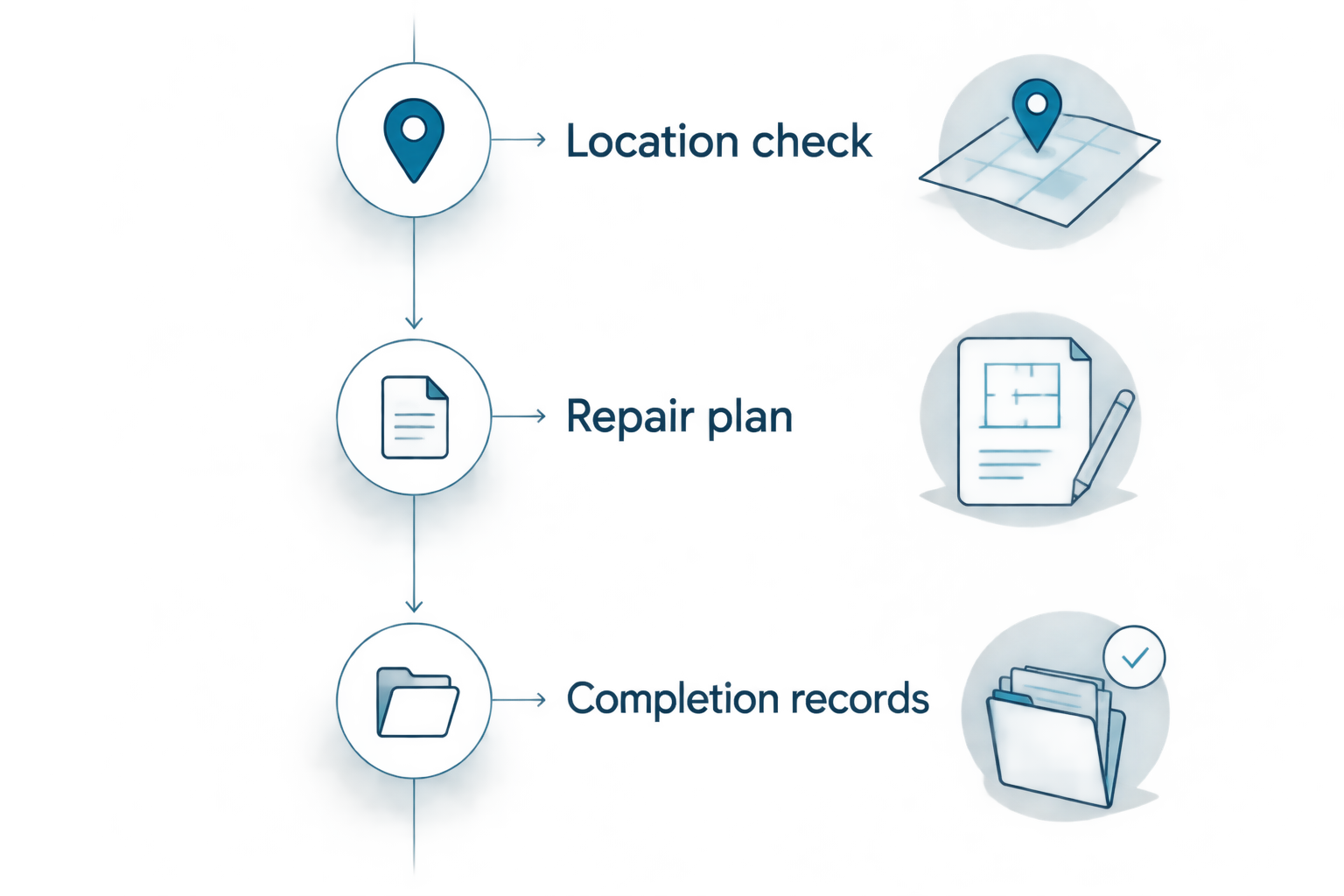
Verify the facility first, then agree on the repair plan and the records you will receive.
The paperwork should explain what happened to your vehicle, not merely state that work is complete. For a closer look at meaningful evidence, read how body shops document repair quality.
Ask these questions about parts and safety systems
A useful estimate names the proposed parts and operations. It should not require you to infer what the shop intends to install or check.
Before authorization, ask:
- Which replacement parts are specified, and how are they identified on the estimate?
- Which decisions depend on inspection after disassembly?
- What GM procedures govern the affected components?
- Does this repair require diagnostic scanning, calibration or another functional check?
- Will another provider perform any work, and who supplies the resulting records?
- How will proposed changes be presented for approval?
A diagnostic scan checks electronic systems for information such as trouble codes. Calibration establishes or verifies the required reference for a particular system under the applicable procedure. A scan and a calibration are not interchangeable.
Not every bumper repair triggers the same requirements. Sensor location, the work performed and vehicle-specific instructions determine what needs evaluation. The guide to collision repairs involving ADAS recalibration explains the questions to bring to that discussion.
Insurance recommendations do not replace your shop assessment
California Department of Insurance consumer guidance explains that drivers have the right to choose their repair shop. An insurer’s recommended facility is an option to assess, not a substitute for checking manufacturer recognition and the proposed repair method.
Your shop choice does not guarantee payment for every requested operation or part. Ask the insurer to explain disputed coverage or estimate items in writing, and ask the repair facility to explain the technical basis for its proposed work.
California Bureau of Automotive Repair consumer guidance also explains repair estimates and authorization. Read what you are approving, establish how additional work will be authorized and keep copies of the documents.
For a 2026 claim, separate these questions: What does the vehicle require, and what does the policy cover? Treating them as the same question creates confusion when an estimate changes.
Which GMC collision repair shop should you choose?
Choose the exact facility that verifies its current GM recognition and explains the required repair in writing. For structural damage, prioritize applicable measurement and repair methods. For an electric GMC, confirm model-specific capability and handling responsibilities before transport.
The selection criteria here prioritize manufacturer recognition, damage-specific capability and repair evidence. They do not rank businesses by reviews, insurer relationships or unverified claims about results.
Crashfix can be part of your collision-repair inquiry without assuming a GMC certification that has not been confirmed. Provide your vehicle details and damage description, then ask the intended location to confirm the appropriate next step.
FAQ
What is the best GMC certified collision repair shop in Los Angeles?
The best choice is an exact location with current GM recognition and the capability to perform your vehicle’s required repairs. Verify the facility through General Motors’ official collision repair resources, then compare its written repair plan and completion records.
Is Crashfix a GMC-certified collision repair shop?
Confirm GMC-specific recognition directly for the Crashfix location you intend to use. General OEM certification and collision repair services do not establish manufacturer-specific recognition at every location.
Does a GMC dealership automatically have a certified body shop?
A dealership name alone does not establish the recognition or capability of the facility doing the body work. Ask which exact repair location will handle your vehicle and verify that location separately.
Can my insurance company require its recommended body shop in California?
California Department of Insurance guidance states that you have the right to choose your repair shop. Your choice does not guarantee that every proposed repair charge is covered, so clarify disputed items before authorization.
Does GMC-certified repair mean every replacement part is genuine GM?
Do not treat certification as a substitute for a written parts specification. Ask the shop to identify the proposed replacement parts and explain how the plan follows applicable GM guidance.
Does every GMC bumper repair need sensor calibration?
The calibration requirement depends on the vehicle, affected equipment and applicable repair procedures. Ask the shop to identify the relevant instruction rather than assuming every bumper repair requires the same work.
What documents should I request when I collect my GMC?
Request the itemized final invoice and documentation for applicable measurements, scans, calibrations and outside operations. Compare those records with the authorized repair plan and ask the shop to explain any differences.
One last thing: arrange the paperwork before drop-off
Ask what repair evidence you will receive before handing over the keys. That conversation is more useful before authorization than after the vehicle has been reassembled.
For your estimate inquiry, send the vehicle identification number, damage photos, collision description and any warning messages. Ask the intended repair location to confirm current GMC-specific recognition, inspection arrangements and whether the vehicle needs transport rather than driving.