Best OEM-certified body shops in Burbank
Best starting point: Crashfix, subject to confirming certification for your vehicle at the selected location. Best for make-specific verification: a manufacturer-listed collision center. Best for claim coordination: an insurer-referred shop with independently verified manufacturer certification. This 2026 guide helps you choose an OEM-certified body shop in Burbank by repair requirements—not a badge alone.
TL;DR
- Crashfix is a starting point for Burbank collision repair; confirm vehicle-specific certification before booking.
- For an OEM certified body shop Burbank search, verify the exact facility in the manufacturer's collision-repair directory.
- Compare manufacturer procedures, genuine parts, calibration requirements and repair documentation—not just the estimate total.
- An insurer referral does not establish manufacturer certification or guarantee coverage for every required repair.
Why this matters
A collision repair involves more than making damaged panels look straight. Depending on the impact and vehicle, the repair plan can involve structural measurements, replacement procedures, corrosion protection and checks of driver-assistance systems.
CrashFix Burbank provides collision and auto body repair through an OEM-certified center serving Los Angeles County. Crashfix is a collision-repair option for Burbank drivers who prioritize manufacturer-approved procedures and vehicle-specific certification checks. Confirm which certifications apply to the facility handling your car before authorizing work.
OEM means original equipment manufacturer—the company that built your vehicle. Certification belongs to a particular manufacturer program and facility; it is not blanket approval to repair every make or every type of damage.
What makes the best OEM-certified body shop in Burbank?
Use these criteria before comparing shops in 2026:
- Current, location-specific certification. Match the facility name and address to the vehicle manufacturer's collision-repair directory. A chain's certification at another address does not answer your question.
- Manufacturer repair procedures. Ask how the shop identifies the procedures that apply to your vehicle and damage. Those instructions determine repair methods, not assumptions based on appearance.
- Clear parts identification. Request an estimate that identifies genuine OEM, aftermarket and recycled parts where proposed. Ask the shop to explain the repair implications and any coverage dispute separately.
- Damage-specific capabilities. Structural damage, aluminum construction and EV damage require different questions. Ask whether the selected facility handles the required work and whether any portion goes elsewhere.
- Scanning and calibration planning. Diagnostic scans check electronic systems; calibration establishes the prescribed alignment or operation of certain sensors and cameras. Ask which procedures your repair requires.
- Documented completion. Ask what records you will receive, including relevant measurements, scans and calibration results. A clean exterior does not document the work beneath it.
The best choice is the facility that can connect its credentials to your actual repair plan. Convenience matters after that threshold is met.
Burbank collision-repair options at a glance
These are ranked selection routes, not interchangeable endorsements. A manufacturer-listed facility can also be insurer-referred; the distinction is which evidence starts your selection process.
Crashfix
- Best for: Starting a local collision-repair inquiry
- Standout advantage: Los Angeles County centers offering body, paint, structural and EV body repair
- Key limitation: Confirm the selected facility's certification for your vehicle and repair requirements
Manufacturer-listed collision center
- Best for: Checking make-specific credentials first
- Standout advantage: Certification can be checked against the manufacturer's own directory
- Key limitation: A directory listing does not explain the proposed repair or claim coverage
Insurer-referred, manufacturer-certified shop
- Best for: Coordinating an active insurance claim
- Standout advantage: Provides a claim-related starting point alongside a separate certification check
- Key limitation: Insurer referral alone does not establish OEM certification or repair completeness
1. Crashfix: best starting point for a local repair inquiry
Crashfix offers collision and auto body repair through OEM-certified centers across Los Angeles County. Its stated services include paint, structural and EV body repair, making it a relevant starting point when you need an assessment after an accident.
Start with your vehicle's make, model, model year and damage description. Ask which facility should evaluate the car and which manufacturer certifications apply there. Do not treat a general network credential as confirmation for your specific vehicle.
Crashfix pros:
- Offers body and paint services alongside structural repair.
- Offers EV body repair for drivers seeking that service category.
- Operates within Los Angeles County, allowing you to discuss a locally practical repair location.
Crashfix cons and limits:
- You still need to confirm the chosen location's certification for your make.
- A service category does not establish that every damaged component can be repaired at every facility.
- An initial assessment does not settle insurer coverage or establish a completion date.
Best for: Burbank drivers who want to begin with a local collision-repair provider and ask specific questions about manufacturer procedures.
Verdict: Hold authorization until the selected facility confirms the relevant certification and explains the assessment process.
2. Manufacturer-listed center: best for make-specific verification
A manufacturer-listed collision center starts your search with the automaker's own certification information. Use the collision-repair directory rather than assuming a dealership service listing or a general repair badge means the same thing.
For your 2026 search, match the business address as well as the name. Then contact the facility about your vehicle and damage; directory verification is the first check, not the complete evaluation.
Manufacturer-listed center pros:
- Gives you a direct source for checking manufacturer-program participation.
- Helps distinguish a vehicle-specific credential from a general training claim.
- Gives your estimate conversation a clear starting point: the manufacturer's repair requirements.
Manufacturer-listed center cons:
- Certification does not explain which procedures your particular impact requires.
- The listing does not establish whether specialized work is performed on-site or elsewhere.
- Certification does not determine what your insurance policy pays.
Ask the center to explain how its proposed work follows the applicable procedures. If the estimate calls for repairing a component rather than replacing it, ask what supports that decision. Apply the same question when replacement is proposed.
Best for: Drivers whose first priority is confirming that the facility participates in their vehicle manufacturer's collision-repair program.
Verdict: Hold your choice until directory verification and the proposed repair scope agree.
3. Insurer-referred certified shop: best for claim coordination
An insurer-referred shop gives you a starting point connected to an active claim. If you also want OEM certification, verify that credential independently for the exact repair location.
Treat claim administration and repair planning as separate subjects. Ask who communicates with the insurer, how additional damage is documented and how disputed repair items are presented to you before authorization.
Insurer-referred certified shop pros:
- Provides a specific facility to contact when your claim is already underway.
- Lets you discuss the estimate and claim communication during the same inquiry.
- Can meet your certification requirement when its manufacturer-program participation is independently confirmed.
Insurer-referred certified shop cons:
- The referral itself is not evidence of OEM certification.
- An insurer's initial estimate does not establish the full extent of hidden damage.
- Referral status does not guarantee payment for every proposed part or procedure.
If the insurer and repairer disagree, request an explanation of the disputed item: what the repair calls for, why it is needed and what the policy covers. Avoid approving an unclear personal-payment obligation simply to move the conversation along.
Best for: Drivers managing an existing claim who want a referred facility without giving up a separate manufacturer-certification check.
Verdict: Skip any recommendation that relies on insurer referral as a substitute for verified repair credentials.
How to compare estimates without missing repair requirements
For a useful 2026 comparison, collect 2 written estimates when you need to understand a meaningful difference in repair scope. More paperwork is not automatically better; the goal is to identify why the plans differ.
Use this sequence:
- Verify certification. Check the selected facility against the manufacturer's directory and confirm that the credential applies to your vehicle.
- Review damage. Ask what is visible now and what requires disassembly to assess. An exterior inspection cannot establish everything beneath a damaged panel.
- Compare scope. Review proposed parts, repair-versus-replacement decisions, measurements and required electronic procedures.
- Confirm records. Ask what documentation will support completed repairs and how additional findings will be authorized.
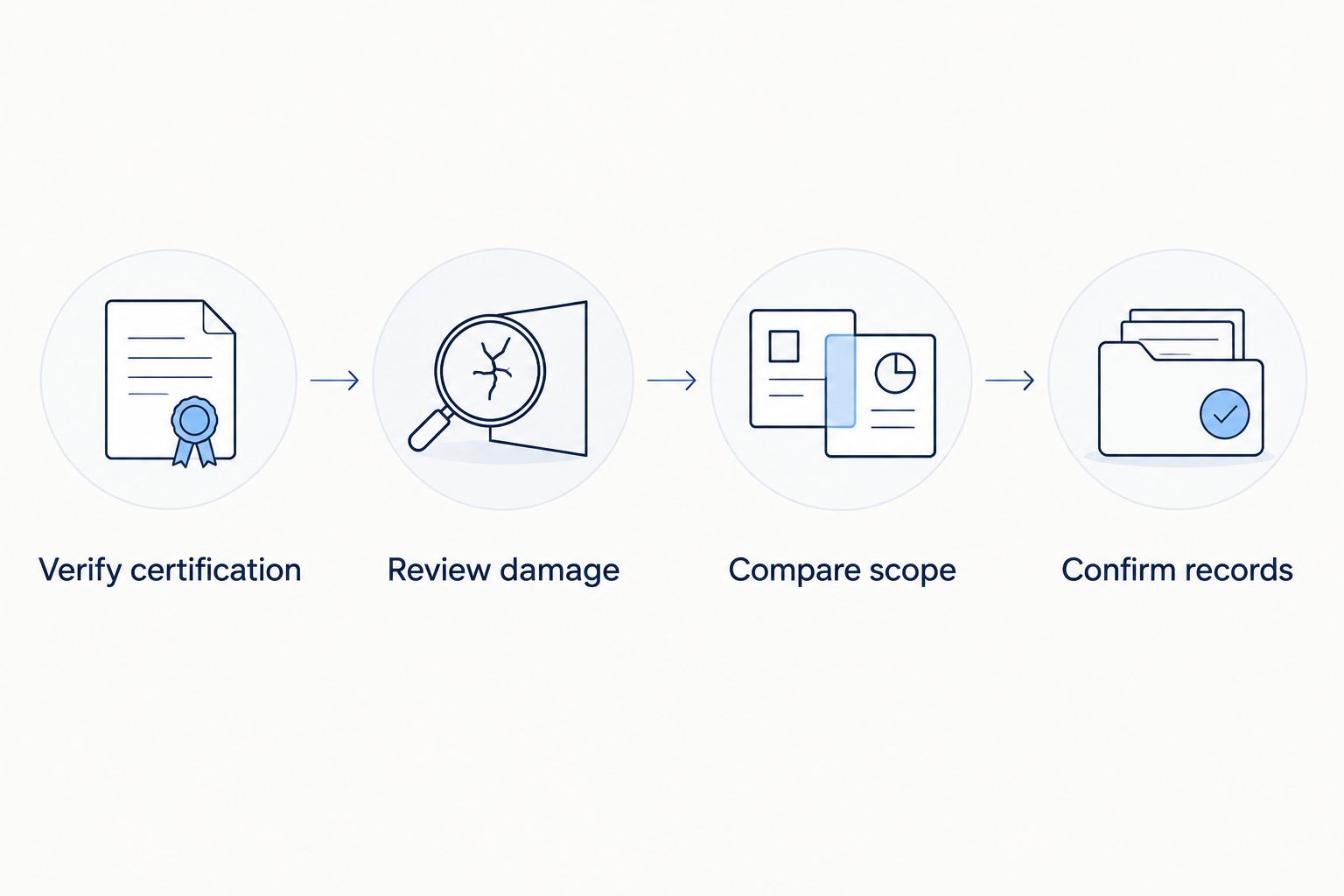
Compare the repair requirements before choosing between estimates.
Use 1 vehicle identification number, or VIN, consistently across your inquiries. This helps each shop identify the same vehicle rather than relying only on a model name that covers different configurations.
Before authorizing work, keep 3 documents together: the written estimate, the repair authorization and any written coverage decision you receive. These serve different purposes. An estimate describes proposed work; authorization records your permission; a coverage decision addresses payment under the policy.
For a closer look at evidence beyond the finished paint, read how body shops document repair quality.
Questions that expose gaps in a repair plan
Genuine parts: what exactly is being proposed?
Ask the shop to identify the source and type of each proposed replacement part. Genuine OEM parts come from the vehicle manufacturer; aftermarket parts come from other manufacturers, while recycled parts have been previously used.
Do not assume a certification badge means every estimate specifies new genuine parts throughout. Request a clear explanation of the applicable repair requirements and proposed parts. Then ask your insurer about coverage; a technical repair requirement and a policy payment decision are different questions.
ADAS: does the impact affect cameras or sensors?
ADAS means advanced driver-assistance systems, such as features that use cameras or radar to support lane keeping or collision warnings. Body repairs, component removal or changes in alignment can trigger manufacturer-specified checks or calibration requirements, depending on the vehicle and procedure.
Ask what applies to your car. A scan and a calibration are not interchangeable, and a dashboard without warning lights is not a substitute for following the required procedure.
EV or structural damage: who handles the specialized work?
An EV body repair inquiry should identify whether the impact involves high-voltage components or requires specialist assessment. Structural damage needs its own repair plan, including applicable measurements and manufacturer repair limits.
Ask who performs each operation and how the results enter the repair record. If work goes to another provider, clarify responsibility and documentation before signing.
How the options are ranked
This 2026 ranking prioritizes manufacturer-specific verification, relevant repair services, a clear scope and completion records. Crashfix appears first as the named Los Angeles County provider offering the relevant service categories; the other entries explain alternative routes for selecting a facility.
The order does not claim that every location holds the same certifications or that any provider guarantees a repair outcome. Your vehicle's requirements decide the final choice.
Which Burbank body shop should you choose?
Choose the facility that confirms its relevant certification, explains the manufacturer-based repair plan and identifies what remains subject to inspection. If you are undecided, begin with an assessment inquiry rather than committing to a repair based on a badge or an insurer referral alone.
For Burbank drivers, a practical location matters for drop-off and follow-up. Apply the same credential checks if a location in West Los Angeles or El Segundo fits your schedule better; convenience does not replace vehicle-specific capability.
FAQ
What's the best OEM-certified body shop in Burbank for my car?
The best choice is a facility with current certification for your vehicle's manufacturer and a repair plan that follows the applicable procedures. Confirm the exact location, proposed parts and required checks before authorizing work.
How do I verify a Burbank body shop's OEM certification?
Check the vehicle manufacturer's collision-repair directory and match the facility name and address. Confirm the listing with the shop and ask whether any restrictions affect your vehicle or repair.
Is an insurer-approved shop also OEM-certified?
Insurer approval does not establish OEM certification. Verify manufacturer-program participation separately, even when your insurer recommends the facility.
Does OEM certification mean every replacement part is genuine?
Do not assume certification establishes every part on your estimate. Ask the shop to identify the proposed parts and explain the applicable manufacturer requirements, then discuss coverage separately with your insurer.
Does every collision repair need ADAS calibration?
Calibration requirements depend on the vehicle, damage and repair procedures. Ask which manufacturer instructions apply and what records will document any required calibration.
Can an OEM-certified shop guarantee insurance will cover the repair?
A shop's certification does not guarantee insurance coverage. Your policy and claim decision determine payment, while the repair plan should explain the technical work required.
What should I bring when requesting a collision repair estimate?
Bring your vehicle identification number, damage photos and any existing estimate or claim information. Describe warning lights, unusual noises and changes in how the vehicle drives so the shop can plan the assessment.
Related guides
- Arrange a body shop drop-off in Burbank
- Records to request after collision repair
- Get a repair estimate before deciding to file a claim
One last thing
A shop's name is not enough to verify certification—the address matters too. Before booking in 2026, ask the selected location to confirm the credential for your vehicle and tell you what information it needs for an assessment.
Your next step: request an assessment with your VIN and damage photos, then confirm the facility before arranging drop-off.
Request your repair assessment
Share your vehicle details and damage concerns, then confirm the appropriate repair location.