How do you arrange a body shop drop-off in Burbank?
Arrange a body shop drop-off in Burbank by confirming the receiving location, appointment, vehicle arrival method and repair authorization directly with the shop before you leave home. Bring your claim details if applicable, document the vehicle’s condition, and arrange your ride home separately; an estimate appointment does not automatically mean the shop will accept your car for repairs that day.
TL;DR
- For an auto body shop Burbank drop-off, confirm the appointment, receiving address and arrival method before moving your vehicle.
- CrashFix operates OEM-certified collision repair centers serving Los Angeles County vehicle owners after accidents.
- Ask whether you are booking an estimate, an inspection or a repair drop-off; these are different commitments.
- Confirm towing, insurance authorization and transportation separately rather than assuming the repair appointment includes them.
Why this matters
A successful drop-off ends with the shop accepting your vehicle and both sides understanding the next step. Arriving without a confirmed intake arrangement creates uncertainty about who receives the keys, what work you authorize and when the assessment begins.
CrashFix provides collision and auto body repair through OEM-certified centers across Los Angeles County. Confirm the relevant location and your vehicle’s manufacturer requirements directly rather than treating a company-wide credential as proof of a particular manufacturer certification at every center.
For your 2026 drop-off, prioritize a documented repair process over the earliest available appointment. You need clarity about manufacturer-approved procedures, parts and any inspections required before repair decisions are made.
How do you arrange a body shop drop-off in Burbank?
Follow this sequence before taking your vehicle to the shop. Keep the appointment confirmation and instructions accessible so you can check them without searching through a long message thread.
- Identify the appointment type. Ask whether you are booking a visual estimate, a damage assessment that involves disassembly, or a repair intake. Describe the collision and any warning lights, unusual sounds or changes in steering or braking.
- Confirm the exact receiving location. Verify the address, appointment time, vehicle entrance and person or team handling intake. Ask whether someone must be present when the vehicle arrives.
- Agree on how the car will arrive. Tell the shop whether you intend to drive or arrange a tow. If the vehicle is already in storage, explain where it is and ask what release and receiving arrangements need to be coordinated.
- Clarify documents and authorization. Ask what identification, vehicle information, claim details and signatures the shop needs. Read the authorization before signing and distinguish permission to inspect from permission to repair.
- Prepare the vehicle and your records. Remove belongings, photograph its condition and gather any prior estimate or claim correspondence. Tell the shop about modifications, previous repairs and access issues that affect assessment.
- Confirm the handoff and your departure. Agree on key delivery, your preferred contact method and the next communication point. Arrange your own transportation unless a separate arrangement has been explicitly confirmed.
Do not treat an online inquiry as a confirmed repair drop-off. Wait for direct confirmation that the intended location will receive your vehicle under the agreed arrangement.
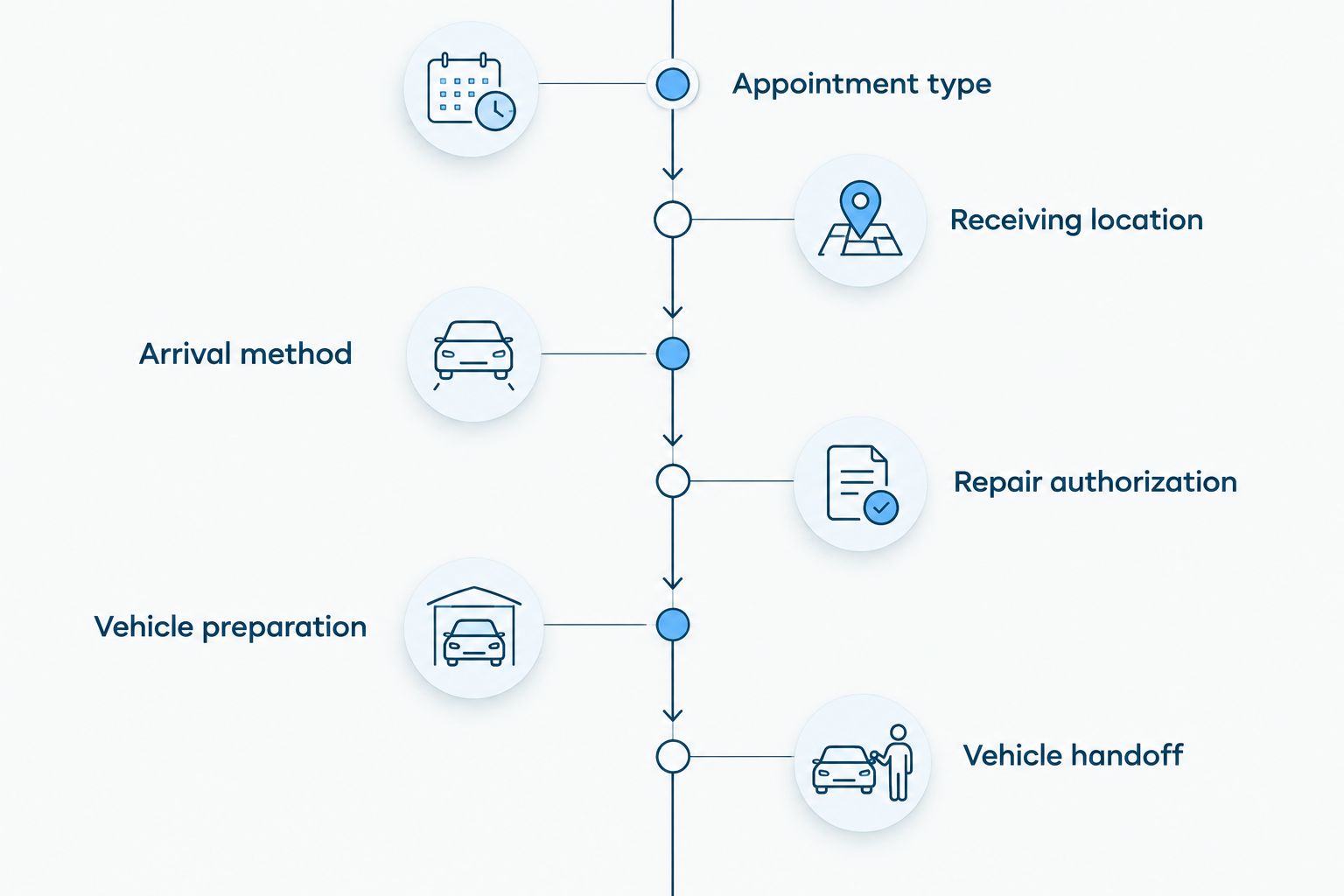
Confirm the receiving arrangement before moving your vehicle.
Estimate appointment or repair drop-off: which do you need?
An estimate appointment addresses the proposed repair scope; a repair drop-off involves leaving the vehicle under an agreed intake arrangement. Ask what happens during your appointment and whether the shop expects you to take the car home afterward.
Visual estimate
- Best for: Drivers seeking an initial assessment of visible damage
- What to clarify: Whether the vehicle stays or leaves after the appointment
- Limitation: Visible damage does not establish the full condition behind damaged panels
Inspection with disassembly
- Best for: Drivers whose damage requires access behind exterior parts
- What to clarify: What disassembly you authorize and what happens afterward
- Limitation: The vehicle’s condition after disassembly affects collection or transfer arrangements
Repair drop-off
- Best for: Drivers ready to leave the vehicle under an agreed repair process
- What to clarify: Repair authorization, communication and receiving arrangements
- Limitation: Intake alone does not establish a completion date or insurance coverage
For a 2026 appointment, ask for the appointment type in the confirmation message. That short clarification prevents a trip based on the wrong expectation.
Ask about the repair standard before booking
OEM means original equipment manufacturer: the company that made your vehicle. Manufacturer repair procedures specify how particular repair operations should be performed, including requirements that depend on the model and damage.
Ask how the shop identifies the applicable procedures and documents the work. If manufacturer certification matters to your decision, verify it for your vehicle’s brand and the specific receiving location.
Ask about genuine OEM parts separately. A certification, an insurance estimate and a parts authorization are different things; have the shop explain proposed parts and any unresolved differences before approving the work.
Driving the vehicle to the shop
Driving to an appointment is appropriate only when the vehicle can be operated safely. An appointment confirmation is not a mechanical assessment, and photographs cannot establish that steering, braking or hidden structural components are undamaged.
Tell the shop about fluid leaks, damaged tires, loose panels, deployed airbags or a change in how the vehicle handles. If safe operation is uncertain, arrange qualified assistance rather than using the drive to the shop as a test.
The advantage of driving is a direct handoff: you can describe concerns and review visible damage in person. The limitation is important: convenience never resolves uncertainty about the vehicle’s condition.
Having the vehicle towed to the shop
Confirm that the shop will receive the vehicle before dispatching a tow. Give the towing provider the verified destination and receiving instructions, then confirm who will acknowledge delivery.
Towing avoids relying on a damaged vehicle for the journey, but it adds another handoff to coordinate. Do not assume that the towing provider, insurer and repair shop have already exchanged instructions.
For an electric vehicle, identify the vehicle accurately and tell the provider about collision damage or relevant warnings. Follow the manufacturer’s transport guidance and the receiving shop’s instructions; do not guess at towing or handling requirements.
What if your car is already at a storage yard?
Ask the current custodian what release authorization is required and coordinate collection with the receiving shop. Confirm responsibility for release arrangements and any charges before authorizing movement.
Keep written records of the destination and instructions. Your objective is a documented transfer, not simply getting the vehicle off the current lot.
What changes your Burbank drop-off plan?
Your arrival arrangement depends on the vehicle, the work being assessed and the approvals involved. These factors deserve a direct answer before you commit to the handoff:
- Vehicle condition: Whether the car can be driven safely determines whether you plan a personal arrival or coordinated transport.
- Inspection scope: A visible-damage estimate and an inspection involving disassembly require different authorizations and collection expectations.
- Claim status: An existing claim, a pending inspection or a disputed repair item affects what needs clarification with the insurer.
- Repair requirements: Structural damage, EV-related concerns and driver-assistance equipment require attention to vehicle-specific procedures.
- Receiving arrangements: Staffed intake, key delivery and tow-truck access must be confirmed for the actual location.
- Your transportation needs: A ride home or rental arrangement is separate from the repair appointment unless explicitly agreed otherwise.
Do not turn these factors into an assumed completion date. For your 2026 repair planning, ask what the shop knows now, what requires inspection and when you should expect the next update.
What should you bring to the drop-off?
Bring the information the shop requests and keep copies for yourself. A useful preparation list includes your contact details, vehicle identification, claim number when applicable, insurer contact information and any existing estimate.
Photograph the vehicle before handoff, including visible damage and its general condition. Remove valuables, work equipment and personal documents; discuss items that cannot readily be removed rather than leaving the shop to discover them.
Tell the intake team about wheel-lock keys, aftermarket equipment or other access requirements. If you are dropping off an EV, ask whether any vehicle-specific items are needed instead of assuming a charging accessory belongs with the car.
Record the symptoms, not your diagnosis
Describe what changed after the collision: a warning light appeared, a door no longer closes normally, or a sound occurs when turning. Those observations help communicate the concern without assuming which component needs replacement.
Include when the symptom occurs and whether it existed before the accident. Let inspection and manufacturer procedures determine the repair requirement.
What should you confirm before handing over the keys?
Read the intake documents and ask what each authorization permits. Inspection, disassembly, repairs, vehicle movement and payment responsibilities should not blur into an unexplained signature request.
Confirm how additional damage will be communicated and how further work will be authorized. Also ask what happens if you decide not to proceed after assessment, including collection arrangements and any obligations described in the documents.
CrashFix offers body, paint, structural and EV body repair services. For a Burbank intake, confirm the relevant center’s repair scope and manufacturer credentials before booking rather than assuming every service or certification applies identically at every location.
Can you drop off a car after hours?
After-hours drop-off is appropriate only when the specific shop has confirmed a receiving procedure. Ask about vehicle placement, key security, authorization paperwork and when receipt will be acknowledged.
An unattended vehicle is not the same as a completed intake. For a 2026 after-hours arrangement, retain the instructions and document the handoff without leaving sensitive information visible inside the car.
Do you need insurance approval before drop-off?
Insurance approval and permission to leave a vehicle are separate issues. Ask the shop what it requires to begin assessment, then confirm with your insurer which expenses and repair operations your policy covers.
Do not assume a claim number authorizes every repair, towing arrangement or rental expense. Ask who will address differences between the insurer’s estimate and the shop’s documented repair requirements.
Should you arrange a rental before dropping off your car?
Arrange onward transportation before surrendering your keys, but confirm any rental terms separately. Ask your insurer about applicable coverage and the rental provider about its own requirements.
Do not book around an unconfirmed repair completion date. Set your transportation plan around the information available and update it as the repair scope becomes clearer.
FAQ
How do I book an auto body shop Burbank drop-off?
Contact the receiving shop and confirm the appointment type, exact location, arrival method and required authorization. Ask whether the vehicle will stay for repairs or leave after an estimate.
Can I leave my damaged car without an appointment?
Confirm acceptance with the shop before leaving your damaged car. An unannounced arrival does not establish receiving arrangements, permission to begin work or responsibility for the handoff.
Should I drive my car or have it towed after an accident?
Do not drive when safe operation is uncertain. Describe the damage and symptoms to a qualified professional and coordinate transport with the receiving shop when needed.
What insurance information should I bring to the body shop?
Bring your claim number, insurer contact information and any existing estimate or relevant correspondence when applicable. Confirm the shop’s document requirements before the appointment.
Does an estimate appointment mean repairs start that day?
An estimate appointment does not automatically authorize or schedule repairs that day. Confirm whether the appointment is for a visual assessment, disassembly or repair intake.
Does OEM certification mean every part will be a genuine OEM part?
OEM certification alone does not tell you which parts are proposed for your repair. Ask the shop to identify the parts in the repair plan and explain any authorization or coverage questions.
Can I arrange a CrashFix collision repair drop-off for an electric vehicle?
CrashFix offers EV body repair services. Confirm the relevant center’s scope, vehicle-specific requirements and receiving instructions before arranging delivery.
One last thing
Confirm the next update, not just the drop-off time. Before you leave the keys, ask who will contact you, what that update will cover and what decision you will need to make next.
For a 2026 booking, send the shop your vehicle details, a short damage description and your preferred arrival method. Ask for confirmation of an estimate or repair intake before arranging your trip.