Caliber Collision alternatives for West LA drivers
Caliber Collision gives drivers access to a national collision-repair network, but a network name alone does not establish the right repair plan for your vehicle. For West LA drivers comparing caliber collision alternatives in 2026, Crashfix is the best starting point if you want a local collision-repair provider offering body, paint, structural and EV body repair; a dealer-referred collision center is another option when you want help identifying a repairer for your make.
TL;DR
- Crashfix is a local starting point for West LA drivers comparing caliber collision alternatives for collision repair.
- Compare manufacturer procedures, parts specifications and repair documentation—not just estimates or network names.
- Confirm certification for your vehicle and the exact repair location before authorizing work.
- Stay with Caliber Collision when its location can explain and document the repair your vehicle needs.
Why this matters
Choosing a body shop means choosing who will assess damage, specify parts and explain the work behind the finished paint. A convenient address matters, but it does not answer those questions.
The useful comparison in 2026 is not national chain versus local shop. It is whether the repairing location can explain the requirements for your vehicle, distinguish repair needs from insurance coverage and give you a clear authorization process.
Caliber Collision alternatives at a glance
Caliber Collision
- Best for: Drivers who prefer a national collision-repair network
- Main reason to consider it: A network-based option for collision repair
- What to verify: The specific location’s qualifications, repair procedures and documentation
- Best for: West LA drivers seeking a local collision-repair provider
- Main reason to consider it: Body, paint, structural and EV body repair services
- What to verify: Make-specific certification and the proposed scope at the repairing location
Dealer-referred collision center
- Best for: Drivers seeking a referral connected to their vehicle’s make
- Main reason to consider it: A starting point for finding a suitable repairer
- What to verify: Whether the center holds the relevant manufacturer certification
Independent collision specialist
- Best for: Drivers comparing a shop’s experience with a particular repair
- Main reason to consider it: Direct evaluation of the individual shop and repair plan
- What to verify: Equipment, qualifications, parts specifications and final records
These are repair-provider choices, not interchangeable endorsements. A dealer referral, independent ownership or national network membership does not replace checking the actual facility.
1. Crashfix: best for local collision-repair assessment
Crashfix operates OEM-certified collision repair centers across Los Angeles County and offers auto body, paint, structural and EV body repair services. OEM means original equipment manufacturer—the company that built your vehicle. For a West LA driver, the next step is to match the vehicle and damage to the relevant location’s confirmed qualifications.
Best for: Drivers who want to discuss accident damage with a local collision-repair provider before choosing where to authorize repairs.
Where this option shines
- Several repair categories: Body, paint, structural and EV body repair are within the stated service offering.
- Manufacturer certification as a selection criterion: The business operates OEM-certified centers; ask which certification applies to your make and location.
- A relevant local shortlist option: You can assess the repair plan against your vehicle’s needs rather than choosing by national name recognition alone.
Where this option falls short
- Company-level credentials do not establish every location’s qualifications. Confirm the exact manufacturer program before treating a location as certified for your vehicle.
- The service list is not a vehicle-specific repair commitment. Structural or EV damage still requires an assessment of the particular vehicle and incident.
- An initial estimate is not a complete damage finding. Disassembly can reveal work that was not visible during the first inspection.
How to compare it with Caliber Collision
Ask both providers to explain the same damage using the same vehicle information. Compare the proposed parts, inspection steps, manufacturer procedures and conditions that would change the estimate—not just the final amount.
Do not assume either provider will use a particular parts type or perform every operation in-house. Get those details in the written plan, including who handles any required calibration.
Verdict: Hold authorization until the repairing location confirms the vehicle-specific scope.
2. Dealer-referred collision center: best for make-focused referrals
A dealer-referred collision center is a repair business your dealership directs you toward. The referral gives you a candidate to investigate; it does not, by itself, establish manufacturer certification or ownership by the dealership.
This route is useful when you want help identifying a shop familiar with your vehicle’s make. Ask the dealer why it recommends that particular facility and then verify the repairer directly.
Best for: Drivers who want a make-focused starting point, especially when the repair involves unfamiliar materials or systems.
Where this option shines
- A clear referral question: You can ask which facility the dealer recommends for collision damage to your specific vehicle.
- A route to certification checks: Ask for the exact manufacturer program name and the facility enrolled in it.
- A focused comparison: The referral gives you another repair plan to assess alongside a chain or local provider.
Where this option falls short
- Referral is not certification. Confirm the distinction before approving work.
- The dealership and repairer can be separate businesses. Establish who estimates, repairs, invoices and answers questions.
- A familiar dealer name does not resolve the parts or coverage question. Read the proposed repair scope and your insurer’s response separately.
For a 2026 comparison, ask whether the referral reflects the vehicle’s current repair requirements rather than accepting a general recommendation. Have the collision center explain any manufacturer-specific equipment, procedures or outside services the job requires.
Verdict: Hold authorization until the referral, certification and responsible repair business are clear.
3. Independent collision specialist: best for evaluating the shop directly
An independent collision specialist gives you another individual facility to compare. Independent ownership alone says nothing about certification, equipment or workmanship, so make the selection on documented qualifications rather than the ownership label.
Best for: Drivers who want to assess a particular repairer’s explanation of their damage and proposed work.
Where this option shines
- Facility-level comparison: You can focus on the people, equipment and procedures relevant to the job.
- Repair-specific questions: Ask how the shop handles the material, damage location and electronic systems involved.
- Another written assessment: A separate repair plan can expose differences that need explanation before authorization.
Where this option falls short
- “Specialist” needs a definition. Ask what training, equipment or manufacturer recognition supports the description.
- A personal recommendation is not repair documentation. You still need a written scope and final records.
- Capabilities must match the damage. Cosmetic repair experience does not establish structural or high-voltage repair capability.
Verdict: Skip any candidate that cannot explain its qualifications and proposed repair operations.
Compare 2 written estimates without comparing unlike repairs
For your 2026 shortlist, request 2 written estimates where practical and compare their assumptions. A lower total does not explain whether the documents cover the same damage, parts and operations.
Use these 4 questions before authorizing work:
Manufacturer procedures
Ask which manufacturer repair information applies to the damaged areas. Structural repairs can involve material-specific restrictions, attachment methods and replacement instructions; the shop should explain the relevant requirements rather than offer a generic reassurance.
Parts specifications
Ask whether each proposed replacement part is genuine OEM, aftermarket, recycled or another stated category. Separate what the repairer recommends from what the insurer agrees to pay under the policy. Do not treat those as the same decision.
Required operations
Ask whether the damage or repair triggers diagnostic scanning, measurements, corrosion protection or calibration. ADAS means advanced driver assistance systems, such as camera- or radar-based assistance features. Calibration requirements depend on the vehicle and the work performed—not simply whether a warning light appears.
Final records
Ask what documents you will receive at pickup. Request an itemized invoice and records for the operations relevant to the job, including measurements, scans or calibration when performed. This guide to how body shops document repair quality explains what to discuss before work begins.
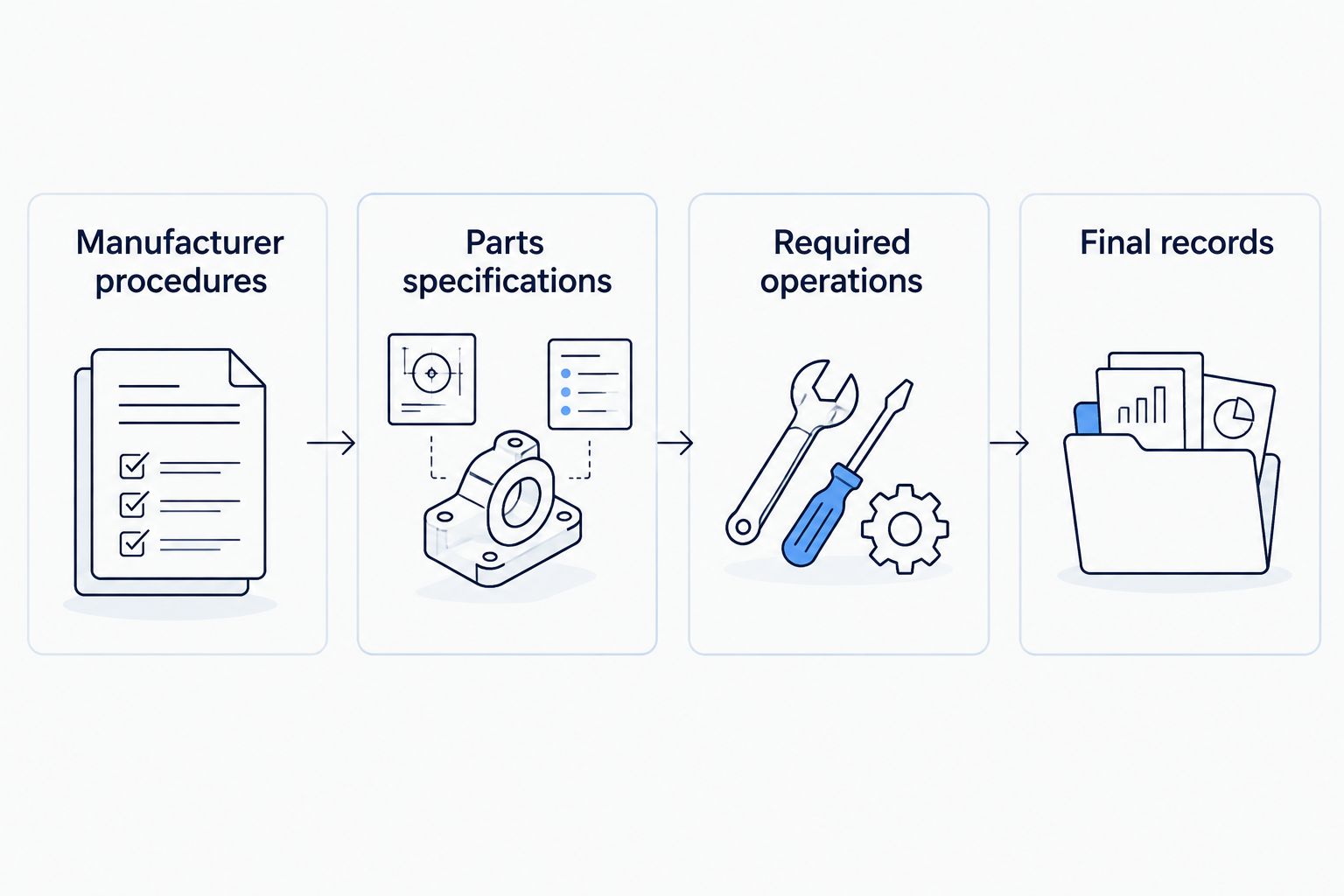
Compare the repair scope before comparing estimate totals.
The strongest answer is specific to your vehicle. An estimate that lists an operation without explaining why it applies still leaves you with a question to resolve.
Why drivers consider switching from Caliber Collision
There is no need to assume a chain-wide problem to consider another provider. A switch makes sense when another facility is a better documented match for the vehicle or gives you a clearer repair plan.
Use these decision points rather than unverified complaints:
- Vehicle fit: Another facility confirms the manufacturer qualification or repair capability your job requires.
- Scope clarity: Another repairer explains a difference in parts, measurements or required operations that you have not resolved.
- Communication: You can identify who approves changes, who contacts you and how additional damage will be documented.
- Practical access: Drop-off, inspection and pickup arrangements work for you without compromising the repair requirements.
These are reasons to investigate an alternative, not claims that Caliber Collision lacks those qualities. Give each candidate the opportunity to answer the same questions.
If your vehicle is already at a shop, ask about existing authorization, completed work and any applicable charges before arranging a transfer. Moving the vehicle does not erase earlier agreements.
When staying with Caliber Collision is the right call
Stay with Caliber Collision when the specific location demonstrates the qualifications your vehicle needs and explains the repair in writing. Switching for a different name adds no value if the alternative cannot improve the clarity or suitability of the plan.
For a 2026 repair decision, keep the assessment practical: can the shop explain the manufacturer requirements, proposed parts, approval process and final records? If those answers are clear and acceptable, remaining with the current repairer is a reasonable choice.
Certification is useful evidence, not a promise about every repair outcome. Keep asking vehicle-specific questions regardless of which name appears above the door.
FAQ
What are the best Caliber Collision alternatives for West LA drivers?
Crashfix, a dealer-referred collision center and an independent collision specialist are options to assess for West LA collision repair. Choose the actual facility based on vehicle-specific qualifications, a written repair plan and clear documentation—not the ownership category alone.
Is a local body shop better than Caliber Collision?
A local body shop is not automatically better than Caliber Collision. Compare the specific facilities on manufacturer procedures, relevant qualifications, proposed parts and the records they provide.
Does OEM-certified mean a shop is certified for every car?
No. Confirm the manufacturer certification for your vehicle and the exact location doing the work; a company-level description does not establish certification for every make at every facility.
Should I choose the lowest collision repair estimate?
Choose a repair plan you understand rather than selecting on the total alone. Estimates can differ in parts, included operations and assumptions about damage that has not yet been exposed.
Will insurance pay for genuine OEM parts?
Payment for genuine OEM parts depends on the policy and claim circumstances. Ask the repairer to identify the recommended parts, then ask the insurer to explain coverage and any unresolved difference in writing.
Do body repairs always require ADAS calibration?
ADAS calibration depends on the vehicle, manufacturer instructions and repair operations. Ask the shop to identify the applicable requirements rather than assuming every repair needs calibration or that no warning light means none is needed.
Can I move my car to another collision repair shop?
Discuss a transfer before moving the vehicle. Confirm existing repair authorization, completed work, applicable charges, vehicle condition and transport arrangements with the current shop and receiving repairer.
What should I bring to a collision repair estimate?
Bring your vehicle information, damage photos and any claim details you have. Describe the impact, warning messages, unusual sounds and previous damage so the repairer can distinguish your observations from its inspection findings.
One last thing
Ask for 3 documents: the estimate, the repair authorization and the final itemized invoice. They answer different questions: what is proposed, what you permit and what was completed.
Keep them together. Before signing, ask how additional damage and changes will be presented for approval; that conversation is more useful than a general promise to “take care of everything.”
Related guides
- OEM-certified body shops in West Los Angeles
- Getting a repair estimate before deciding to file a claim
- Records to request after collision repair in Los Angeles
For your 2026 repair shortlist, start with an assessment rather than a commitment. Request a Crashfix collision repair appointment, provide your vehicle details and ask which location is qualified for the work before authorizing repairs.
Request a collision repair appointment
Share your vehicle and damage details, then confirm the appropriate repair location and next steps.