Can a bumper with parking sensors be repainted?
Yes, a bumper with parking sensors can be repainted when the vehicle manufacturer's repair instructions permit the refinishing work and the sensors, mounts, and wiring remain serviceable. For bumper repair Los Angeles drivers are considering in 2026, the key distinction is between painting the bumper cover and painting a sensor face: permission to refinish one does not automatically mean permission to refinish the other.
TL;DR
- Bumper repair Los Angeles drivers arrange should follow vehicle-specific instructions for paint, parking sensors, and any radar behind the bumper.
- A paintable bumper cover does not mean every parking sensor can be repainted.
- Inspect sensor mounts and wiring before treating collision damage as a cosmetic problem.
- Crashfix offers collision repair for Los Angeles County drivers; confirm the repair plan for your vehicle before authorizing work.
Can a bumper with parking sensors be repainted?
Yes—provided the repair follows the manufacturer's instructions for the bumper cover and its associated sensors. The shop must identify which components need refinishing, which need protection or removal, and which need replacement rather than paint.
The painted plastic panel you see is the bumper cover. Parking sensors are separate components mounted in or near that panel. Other driver-assistance equipment, including radar on some vehicles, can sit behind it.
Crashfix provides collision, paint, structural, and EV body repair services across Los Angeles County. For a sensor-equipped bumper, ask for an assessment that addresses the electronics and their mounting points alongside the visible finish.
Refinish the existing bumper cover
- Best for: Cosmetic damage where the cover remains repairable under manufacturer instructions
- Benefit: Addresses damaged paint while retaining a serviceable cover
- Limitation: Does not fix damaged sensors, wiring, or mounts
Repair and refinish the existing cover
- Best for: Physical damage in an area where the manufacturer permits repair
- Benefit: Can address the damaged plastic and finish together
- Limitation: Repair restrictions can apply around sensor and radar areas
Replace and refinish the cover
- Best for: Damage or previous repairs that rule out an approved repair
- Benefit: Replaces a cover that cannot receive the required repair
- Limitation: Sensors and mounting components still need separate assessment
Choose the repair method from the damage and manufacturer procedure—not from the appearance of the scratch alone. None of these options automatically resolves an electronic fault.
Why this matters
A freshly painted bumper can look correct while a sensor sits loose or points in the wrong direction. Appearance and parking-assistance function are separate checks.
That distinction matters whether you park in a tight West Los Angeles garage, a Burbank driveway, or an El Segundo parking structure. You need a repair plan that addresses what happened behind the cover, not just the scrape you can photograph.
When reviewing a 2026 repair estimate, look for a clear explanation of sensor handling and any vehicle-specific testing requirements. A line describing bumper paint is not, by itself, an explanation of how the parking-assistance system will be checked.
Repainting the bumper cover
Best for: surface damage on a cover that remains suitable for refinishing. Scratched paint does not automatically require a replacement bumper, but the shop must inspect the substrate—the plastic beneath the paint—and the nearby mounting areas.
Ask how the shop will prepare the cover and protect components that should not receive paint. Depending on the vehicle and procedure, access can require removing the cover, trim, sensors, or related hardware.
The benefit is straightforward: refinishing addresses the damaged coating and restores the painted surface. The limitation is equally important: paint work cannot correct a broken sensor bracket, damaged connector, or displaced reinforcement behind the cover.
Ask the estimator to separate cosmetic findings from collision damage. That makes it easier to understand why the repair includes work you cannot see from outside the vehicle.
Repainting a parking sensor face
Best for: sensors whose manufacturer instructions specifically permit refinishing. Do not assume that a small round sensor should receive the same preparation and paint application as the surrounding bumper.
Many parking sensors use ultrasound to detect nearby obstacles. Their exposed faces are functional surfaces, not simply decorative inserts. Refinishing instructions can therefore differ from the instructions for the bumper cover.
Ask the shop to confirm:
- Whether the existing sensor can be refinished.
- Whether previous paint affects that decision.
- What surface preparation and coating restrictions apply.
- Whether the sensor must be removed during the bumper work.
- Whether damage requires replacement instead of refinishing.
The advantage of permitted refinishing is a coordinated appearance without replacing a serviceable component unnecessarily. The limitation is that permission is sensor-specific; a general paint-matching process is not enough.
Do not sand or spray a parking sensor yourself before the shop identifies the applicable procedure. Unapproved preparation can turn a cosmetic concern into a component-replacement issue.
Replacing a damaged cover or sensor
Best for: components that are damaged beyond the manufacturer's permitted repair. A cracked cover, broken sensor holder, or damaged sensor needs its own repair decision.
Replacement does not mean every part behind the bumper must also be replaced. Equally, an undamaged-looking cover does not prove that every concealed component can stay.
Ask the shop to identify the reason for each proposed replacement and the specified replacement part. Genuine parts and manufacturer-approved procedures should be discussed as repair requirements, separately from what an insurer agrees to pay.
The benefit of replacement is removing a component that cannot receive the required repair. Its limitation is that installation alone does not establish correct system operation; the applicable inspections, adjustments, or checks still matter.
What should the shop check before painting?
A useful repair sequence starts before the spray booth. For your 2026 repair authorization, ask the estimator to explain the following steps in plain language and identify any decisions that depend on disassembly.
- Identify equipment. Confirm the vehicle configuration and which parking or driver-assistance components are associated with the damaged bumper. Similar-looking covers can serve different equipment packages.
- Inspect damage. Check the cover, sensor holders, connectors, wiring, and accessible components behind the impact area. Record any parking-assistance symptoms you noticed after the collision.
- Check procedures. Establish where repair and refinishing are permitted, how sensors must be handled, and what post-repair operations the manufacturer requires.
- Plan refinishing. Decide which components need removal, protection, permitted refinishing, or replacement. Keep sensor-specific instructions separate from general paint preparation.
- Verify operation. Complete the inspections, diagnostic work, calibration, or functional checks required for that vehicle and repair. Record the results rather than relying only on appearance.
A preliminary estimate can change when disassembly exposes additional damage. Ask how the shop will explain those findings and obtain authorization before additional work proceeds.
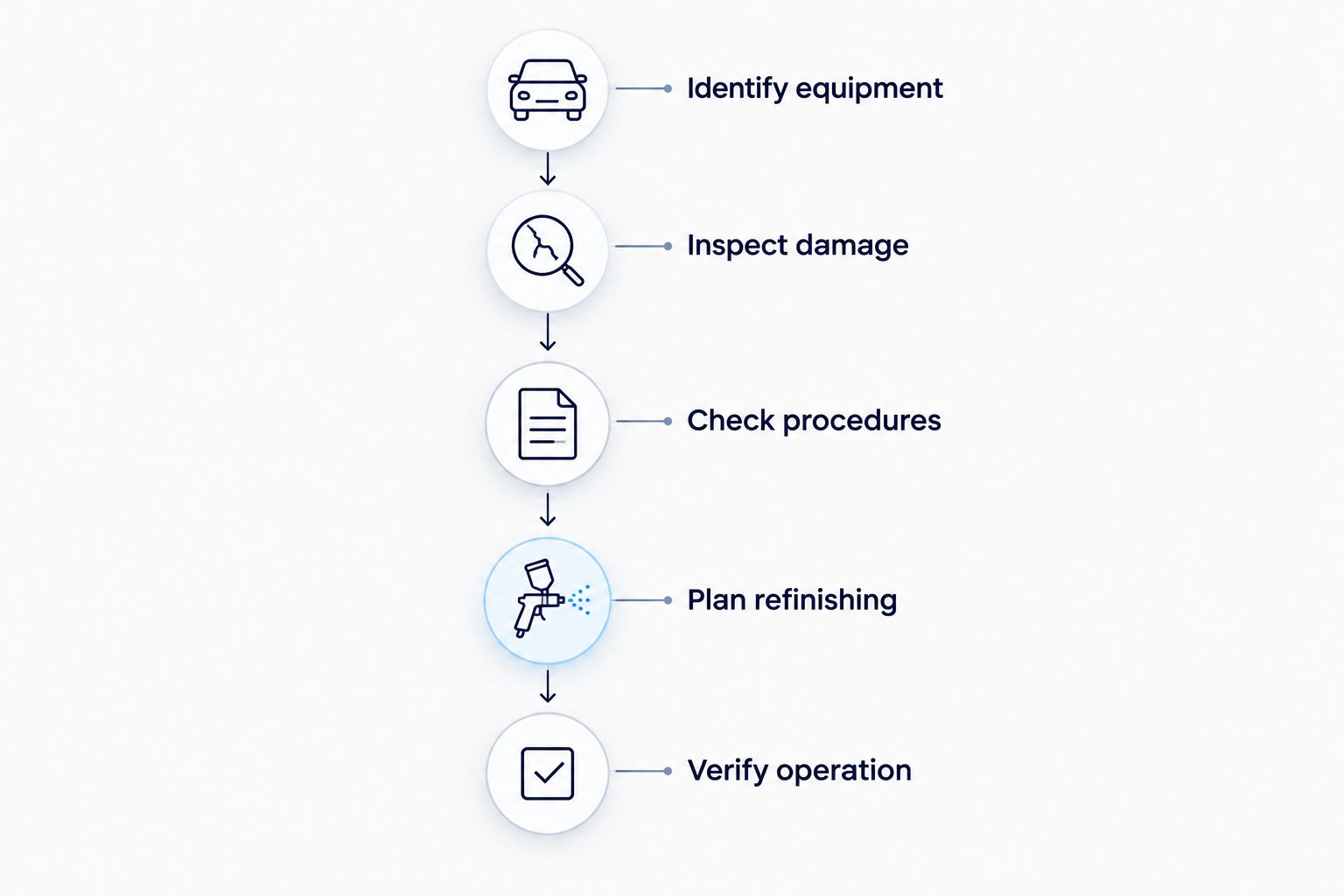
The sensor repair plan starts before paint preparation, not after the bumper is reassembled.
Why bumper refinishing requirements vary
There is no single paint rule for every sensor-equipped bumper. These factors determine what the repair needs:
- Vehicle configuration. The shop must identify the actual equipment fitted to your vehicle rather than assume that every version uses the same components.
- Sensor design. Instructions for refinishing a sensor face are separate from instructions for refinishing the surrounding plastic.
- Damage location. Damage near a sensor holder or radar area needs a different assessment from an isolated surface scratch elsewhere on the cover.
- Previous repairs. Existing coatings, filler, or earlier damage can affect whether another repair is permitted.
- Mounting condition. A sensor needs the correct position and secure attachment; paint does not repair a broken holder.
- Required verification. The applicable procedure determines whether the work requires diagnostic checks, calibration, initialization, or other functional verification.
These factors explain why two bumper estimates can describe different operations without either estimate being understandable from photographs alone. Ask each shop to connect its proposed work to the damage and applicable repair instructions.
Does repainting a bumper require sensor calibration?
Repainting a bumper does not create a universal calibration requirement. The vehicle's equipment, the components disturbed, and the manufacturer's procedure determine what checks or calibration the repair requires.
Calibration means setting or confirming a system's alignment or reference according to its specified process. A diagnostic scan reads electronic information, including fault codes; it is not the same operation as calibration.
For a 2026 estimate, ask the shop to name the system and the required operation rather than use a vague phrase such as sensor reset. Parking sensors and radar-based driver-assistance systems should not be treated as interchangeable equipment.
Can a small parking-lot scrape damage the sensors?
A small visible scrape does not establish the condition of the sensors or their mounts. Tell the estimator about new warnings, constant beeping, missed obstacle alerts, or a sensor that looks recessed or loose.
Do not deliberately approach a person, wall, or another vehicle to test whether the system works. Continue to check your surroundings directly and follow the vehicle owner's manual while arranging inspection.
What records should I request after bumper painting?
Request an itemized repair record and documentation of the checks required for your vehicle. The paperwork should distinguish paint work, component repair or replacement, and any diagnostic or calibration operations performed.
Ask what the shop found, what changed after disassembly, and how the completed work was verified. This guide to how body shops document repair quality explains the questions to raise before authorizing the job.
How to compare bumper repair estimates in Los Angeles
Compare the scope before comparing the bottom line. An estimate that describes only sanding and painting is not directly comparable with one that also includes necessary disassembly, sensor handling, and system verification.
For bumper repair Los Angeles drivers are arranging in 2026, bring clear photos, your vehicle information, and a description of any changed parking-assistance behavior. Ask whether the first estimate is preliminary and what inspection is needed to confirm the repair plan.
Crashfix collision repair is best suited to Los Angeles County drivers seeking body and paint repairs after an accident. For your specific vehicle, confirm the relevant location's manufacturer certification and ask which procedures apply; a general certification claim is not a substitute for vehicle-specific confirmation.
Keep insurance questions separate. Ask the repairer what work the vehicle requires and ask your insurer how the policy addresses that work. Neither a paint estimate nor a repair recommendation guarantees coverage.
FAQ
Can a bumper with parking sensors be repainted without replacing the sensors?
Yes, existing parking sensors can remain when they are serviceable and the manufacturer's repair instructions permit the proposed work. The shop must separately assess the cover, sensor faces, mounts, and wiring.
Can parking sensors be painted the same color as the bumper?
Parking sensors can be painted only when the applicable sensor instructions permit refinishing. Matching the bumper color does not override preparation or coating restrictions.
Will bumper paint stop my parking sensors from working?
Incorrect refinishing can affect parking-sensor operation. The shop should follow the sensor-specific instructions and complete the required checks after the repair.
Does every bumper repaint need ADAS calibration?
No, every bumper repaint does not require the same ADAS calibration work. The vehicle's equipment, repair operations, and manufacturer instructions determine what is required.
Should I replace a bumper if the sensor holder is broken?
A broken sensor holder requires a vehicle-specific repair decision, not automatic replacement of every bumper component. Ask whether the manufacturer permits holder replacement or repair, or requires a replacement cover.
What should I ask about bumper repair in Los Angeles?
Ask how the shop will handle the bumper's sensors, follow manufacturer repair instructions, and document the required checks. Also confirm the relevant location's credentials for your vehicle rather than assuming every location holds the same certifications.
Will insurance cover parking sensors damaged in an accident?
Insurance coverage depends on your policy and the claim decision. Have the shop document the damage and required repair, then confirm coverage with your insurer before assuming an operation is included.
Related guides
- Can a cracked bumper be repaired, or does it need replacing?
- Can you get a repair estimate before deciding to file a claim?
- What records should you get after collision repair in Los Angeles?
One last thing
A parking sensor does not have to look broken for its mounting position to need attention. Mention changes in alerts even when the bumper damage looks minor; that information belongs in the inspection, not just in a conversation at pickup.
Before authorizing paint, ask for the sensor plan. Contact Crashfix with your vehicle details, photos, and any new warnings to arrange an assessment and discuss the next step toward an estimate.