Can a cracked bumper be repaired or does it need replacing?
A cracked bumper cover can be repaired when the vehicle manufacturer permits the repair and the damage leaves a suitable repair area; replacement is needed when the cover cannot meet those requirements. The visible crack is only part of the decision: damaged mounts, hidden impact components, and nearby driver-assistance sensors also need assessment before you approve work.
TL;DR
- For bumper repair Los Angeles drivers should prioritize manufacturer procedures over the visible size of a crack.
- Repair suits eligible bumper-cover damage; replacement addresses covers that cannot meet the vehicle’s repair requirements.
- A repaired or replaced cover does not resolve hidden reinforcement, mounting, or sensor damage by itself.
- Crashfix collision repair serves Los Angeles County drivers seeking an assessment after an accident.
Why this matters
The painted plastic piece you call a bumper is usually the bumper cover, not the complete impact-management assembly. Behind it are mounting points and components that need their own inspection after a collision. A neat-looking repair does not establish that everything underneath is undamaged.
Crashfix operates OEM-certified collision repair centers across Los Angeles County. For your 2026 repair decision, ask the relevant location to explain the manufacturer’s procedure for your vehicle rather than choosing repair or replacement from a photograph alone.
Choose the repair method after the damage assessment, not before it. That applies whether you are arranging repairs near West Los Angeles, Burbank, or El Segundo.
Can a cracked bumper be repaired or does it need replacing?
A cracked bumper cover is repairable only when its material, damage location, condition, and manufacturer instructions support that method. Replacement is the appropriate choice when those conditions rule out repair. Neither option removes the need to inspect the rest of the bumper assembly.
Bumper-cover repair
- Best for: Damage in an area where the manufacturer permits a suitable repair
- Main advantage: Retains the existing cover when it remains serviceable
- Main limitation: Cannot correct every crack, damaged attachment, or restricted sensor area
Bumper-cover replacement
- Best for: Damage that falls outside permitted repair conditions
- Main advantage: Replaces a cover that cannot be acceptably repaired
- Main limitation: Still requires correct fitting, refinishing where applicable, and assessment of hidden damage
Do not use crack length alone as the deciding test. A crack near an attachment point presents a different problem from damage in an otherwise intact section of plastic. Likewise, a cover that appears repairable in isolation needs a different decision if the vehicle manufacturer restricts repairs around a radar sensor.
Ask the estimator to identify the damaged part precisely. A recommendation to replace a bumper cover is not the same as a recommendation to replace the reinforcement behind it.
When repairing the bumper cover makes sense
Repair makes sense when the cover remains a suitable base for the manufacturer-permitted repair method. The shop needs to identify the plastic, examine the damage, and determine whether the repaired area can meet the applicable requirements.
Some plastic repairs use welding or an adhesive repair system selected for the material. These are repair methods, not universal permission to fix every bumper. The method must suit both the component and the vehicle manufacturer’s instructions.
Ask the shop to explain:
- Damage location: Is the crack away from areas where repair is restricted?
- Material compatibility: What repair method is appropriate for this cover?
- Attachment condition: Will the cover mount correctly after repair?
- Sensor requirements: Does the repair affect a radar transmission area or a sensor mounting location?
- Finish condition: Does previous damage or repair change the proposed approach?
The benefit is retaining a serviceable original component. The limitation is that repairing the visible plastic does not address a distorted support, damaged absorber, or broken bracket behind it.
For a 2026 estimate, request a plain-language explanation of why repair is permitted on your particular cover. A general statement that plastic bumpers are repairable is not enough.
When replacing the bumper cover makes sense
Replacement makes sense when the damaged cover cannot meet the applicable repair requirements. Examples include damage in a manufacturer-restricted area or attachment damage that cannot be restored using an approved method.
A replacement recommendation should identify the reason. Ask whether the issue is the crack itself, the cover’s shape, its mounting points, a previous repair, or a restriction involving a driver-assistance system.
A new cover is a replacement part, not a complete collision repair. The shop still needs to address damaged components underneath, check fit, and complete any required finishing or electronic procedures.
When reviewing a replacement proposal, ask:
- What exact component is being replaced?
- What part type is listed on the estimate?
- Which associated brackets, retainers, or other components need attention?
- What manufacturer instructions apply to fitting and refinishing?
- Are scanning or calibration procedures required for this vehicle and repair?
Original equipment manufacturer, or OEM, parts are supplied through the vehicle manufacturer’s parts system. Ask the shop to identify the proposed part accurately; do not assume every replacement cover has the same origin or requirements.
Why the repair-or-replace decision varies
The correct decision varies because bumper covers are not interchangeable repair surfaces. These factors matter more than a generic rule about how large a crack looks:
- Manufacturer instructions: The vehicle manufacturer defines restrictions and required procedures for the affected component.
- Damage location: Cracks at mounting points, edges, or sensor-related areas raise different repair questions.
- Material and condition: The plastic type, distortion, and existing repairs affect the available repair method.
- Hidden damage: An impact can affect components behind the cover without leaving the full damage visible outside.
- Driver-assistance equipment: Radar and parking-sensor installations introduce requirements beyond restoring appearance.
- Attachment integrity: A cover must fit and attach correctly; repainting does not fix a damaged mounting arrangement.
For Los Angeles drivers comparing estimates in 2026, these differences explain why apparently similar bumper damage can receive different recommendations. Ask each shop to connect its recommendation to your vehicle and the actual damage, not to a standard repair package.
What should happen before you approve bumper work?
A useful assessment follows a clear sequence. Photos help start the conversation, but the repair decision needs more than an exterior view when damage underneath remains uncertain.
- Identify the vehicle. Provide the vehicle identification number, or VIN, so the shop can identify the relevant vehicle configuration and repair information.
- Inspect the damage. Explain where the impact occurred and report warning messages, loose trim, unusual gaps, or parking-sensor problems.
- Check procedures. Ask which manufacturer instructions govern the damaged cover and nearby equipment.
- Review the estimate. Separate cover repair or replacement from refinishing, associated parts, and any required electronic procedures.
- Approve the scope. Confirm what you are authorizing and how the shop will handle additional damage discovered during disassembly.
A preliminary estimate is not a promise that no further damage exists. Ask how the shop will document newly discovered damage and obtain your authorization before additional work proceeds.
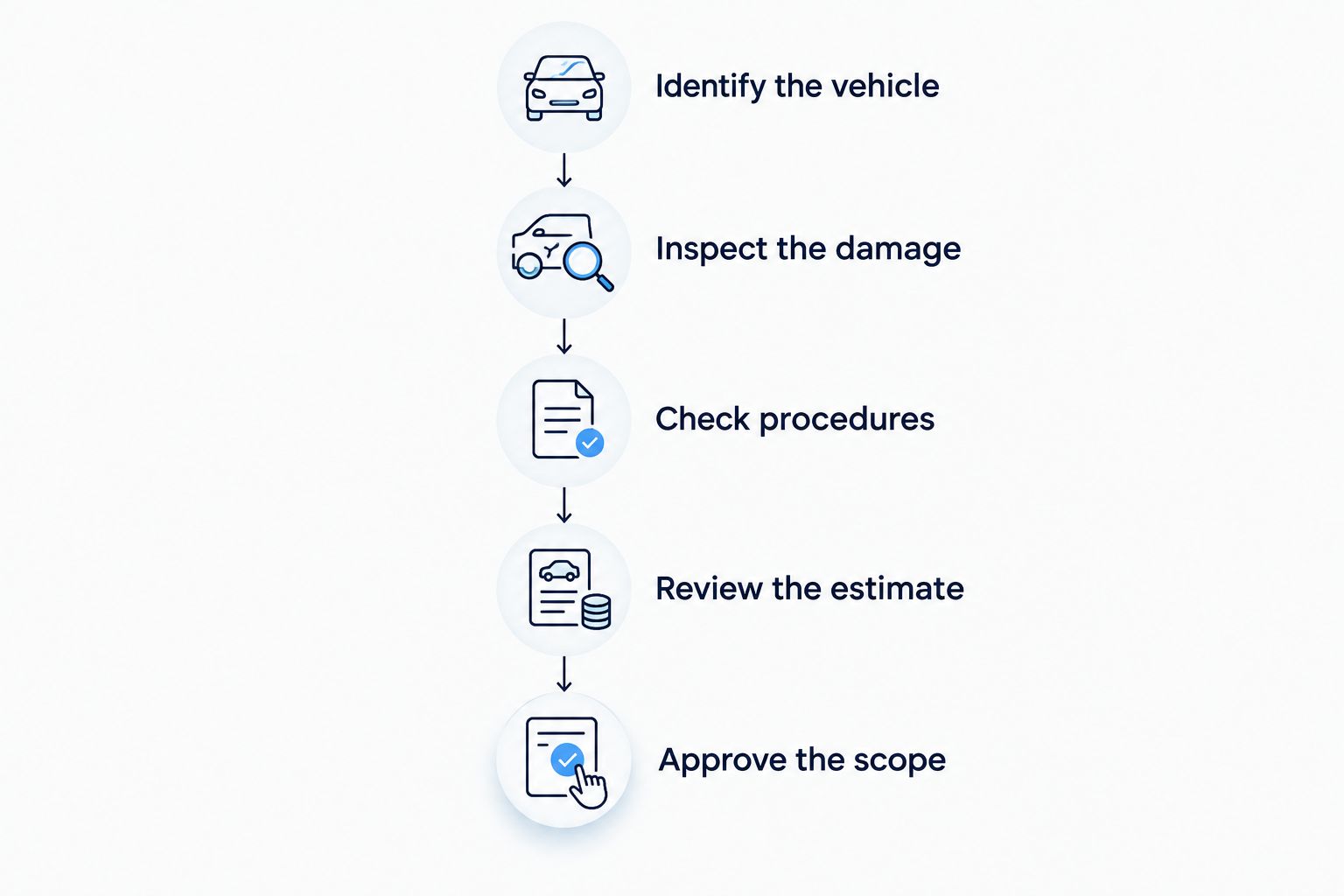
Approve the method after the vehicle, damage, and repair requirements have been checked.
Keep the written explanation with your repair paperwork. The guide to records after collision repair in Los Angeles explains the documentation questions to raise before handover.
Does a cracked bumper affect parking sensors or radar?
A cracked bumper cover can involve the area around parking sensors or radar equipment, but the crack alone does not establish whether those systems are damaged. The shop needs to inspect the relevant components and follow the vehicle manufacturer’s requirements.
Parking sensors and radar are different technologies. Depending on the vehicle, sensors sit in the cover or other equipment sits behind it; mounting position and the condition of the surrounding area matter.
ADAS means advanced driver-assistance systems, such as systems supporting collision warnings or other driving assistance. Calibration checks or establishes the required alignment of applicable equipment. It is not the same task as repairing plastic or clearing a dashboard warning.
For a 2026 repair authorization, ask whether scanning, calibration, or both are required and why. Do not assume every bumper repair requires calibration, or that an absence of warning lights proves no procedure is needed.
Can I keep driving with a cracked bumper?
A cracked bumper needs assessment before anyone can give vehicle-specific driving advice. Do not treat a small visible crack as proof that the assembly is secure or that nothing behind it was affected.
If the cover is loose, dragging, rubbing a tire, or at risk of detaching, do not continue driving. Arrange assistance rather than trying to hold it in place for normal use.
Tell the repairer about warning lights, fluid leaks, damaged lights, or changes in how the vehicle drives after the impact. Those issues extend beyond the cosmetic condition of the bumper cover and need attention when deciding how to move the vehicle.
Will insurance pay for repair or replacement?
Insurance payment depends on your policy, the circumstances of the loss, and the claim decision. The repair method should still be explained through the vehicle’s damage and applicable manufacturer requirements.
Ask the shop to distinguish the repair recommendation from the insurer’s payment position. If the estimate changes after disassembly, ask how supporting photos and repair information will be submitted and what authorization you need to provide.
Keep part selection and coverage as separate questions, too. A proposed part type on an estimate does not establish what your policy pays for, and an insurer’s initial estimate does not settle every technical repair requirement.
FAQ
Can a small crack in a plastic bumper be repaired?
A small crack can be repaired when the cover’s material, damage location, condition, and manufacturer instructions permit it. Size alone does not determine whether repair is appropriate.
Is replacing a bumper cover better than repairing it?
Replacement is better when the cover cannot meet the applicable repair requirements; repair is appropriate when it can. Neither choice replaces the need to inspect hidden components.
Can you tell from a photo whether my bumper needs replacing?
A photo supports an initial assessment but does not establish the condition of hidden components. The shop needs to resolve those questions before confirming the full repair scope.
Does bumper replacement include the reinforcement behind it?
Bumper-cover replacement does not automatically include the reinforcement behind it. Ask the estimator to identify each damaged component and list the proposed work separately.
Do parking sensors need calibration after bumper repair?
Calibration requirements depend on the vehicle, affected equipment, and manufacturer procedures. Ask the shop to distinguish parking-sensor checks from any radar-related calibration requirements.
Can I glue a cracked bumper before taking it to a shop?
Do not apply household glue before the repair assessment. Let the shop identify the material and appropriate repair method, and arrange assistance if the cover is insecure.
What should I bring to a bumper repair assessment in 2026?
Bring your vehicle details, impact photos, and any claim information for your 2026 bumper repair assessment. Describe warning messages and changes you noticed after the collision.
One last thing
The most useful question is not whether someone can hide the crack. It is whether the proposed repair meets the vehicle manufacturer’s requirements. Ask for that explanation before approving paintwork, because appearance alone does not establish the condition of the bumper assembly.
Crashfix collision repair is for Los Angeles County drivers seeking an assessment after an accident. Before booking your 2026 repair assessment, gather your VIN and impact photos, then ask the relevant location to explain the cover decision, hidden-damage inspection, proposed parts, and any sensor-related procedures.
Arrange your bumper assessment
Discuss the crack, inspection needs, and proposed repair method before authorizing work.