Can a Honda windshield camera be affected by body repairs?
Yes. Body repairs can affect a Honda windshield camera when the work changes its mounting, the glass it looks through, or the vehicle geometry used for aiming. Whether your Honda needs camera calibration depends on its exact model, equipment, damage, and Honda repair procedures—not simply whether a warning light appears.
TL;DR
- Choose a Honda certified body shop that explains camera checks using your vehicle’s specific repair procedures.
- Honda Sensing camera calibration and diagnostic scanning perform different jobs; neither automatically replaces the other.
- Windshield, camera-mounting, structural, and alignment work deserve a documented review of calibration requirements.
- Crashfix offers Los Angeles County collision repair; verify Honda certification for the specific location before booking.
Why this matters
A repaired panel can look right while a camera-related repair requirement remains unresolved. Your windshield camera helps supported driver-assistance features interpret the road ahead, so the repair plan must address more than the visible damage.
When comparing a Honda certified body shop in 2026, ask how the shop identifies required inspections, scans, and calibration. The useful evidence is a vehicle-specific repair plan followed by completion records. This guide to how body shops document repair quality explains what to look for beyond finished paintwork.
A clear dashboard is not proof that camera aiming meets Honda’s requirements. Treat a warning light as information, not as the only test of whether the repair is complete.
Can a Honda windshield camera be affected by body repairs?
Yes. The camera’s relationship to the windshield and the road matters, even when the camera housing shows no obvious damage. Body repair can involve glass removal, nearby mounting areas, structural correction, or work affecting alignment and vehicle stance.
That does not mean every dent repair requires calibration. The correct decision comes from Honda service information for your particular vehicle and the operations actually performed.
Windshield replacement
- Why the camera needs consideration: The camera looks through the glass, and its mounting relationship matters
- What you should request: The applicable glass and camera aiming requirements
Camera removal or mounting work
- Why the camera needs consideration: Reinstallation can affect the camera’s position
- What you should request: Confirmation of the required inspection and aiming procedure
Structural repair
- Why the camera needs consideration: Body geometry can change during damage and correction
- What you should request: A review of camera requirements alongside structural measurements
Suspension or alignment work
- Why the camera needs consideration: Vehicle geometry can affect the camera’s relationship to the road
- What you should request: A vehicle-specific check of calibration prerequisites and triggers
Cosmetic panel repair away from the camera
- Why the camera needs consideration: Not every body operation changes the camera’s operating conditions
- What you should request: An explanation of whether any calibration trigger applies
This table is a discussion guide, not a substitute for Honda repair instructions. Ask the shop to connect its calibration decision to your vehicle and repair operations. A general statement that all body repairs require calibration is no more useful than a blanket claim that none do.
Windshield and camera-mounting repairs
The windshield is part of the camera’s viewing environment. Glass damage, unsuitable obstructions, and problems around the camera mounting area deserve attention during repair planning.
If your windshield is being replaced, ask which glass part is specified and how the shop will address the camera afterward. Do not assume that fitting new glass completes the camera-related work. The applicable procedure determines the next steps.
The same distinction applies when a camera is removed and reinstalled. A unit that clips into place still needs whatever inspection or aiming Honda specifies for that operation.
For a repair booked in 2026, request current instructions for your Honda’s model year and equipment. The appointment year does not identify the vehicle’s camera system, and the Honda Sensing name alone does not establish a single procedure for every Honda.
Structural, suspension, and alignment repairs
Structural repair means correcting damage to the vehicle’s load-bearing body structure. That work can change the relationship between the body, suspension, and road, making camera requirements part of the repair-planning discussion.
Wheel alignment adjusts wheel geometry. Camera calibration establishes or checks the camera’s aiming according to the applicable procedure. An alignment report does not replace a required camera calibration report.
Ask the shop how it will sequence these operations. If a calibration procedure requires particular vehicle conditions, those conditions need to be established before the procedure is completed.
The benefit of a coordinated repair plan is straightforward: structural, mechanical, and camera work are considered together. The limitation is equally important: no generic checklist can determine every requirement without identifying the specific vehicle and damage.
Cosmetic repairs away from the windshield camera
A paint repair or isolated dent does not automatically mean the windshield camera needs recalibration. The scope matters: ask whether the job includes glass removal, camera disturbance, structural correction, or another operation identified in Honda’s instructions.
That distinction protects you from both incomplete repairs and unexplained additions to the estimate. A documented decision that calibration is not required is more useful than an unsupported verbal assurance.
For example, a repair described as bumper work can include other operations after inspection. Ask what the full repair involves rather than deciding from the name of the damaged panel.
Judge the calibration decision by the work performed, not by how small the accident looked. Visible damage alone does not establish the complete repair scope.
Why camera requirements vary
Honda camera requirements depend on the vehicle and repair, not the shop’s preferred routine. These factors explain why two apparently similar estimates can include different operations:
- Vehicle identity: The model, model year, and installed equipment determine which service instructions apply.
- Camera disturbance: Removal, replacement, or work on the mounting area can introduce requirements that paintwork alone does not.
- Glass work: Windshield replacement requires a review of the applicable glass and camera procedures.
- Body geometry: Structural damage and correction can affect the conditions relevant to camera aiming.
- Suspension and alignment: Work affecting vehicle geometry needs to be considered alongside camera prerequisites.
- Diagnostic findings: Fault codes and observed symptoms guide diagnosis, but their absence does not cancel a procedure-based requirement.
Your insurer’s authorization is a separate issue. A repair requirement explains what the vehicle needs; your policy and claim handling determine coverage. Do not accept either an insurance approval or denial as a technical explanation of the calibration requirement.
How should a Honda certified body shop handle camera concerns?
Use this sequence when discussing your 2026 repair. You do not need to interpret service manuals yourself; you need a clear explanation of how the shop applies them.
- Identify the vehicle. Provide the vehicle identification number and describe the accident, warning messages, and any prior windshield or camera work you know about.
- Review repair procedures. Ask which Honda instructions apply to the planned glass, body, structural, and alignment operations. Request an explanation of any required camera aiming.
- Complete prerequisite work. Ask how structural correction, glass installation, alignment, and other specified conditions will be addressed before calibration.
- Perform required calibration. Establish who performs the work and how the result is documented. A shop can coordinate outside work, but responsibility and records should remain clear.
- Collect repair records. Request the applicable scan results, calibration documentation, and an explanation of unresolved findings before pickup.
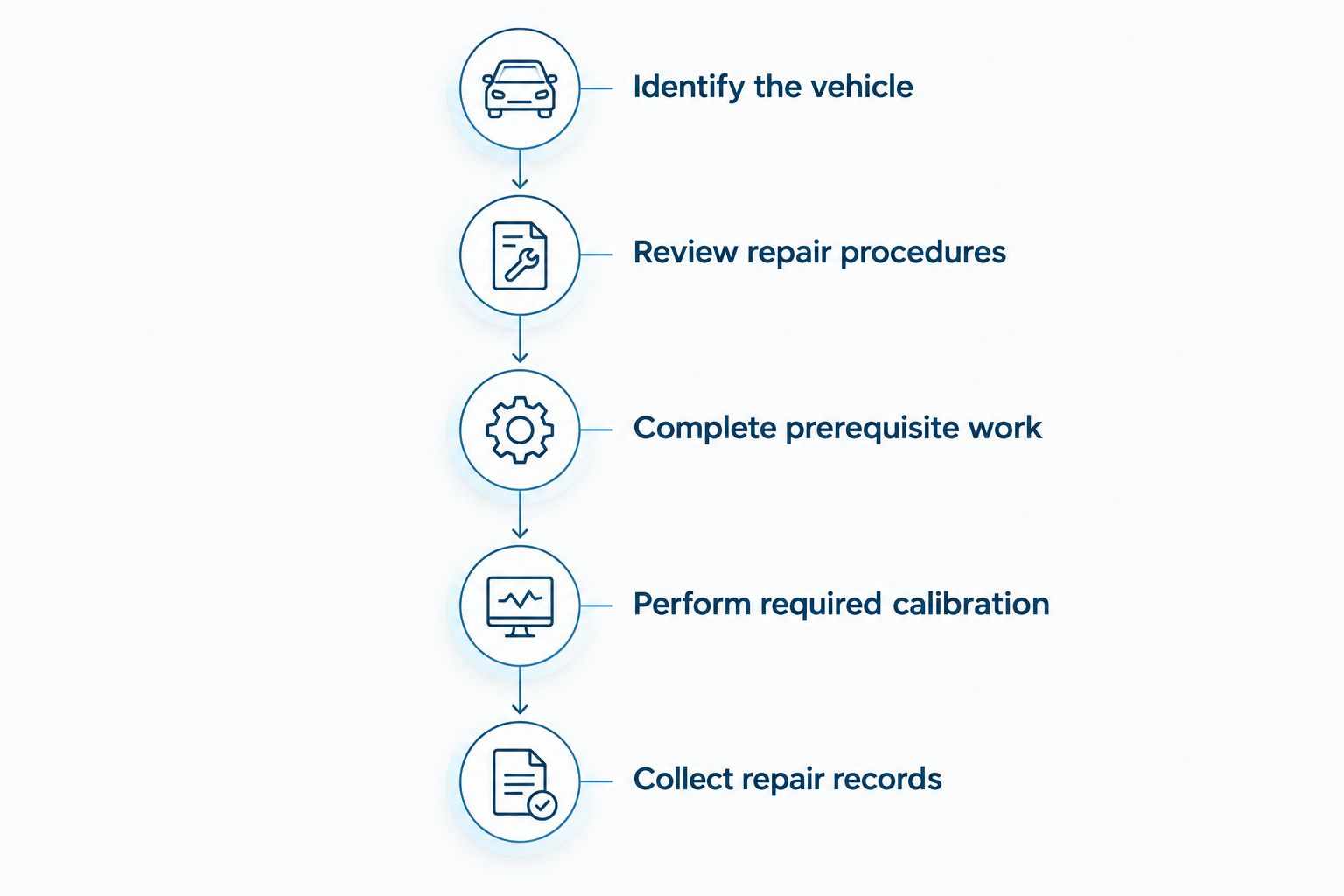
Camera calibration belongs within the repair sequence, after its required prerequisites.
Ask the shop to explain unfamiliar terms in ordinary language. A diagnostic scan reads information from electronic systems, including stored faults. Calibration is a separate procedure used to establish or verify sensor aiming under specified conditions.
A road test also has a separate purpose. It can help evaluate vehicle operation, but an ordinary drive is not automatically the manufacturer’s specified dynamic calibration procedure.
Does Honda certification prove the camera work is complete?
No. Certification and repair completion answer different questions. Certification concerns a facility’s recognized qualifications; completion records concern the work performed on your vehicle.
Verify any Honda certification claim for the exact location you intend to use. Do not assume that a business with several locations holds the same manufacturer credentials at each address, or that certification for another manufacturer establishes Honda certification.
Crashfix collision repair is a local option for Los Angeles County drivers who need post-accident body repairs. Before choosing a location, ask it to confirm the Honda-specific credentials and camera-work arrangements relevant to your vehicle.
For drivers comparing repairs in West Los Angeles, Burbank, or El Segundo, convenience matters, but it does not replace documentation. Ask who performs calibration, where it happens, and which records you will receive. The answers should describe a process, not just a credential.
Can a diagnostic scan replace camera calibration?
No. A scan and a calibration perform different jobs. A scan helps identify electronic faults; calibration addresses aiming or reference conditions specified by the manufacturer.
A report showing no relevant fault codes does not independently prove that the camera meets its aiming requirements. Conversely, calibration does not eliminate the need to diagnose a remaining fault or warning message.
For your 2026 repair file, keep these records separate enough to understand what each establishes. Ask the shop to explain any failed procedure, repeated attempt, or outstanding issue before you accept the vehicle.
What should you ask before authorizing the repair?
Start with the repair plan, not a promise about the dashboard. Ask these questions before work begins:
- Which Honda procedure determines whether my camera needs calibration?
- Will you remove the windshield, camera, or camera mounting components?
- Does the repair include structural correction or alignment work?
- Which glass and replacement parts are specified, and why?
- Who will perform any required calibration?
- What happens if calibration cannot be completed successfully?
- Which scan, measurement, and calibration records will I receive?
Ask for proposed changes to be explained when inspection reveals additional damage. A preliminary estimate is not always the final repair plan, and additional operations should have a stated reason.
The same approach applies if you are paying out of pocket. You can choose how to handle the claim, but that decision does not change the manufacturer’s repair requirements.
FAQ
Can body repairs affect my Honda windshield camera even if it was not hit?
Yes. Work involving the windshield, camera mounting, body geometry, or alignment can make camera requirements relevant even without direct camera damage. The applicable Honda procedure determines what is required.
Does every Honda body repair require camera calibration?
No. Calibration depends on the vehicle and the operations performed. Ask the shop to explain the specific procedure that requires calibration or supports its decision that calibration is unnecessary.
Can I assume the camera is fine if there are no warning lights?
No. The absence of warning lights does not prove that camera aiming meets Honda’s requirements. Required inspections and calibration still depend on the repair procedure.
Will replacing my Honda windshield mean the camera needs attention?
Yes. Windshield replacement requires a review of the applicable camera inspection and aiming instructions. Ask the installer and repair shop how those requirements will be completed and documented.
Is wheel alignment the same as Honda camera calibration?
No. Wheel alignment addresses wheel geometry, while camera calibration addresses the camera’s aiming or reference conditions. Completing one does not substitute for the other when both are required.
Does choosing a Honda certified body shop guarantee insurance coverage?
No. Shop certification does not determine your insurance benefits. Discuss technical repair requirements with the shop and coverage questions with your insurer.
What camera-related paperwork should I request at pickup?
Request the applicable diagnostic scan results and calibration documentation, plus an explanation of any unresolved findings. Ask the shop to identify the vehicle and procedures covered by those records.
One last thing
Ask what the final road test proves—and what it does not. A vehicle that feels normal on the drive home still needs any camera procedure required by its repair instructions. Do not deliberately trigger lane warnings or automatic braking to test the repair yourself.
Before booking a 2026 repair with Crashfix, have your vehicle identification number, damage photos, and any dashboard messages ready. Request an estimate discussion that includes windshield-camera requirements, genuine parts, and documentation—not just panel replacement and paint.
Discuss your Honda repair
Ask Crashfix about the repair plan, location-specific credentials, and required camera checks.