What should Honda owners ask after a rear-end collision?
After a rear-end collision, ask who will inspect hidden damage, which Honda repair procedures apply, what parts the estimate specifies, and whether your vehicle needs diagnostic scans or calibration. When choosing a honda certified body shop, verify the specific location’s current Honda certification rather than relying on a general certification claim. Keep the repair requirements separate from what your insurance policy covers.
TL;DR
- Choose a honda certified body shop by verifying the location’s Honda certification and vehicle-specific repair plan.
- Honda rear-end collision repairs need an inspection beyond the visible bumper damage.
- Ask for documented parts decisions, required diagnostic scans, and any applicable sensor calibration.
- Crashfix offers collision repair in Los Angeles County; confirm Honda credentials with the location before booking.
Why this matters
A bumper cover is the visible outer panel, not the entire rear-impact protection system. Damage behind it can change the repair plan, and a clean-looking exterior does not establish that mounting points, wiring, or underlying components are undamaged.
Crashfix is a collision repair option for Los Angeles County drivers seeking an assessment after an accident. Before choosing a location, ask Crashfix to confirm its current Honda credentials and explain how it will document your vehicle’s repair requirements. A general OEM-certified description does not establish Honda certification at every location.
What should Honda owners ask after a rear-end collision?
Ask these questions before authorizing repairs. The useful answer is not simply that the shop handles Hondas; it is an explanation tied to your vehicle, its damage, and Honda’s applicable instructions.
- Certification: “Does this exact location hold current Honda collision repair certification, and how can I verify it?” Request current confirmation for your 2026 repair rather than relying on an undated badge.
- Damage inspection: “What needs to come apart before you can assess the damage?” Ask whether the initial estimate includes inspection behind the bumper cover and checks of adjacent components.
- Repair procedures: “Which Honda procedures apply to the damaged areas?” Ask how the shop decides whether a component can be repaired or must be replaced.
- Parts selection: “Which parts are genuine Honda parts, and what other parts appear on the estimate?” Have the shop identify proposed substitutions before you authorize them.
- Electronic checks: “Does my Honda require diagnostic scans, calibration, or both?” Ask what triggers each operation and what documentation you will receive.
- Repair records: “What will the final invoice and supporting records show?” Request an explanation of supplements, completed checks, and any unresolved concerns.
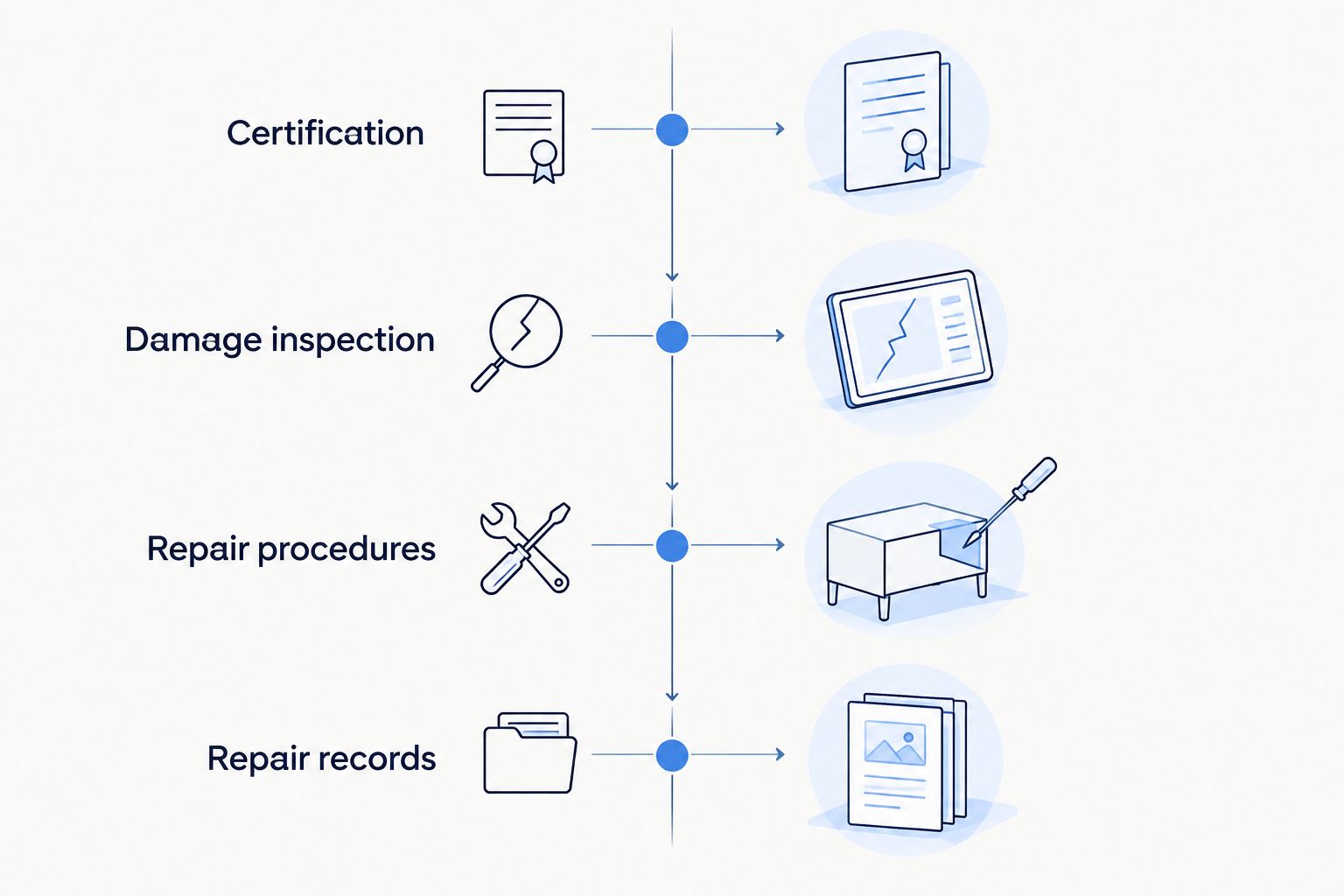
Verify the repair approach before authorization, then collect records of the completed work.
These questions establish what the shop intends to do before you approve the work. If an answer stays vague, ask for the relevant procedure, estimate entry, or document rather than accepting a verbal assurance.
Verify Honda certification for the location you will use
Ask for the facility’s exact name and address, then check its current status through Honda’s official collision repair network information. Match the listed location to the place receiving your car, not just the company name on an advertisement.
Manufacturer certification, technician training, and a business’s general credentials describe different things. Ask the shop to distinguish them. None replaces a repair plan that addresses your particular Honda’s model, equipment, and damage.
For a 2026 repair, save the certification confirmation with your estimate. This gives you a dated record of what you checked when choosing the facility; it does not guarantee an insurance payment or a particular repair outcome.
Do not treat a logo as the repair plan. Ask how the location obtains current Honda procedures and documents the operations those procedures require.
Ask what lies behind the bumper cover
Ask the estimator to explain the difference between the bumper cover and the components behind it. Depending on the vehicle and impact, inspection can involve the absorber, reinforcement, attachments, rear body area, trunk or liftgate opening, and nearby wiring.
Describe what changed after the collision. A trunk that no longer closes normally, a new warning message, a loose panel, or a fluid leak belongs in the intake notes even if the exterior damage looks limited. Do not repeatedly operate a damaged closure just to demonstrate the problem.
Ask whether the estimate is preliminary or based on disassembly. Disassembly means removing components to inspect areas that are otherwise concealed; it can reveal repair needs that photographs alone cannot establish.
A supplement is an addition or revision to the original estimate. Ask who will explain newly identified damage, obtain any necessary authorization, and discuss insurance approval before additional work proceeds.
Separate inspection, diagnostic scans, and calibration
These operations answer different questions. Ask the shop which ones apply to your Honda and why; do not accept them as interchangeable descriptions of a general check.
Physical inspection
- Best for: Finding visible and concealed collision damage
- What it contributes: Examines panels, attachments, components, and affected areas
- What it does not establish: Does not replace electronic diagnosis
Diagnostic scan
- Best for: Identifying reported electronic faults
- What it contributes: Reads information from vehicle control systems
- What it does not establish: Does not prove that every component is undamaged or correctly aimed
Sensor calibration
- Best for: Setting an affected system to its specified reference
- What it contributes: Follows an applicable procedure for the vehicle and equipment
- What it does not establish: Does not repair damaged brackets, wiring, or body structure
ADAS means advanced driver assistance systems. On appropriately equipped vehicles, rear-area equipment can include systems associated with parking assistance or blind-spot monitoring. Equipment varies, so ask the shop to identify what your vehicle actually has instead of assuming every Honda uses the same arrangement.
No dashboard warning is not proof that calibration is unnecessary. The applicable repair procedure, affected components, and work performed determine the checks to discuss. Ask whether sensor removal, mounting changes, or replacement work creates additional requirements for your vehicle.
If another business performs calibration, ask who coordinates it and provides the resulting report. The important distinction is between a planned operation on an estimate and a documented completed operation at delivery.
Ask how parts and repair decisions are justified
Ask the shop to identify each proposed replacement part and its source. OEM means original equipment manufacturer; an OEM designation is not the same description as an aftermarket or recycled part.
For a Honda repair, ask whether genuine Honda parts are specified and whether any proposed alternative conflicts with Honda’s applicable repair position or procedure. Do not assume the insurer’s estimate and the shop’s repair plan use identical parts descriptions.
A repair-versus-replace decision also needs an explanation. A bumper cover, reinforcement, mounting bracket, and rear body panel serve different purposes, so one general answer about repairing plastic does not settle every damaged component.
If you want background before discussing the estimate, read about whether a cracked bumper can be repaired or needs replacing. Then ask the estimator to connect that decision to the actual damage and applicable procedure on your vehicle.
Why rear-end collision repair requirements vary
The repair plan depends on the vehicle and the impact, not simply on whether the bumper looks scratched or dented. Ask the estimator to explain these factors in plain language:
- Damage location: A central impact and a corner impact involve different areas to inspect. Have the shop identify the affected attachments and adjacent panels.
- Hidden damage: Inspection behind exterior panels can reveal damage absent from the initial photographs. Ask what remains uninspected on a preliminary estimate.
- Vehicle equipment: Sensors, cameras, wiring, and other installed equipment affect the required checks. Confirm equipment using your actual vehicle information.
- Repair method: Removing, replacing, or repositioning components can change the applicable procedures. Ask why each operation appears in the repair plan.
- Existing condition: Prior repairs and unrelated damage need to be distinguished from the current collision. Request photographs and an explanation where that distinction affects the estimate.
For an estimate prepared in 2026, ask the shop to use current vehicle-specific instructions rather than a remembered approach from a previous repair. A similar-looking Honda is not a substitute for identifying your vehicle correctly.
What should I ask my insurer before approving repairs?
Ask your insurer which coverage applies, what your deductible is, and how it handles the shop’s proposed parts and supplemental damage. Ask the repair facility a different question: what does the vehicle require under the applicable repair procedures?
Those conversations overlap, but they are not the same. An insurer’s approval establishes its payment decision; it does not by itself explain why a repair operation is technically appropriate.
Before signing, understand the repair authorization, responsibility for disputed items, and how additional work receives approval. Ask about rental arrangements separately because rental benefits and limits depend on the policy and claim circumstances.
Keep the estimate, insurer correspondence, and authorization together. If the shop and insurer disagree, ask for the disputed item and the reason in writing rather than trying to resolve an unclear verbal summary.
Can I drive my Honda after a rear-end collision?
Do not judge drivability from the bumper’s appearance alone. Loose components, leaking fluids, damaged lighting, a closure that will not latch, unusual handling, or warning messages require attention before you decide to drive.
Tell the repair facility what you observe and ask how to arrange an assessment or authorized towing. A remote conversation cannot establish the condition of concealed components, so do not treat a reassuring photograph as a substitute for inspection.
If your Honda is electrified, identify the model and describe any warnings or visible damage when arranging assistance. Do not touch damaged high-voltage components or attempt to inspect them yourself.
What records should I receive when the repair is finished?
Ask for a final itemized invoice, an explanation of supplements, and documentation of applicable scans and calibration. Request clarification of any difference between the authorized estimate and the work shown as completed.
At pickup, have the facility explain the repaired areas and demonstrate relevant functions. Ask about warning messages, closures, lights, parking assistance, and other affected equipment without assuming that a quick walkaround verifies every repair operation.
Your 2026 repair file should connect the original damage, authorized work, and final records. Keep photographs and written explanations together, especially if you later need to discuss the repair with an insurer, lessor, or buyer.
FAQ
How do I verify a Honda certified body shop near me?
Verify the exact facility through Honda’s official collision repair network information and match its address to your chosen shop. Ask the facility for current confirmation rather than relying only on an advertisement or an undated logo.
Does Crashfix have Honda certification at every location?
Confirm Honda certification directly with the specific Crashfix location before booking. Its general OEM-certified description does not establish Honda certification at every facility.
Does a rear-end collision always require sensor calibration?
Calibration requirements depend on your Honda’s equipment, the affected components, and the applicable repair procedures. Ask the shop to explain the requirement for your vehicle and provide documentation if calibration is performed.
Can a diagnostic scan find all hidden collision damage?
A diagnostic scan does not find all hidden collision damage. Physical inspection and any necessary disassembly address components and damage that electronic fault information alone cannot establish.
Will my insurance pay for genuine Honda parts?
Payment for genuine Honda parts depends on your policy and the claim decision. Ask the shop to identify the required parts and ask your insurer to explain coverage for those specific estimate entries.
Why did the estimate change after the bumper came off?
Removing the bumper cover can expose damage that was not visible during the initial inspection. Ask for photographs, an itemized supplement, and an explanation of any additional authorization before the extra work proceeds.
What should I bring to a rear-end collision estimate?
Bring your vehicle information, available collision photographs, claim details if applicable, and a written list of changes you noticed after the impact. Include warning messages, unusual noises, closure problems, and any prior damage relevant to the inspection.
One last thing
Ask what is still unknown before asking when the car will be finished. An estimate based on exterior inspection and a repair plan based on exposed damage describe different stages of understanding the job.
For a repair booked in 2026, keep a short written list of symptoms and questions on your phone. Bring it to the estimate so the discussion covers your concerns, not just the most visible dent.
Related guides
- How body shops document repair quality
- What records to get after collision repair in Los Angeles
- How to arrange a body shop drop-off in Burbank
Before arranging an estimate with Crashfix, identify the location you plan to use and request confirmation of its Honda credentials. Share your vehicle details, collision photographs, and symptoms, then ask what the initial assessment includes and what remains subject to inspection.