Can a Los Angeles body shop repair a car seat mounting area?
Yes—a Los Angeles body shop can repair a damaged car seat mounting area when the vehicle manufacturer permits the repair and the shop has the required equipment and training. Some damage requires replacement of the mounting reinforcement or surrounding floor structure rather than straightening or welding the existing metal. For a 2026 repair decision, the deciding evidence is the vehicle-specific repair procedure and an inspection—not whether the seat still slides or bolts into place.
TL;DR
- Choosing an auto body shop Los Angeles drivers can trust starts with vehicle-specific seat mounting and structural repair procedures.
- A seat that bolts down can still have damaged mounting points, floor reinforcements, or tracks.
- Repair versus replacement depends on manufacturer instructions, material condition, and damage location.
- Crashfix is an option for Los Angeles County drivers seeking structural collision repair assessment.
Can a Los Angeles body shop repair a car seat mounting area?
Yes, but the manufacturer’s repair instructions determine what the shop can repair and what it must replace. The mounting area includes more than the visible bolt holes. It can include threaded attachments, reinforced floor sections, brackets, and the structure supporting the seat.
Ask the shop to explain which component is damaged before authorizing work. The same complaint—a seat that rocks after an accident—can involve the seat mechanism, the body attachment, or both. A useful explanation connects the damage photos to the proposed work; this guide to how body shops document repair quality explains what to request.
Repairing the existing mounting structure
- Best for: Damage the manufacturer explicitly permits repairing
- Benefit: Retains the original component where an approved repair exists
- Limitation: Not appropriate where material or damage restrictions prohibit repair
Replacing the affected body component
- Best for: Damage requiring replacement under manufacturer procedures
- Benefit: Replaces the damaged reinforcement or floor component
- Limitation: Requires the specified joining methods and access to surrounding structure
Repairing or replacing seat hardware
- Best for: Damage isolated to tracks, brackets, or approved serviceable hardware
- Benefit: Addresses the damaged seat component
- Limitation: Does not correct damage to the body beneath the seat
These are inspection outcomes, not interchangeable packages. A repair can involve both seat-component replacement and work on the underlying body.
Why this matters
Seat attachments help hold the seat in position during a collision. Depending on the vehicle, restraint components can also connect to the seat assembly. Damage beneath the carpet therefore deserves more attention than a cosmetic floor dent.
For a Los Angeles County driver choosing a shop in 2026, the useful question is not simply whether the business performs welding. Ask whether it can identify and follow the manufacturer’s procedure for your exact vehicle and damaged component.
Crashfix is an option for Los Angeles County drivers seeking structural collision repair assessment. Crashfix operates OEM-certified collision repair centers, but you should still confirm the relevant location’s current certification for your vehicle manufacturer. A certification for one manufacturer does not establish certification for another.
What exactly is damaged beneath the seat?
A shop should distinguish the seat assembly from the body structure before writing the repair plan. Describe what changed after the accident, but let inspection establish the cause.
Seat tracks and brackets
Tracks allow the seat to move and lock into position; brackets connect parts of the assembly. Damage here can affect movement, alignment, or locking even when the floor attachments remain intact.
Tell the estimator if the seat began rocking, sitting unevenly, or failing to lock after the collision. Do not repeatedly force an adjustment to demonstrate the problem. The shop needs to inspect the mechanism and its attachments separately.
Mounting points and reinforcements
Mounting points transfer loads into reinforced portions of the vehicle body. A damaged threaded attachment, cracked reinforcement, or distorted mounting surface is not resolved merely by tightening a bolt.
A bolt that tightens is not proof that the mounting structure is sound. Ask the shop to identify the affected attachment and explain whether the manufacturer permits its proposed repair.
Floor structure and adjacent damage
A collision can deform the floor around an attachment without producing an obvious exterior symptom. Inspection must establish whether the problem stays within the mounting area or extends into neighboring structure.
That distinction matters because repairing the visible spot alone does not address damage elsewhere. The repair plan should describe the affected area clearly enough that you understand what the shop inspected and what work it proposes.
How should a shop assess a seat mounting repair?
A sound assessment connects vehicle identification, physical inspection, manufacturer instructions, and verification. Use this sequence when discussing a 2026 collision repair estimate.
- Vehicle identification. Give the shop the vehicle identification number and explain the collision, seat position, and symptoms. Vehicle-specific information matters because repair instructions differ across models and configurations.
- Damage inspection. Ask what access is necessary to inspect the mounting points, seat hardware, floor, and nearby reinforcements. Carpet and trim can conceal damage; an exterior walkaround does not establish the condition underneath.
- Procedure review. Ask the estimator to explain the applicable manufacturer instructions, including repair restrictions, replacement requirements, joining methods, and fasteners.
- Repair planning. Request a written scope separating seat work, structural work, and any required electrical or restraint-system procedures. Ask how newly exposed damage will be documented and authorized.
- Final verification. Request the checks required by the repair procedure, along with records showing what was completed. These can include attachment checks, seat operation, measurements, and relevant diagnostic results.
The sequence is useful because each decision depends on the evidence before it. A replacement recommendation should follow inspection and procedure review, not a blanket assumption that every damaged floor needs replacement.
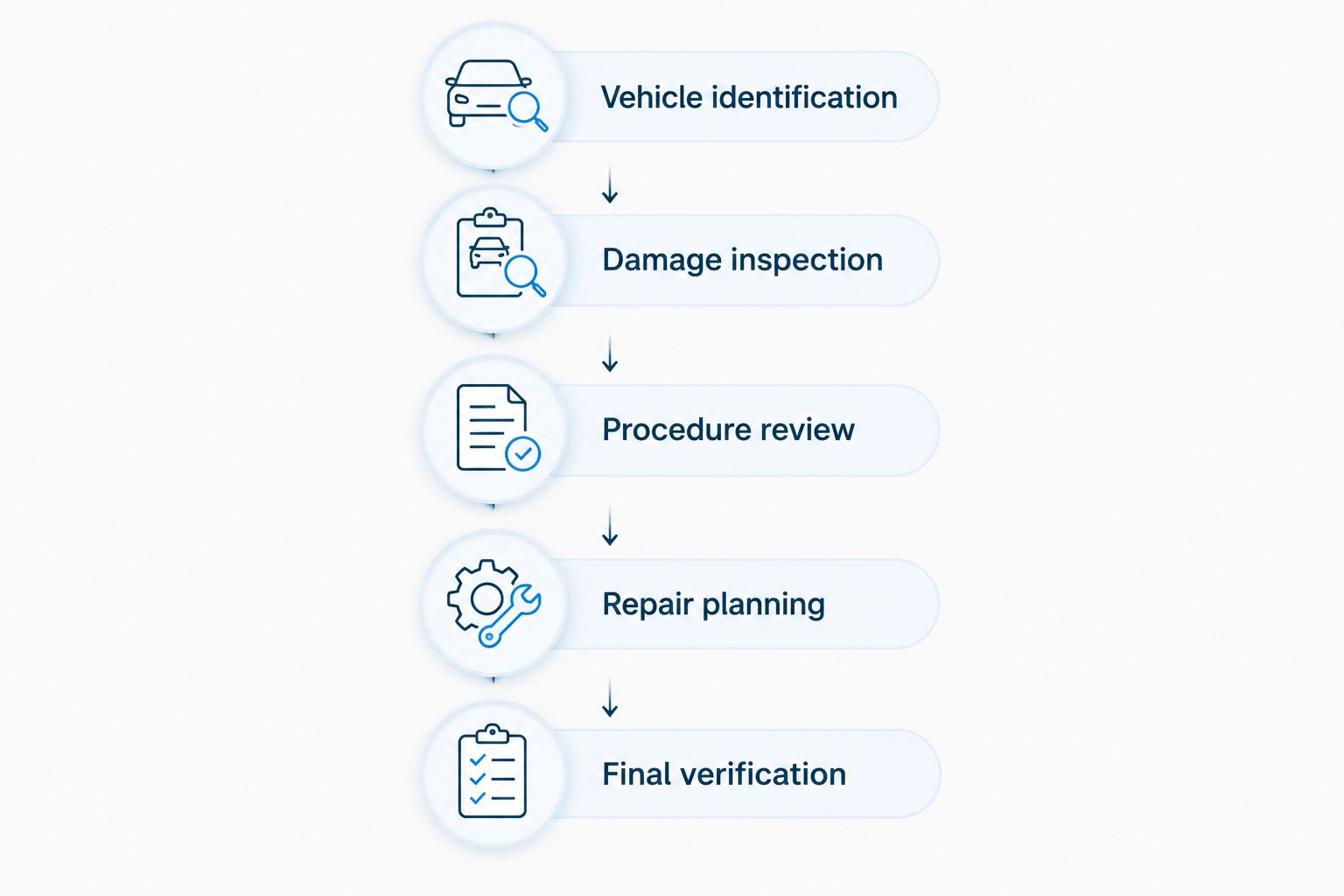
The repair decision should follow inspection and manufacturer procedure review.
Why seat mounting repairs vary
Seat mounting repairs vary because the damaged component and the permitted repair method vary. These factors deserve a clear answer before work begins:
- Vehicle construction. Different materials and reinforcement designs carry different repair restrictions. Ask which material is damaged and how that affects the proposed method.
- Damage location. A damaged seat track is a different repair problem from a torn floor reinforcement. The estimate should identify the component, not just say seat repair.
- Damage extent. Cracking, tearing, distortion, and damaged threads require assessment against the applicable procedure. Appearance alone does not establish repairability.
- Required access. Removing interior components can be necessary to inspect or repair the attachment correctly. Ask what the shop needs to remove and why.
- Connected systems. Seat wiring, restraint components, and occupant-detection equipment require attention when affected by the collision or repair operations. The vehicle’s instructions determine the required checks.
- Previous work. Earlier welding, corrosion, or an old repair can change the condition the shop encounters. Ask the estimator to distinguish collision damage from pre-existing conditions.
Insurance authorization is a separate issue. The manufacturer’s procedure establishes the repair requirements; your policy and claim circumstances determine coverage.
What should you ask before approving the repair?
Ask for the damaged component, the applicable procedure, and the proposed verification—not a general promise that the seat will be secure. Those details make estimates easier to compare.
Use these questions with any shop:
- Which attachment, reinforcement, floor section, or seat component is damaged?
- Does the manufacturer permit repair at that location, or require replacement?
- Which parts and fasteners does the procedure specify?
- What genuine replacement parts are proposed, and how are they identified on the estimate?
- What inspections or measurements support the repair decision?
- Which checks will document completion?
A general OEM-certified description does not answer all of these questions. For Crashfix or any other collision repair provider, confirm the relevant location’s credentials and the procedure for your vehicle before approval.
If you live in West Los Angeles, work in Burbank, or need a drop-off near El Segundo, convenience matters. It should narrow your choices only after you establish that the location can perform the required work.
Can you drive with a loose seat after an accident?
Do not treat a loose seat as a cosmetic problem or assume the vehicle is safe to drive. Describe the movement to the repair facility and ask about transport before bringing the vehicle in.
A seat that rocks, shifts unexpectedly, or fails to lock needs assessment. Tightening visible bolts yourself does not determine whether the threads, reinforcement, or surrounding floor suffered damage.
For a 2026 repair booking, explain the seat concern when you first contact the shop rather than waiting until drop-off. That gives the facility the information needed to discuss inspection and arrival arrangements.
Does a seat mounting repair require electronic checks?
Electronic checks depend on the vehicle, the collision, and the repair operations. Seats can contain wiring and components associated with airbags, belt systems, power adjustments, and occupant detection.
Ask which manufacturer-required checks apply after removing or repairing the seat. Do not assume every vehicle requires the same calibration, and do not assume reconnecting a plug completes the process.
A diagnostic scan also does not replace structural inspection. Electronic results and physical attachment checks answer different questions; the repair plan should address both where required.
What records should you receive after the repair?
Request records that explain what was damaged, what was repaired or replaced, and how the completed work was checked. For your 2026 repair file, keep the estimate, approved changes, final invoice, and available supporting documentation together.
Useful records include:
- Photos identifying the damaged mounting area and exposed structure.
- An itemized description of repaired and replaced components.
- Identification of replacement parts and relevant fasteners.
- The manufacturer procedure references used for the work.
- Applicable measurement, diagnostic, calibration, or inspection results.
Not every repair produces every type of report. Ask which records apply to your vehicle and repair scope rather than requesting a generic certificate as a substitute for evidence.
At pickup, ask the shop to explain the completed work and demonstrate normal seat adjustment and locking. That demonstration supplements the repair records; it does not replace them.
FAQ
Can a body shop weld a damaged seat mounting bracket?
A body shop should weld a seat mounting bracket only when the vehicle manufacturer permits that repair and specifies the method. Some damaged components require replacement instead; a generic welding proposal is not enough.
Does a loose seat mean the car has frame damage?
A loose seat does not by itself establish frame or structural damage. The cause can involve seat hardware, body attachments, or surrounding structure, so the shop must inspect those areas separately.
Can I fix a damaged seat mount by tightening the bolts?
Tightening bolts does not establish that a damaged seat mount is repaired. The attachment, threads, reinforcement, and surrounding floor need assessment against the manufacturer’s instructions.
Will insurance cover a seat mounting repair after a crash?
Coverage depends on your policy, claim circumstances, and insurer’s decision. Ask the shop to document the collision-related damage and required repair separately from coverage discussions.
Does an OEM-certified shop have certification for every car brand?
OEM certification does not mean a shop is certified for every vehicle manufacturer. Confirm the current certification of the specific location for your vehicle brand.
Can a shop repair the seat mount without replacing the whole floor?
A shop can repair or replace a smaller area only when the manufacturer’s procedure permits that approach. The damage location, material, and extent determine the allowed scope.
What should I send before booking a seat mounting inspection in 2026?
Send your vehicle identification number, collision details, and photos you can take without disturbing the damaged area. Explain any seat movement, locking problem, or warning message, and ask about transport if the seat is loose.
One last thing
Normal seat movement after a repair is necessary, but it is not the whole verification. Ask how the shop checked the attachment beneath the carpet, not just whether the adjustment switch works.
Use the Crashfix website to take the next step toward an estimate. Describe the seat mounting concern specifically and ask the relevant location to confirm its inspection process and manufacturer credentials.
Related guides
- What records should you get after collision repair in Los Angeles?
- What should you do if a body shop finds prior poor repairs?
- What should a Hyundai repair plan include after a side impact?
Request a seat mounting assessment
Describe the collision and seat movement, then ask about inspection and transport arrangements.