Should you repair body damage before selling your car in LA?
Repair body damage before selling your car in Los Angeles when a documented repair is justified by the sale outcome, or when you intend to sell the vehicle as repaired rather than damaged. For minor cosmetic damage, compare written repair estimates with real as-is offers; for damage involving structure, restraints or driver-assistance equipment, establish the repair requirements before deciding how to sell.
TL;DR
- Choose an auto body shop los angeles drivers can question about manufacturer procedures, parts and repair documentation.
- Compare actual as-is offers with the full repair scope before authorizing cosmetic work.
- Crashfix operates OEM-certified collision repair centers; verify the relevant location’s certification for your vehicle.
- Repairing visible damage does not erase accident history or guarantee a higher selling price.
Should you repair body damage before selling your car in LA?
Get the damage assessed first, then decide whether to repair or sell as-is. A dent, cracked bumper and collision-damaged structural component present different decisions, even when the damage looks similar in listing photos.
Use this comparison to choose your next step in 2026. None of these routes guarantees a better financial result.
Repair cosmetic damage
- Best for: Sellers with isolated appearance damage and a documented reason to repair
- Main advantage: Addresses visible defects before listing
- Main limitation: The sale might not recover the repair expense
Complete collision repairs
- Best for: Sellers choosing to restore collision damage before selling
- Main advantage: Addresses the documented repair scope rather than appearance alone
- Main limitation: Hidden damage can expand the initial scope
Sell with damage disclosed
- Best for: Sellers prioritizing an as-is transaction
- Main advantage: Avoids arranging repairs before the sale
- Main limitation: Buyers assess the damage and uncertainty in their offers
Repair records matter whichever route you choose. Understand how body shops document repair quality before you approve work, so you know what evidence to request afterward.
Why this matters
A clean-looking panel is not proof that a collision repair is complete. Paint can conceal the surface while leaving unanswered questions about attachments, underlying damage or required checks.
Your decision has separate financial and repair questions: does repairing the car support your selling plan, and what work does the vehicle actually require? Keep those questions separate. A repair requirement does not disappear because you plan to sell, and an insurance policy does not automatically pay for every repair decision.
Cosmetic damage: compare the repair scope with real offers
A cosmetic defect affects appearance without an identified underlying collision-repair requirement. Do not assign that label yourself just because the mark is small; have the damaged area assessed.
For an isolated scratch or dent, ask what the proposed repair involves. Does the shop propose dent removal, refinishing, panel replacement or work on adjacent panels? Those are different scopes, not interchangeable ways to describe the same job.
Before authorizing work, gather:
- A written description of the damage and proposed repair.
- An as-is offer that accounts for the disclosed damage.
- A separate assessment of the vehicle’s likely sale outcome after the proposed work.
- Any inspection findings that change the damage from cosmetic to collision-related.
Repair cosmetic damage for a documented reason, not because every scratch must disappear before a sale. A buyer’s preference for a cleaner car is not a promise to repay your repair expense.
For a 2026 sale, distinguish an asking price from an offer. A similar vehicle advertised without visible damage does not establish what your own car will sell for after repairs, especially when mileage, condition and accident history differ.
Collision damage: establish what lies beneath the surface
Collision damage needs a repair assessment before it becomes a resale decision. A bumper cover, for example, is the visible outer component; the condition of attachments and components behind it requires separate attention.
Tell the estimator where the vehicle was struck and what changed afterward. Mention warning lights, unusual noises, steering changes, doors that no longer close normally or panels that rub. Do not omit a symptom because you think it will complicate the estimate.
Ask the shop to explain these terms where relevant:
- Structural measurement: checking specified vehicle dimensions against manufacturer information.
- Diagnostic scan: reading electronic systems for fault information; it is not a substitute for physical inspection.
- Calibration: a manufacturer-specified procedure for setting or checking applicable driver-assistance equipment.
- Supplement: additional documented repair work identified after the initial estimate.
Not every vehicle needs every procedure after every impact. The applicable manufacturer procedure and damage findings determine the repair plan. A generic promise to scan everything or recalibrate nothing is not a vehicle-specific explanation.
If the assessment identifies a condition that affects whether you should drive the car, follow the inspection advice about transport. Selling soon is not a reason to keep driving a vehicle with an unresolved concern.
Selling as-is: disclose the condition without guessing
Selling with damage disclosed is a legitimate alternative to arranging repairs first. It is best for a seller who accepts an as-is offer and wants the buyer to evaluate the vehicle in its current condition.
The advantage is straightforward: you do not need to manage a repair before the transaction. The limitation is equally clear: a buyer has to account for both known damage and unanswered questions when making an offer.
Describe what you know, retain photographs and share relevant estimates or inspection records. Avoid describing damage as merely cosmetic unless an assessment supports that description.
An as-is description does not settle every disclosure obligation. For a California sale in 2026, follow the applicable transfer and disclosure requirements, and do not represent a damaged vehicle as fully repaired.
If a buyer asks whether the vehicle is safe, do not substitute reassurance for an inspection. Explain what was inspected, what remains unrepaired and which records are available.
Why the repair-or-sell decision varies
There is no universal rule that body repairs pay for themselves before a sale. Your decision depends on the actual vehicle, damage and transaction.
- Damage depth: a surface defect and damage involving underlying components require different evaluations.
- Repair method: dent removal, refinishing and replacement have different requirements and limitations.
- Vehicle-specific procedures: materials, joining methods and equipment requirements affect the repair plan.
- Sale route: a private buyer, dealer or damaged-vehicle buyer evaluates the transaction differently.
- Condition evidence: photos, estimates and completed repair records explain what happened and what was addressed.
- Payment responsibility: your policy terms and claim circumstances determine coverage, not the fact that repairs are needed.
For a Los Angeles County driver, location also affects the practical decision. Choose a repair arrangement you can manage from West Los Angeles, Burbank or El Segundo without treating convenience as proof of repair qualifications.
How do you make the decision before authorizing repairs?
Use this sequence to keep the financial decision tied to the actual damage. In 2026, the essential evidence is still a written scope, a realistic offer and a clear record of what you authorize.
- Document damage. Photograph the affected area and record symptoms, warning messages and the circumstances of the impact.
- Request inspection. Ask for a vehicle-specific assessment and an explanation of any disassembly needed to establish the scope.
- Compare offers. Obtain an as-is offer and evaluate the proposed repair against a realistic selling outcome.
- Authorize scope. Decide whether to proceed, and confirm how additional findings will be presented for approval.
- Keep records. Retain the estimate, approvals, final invoice and applicable inspection or calibration documentation.
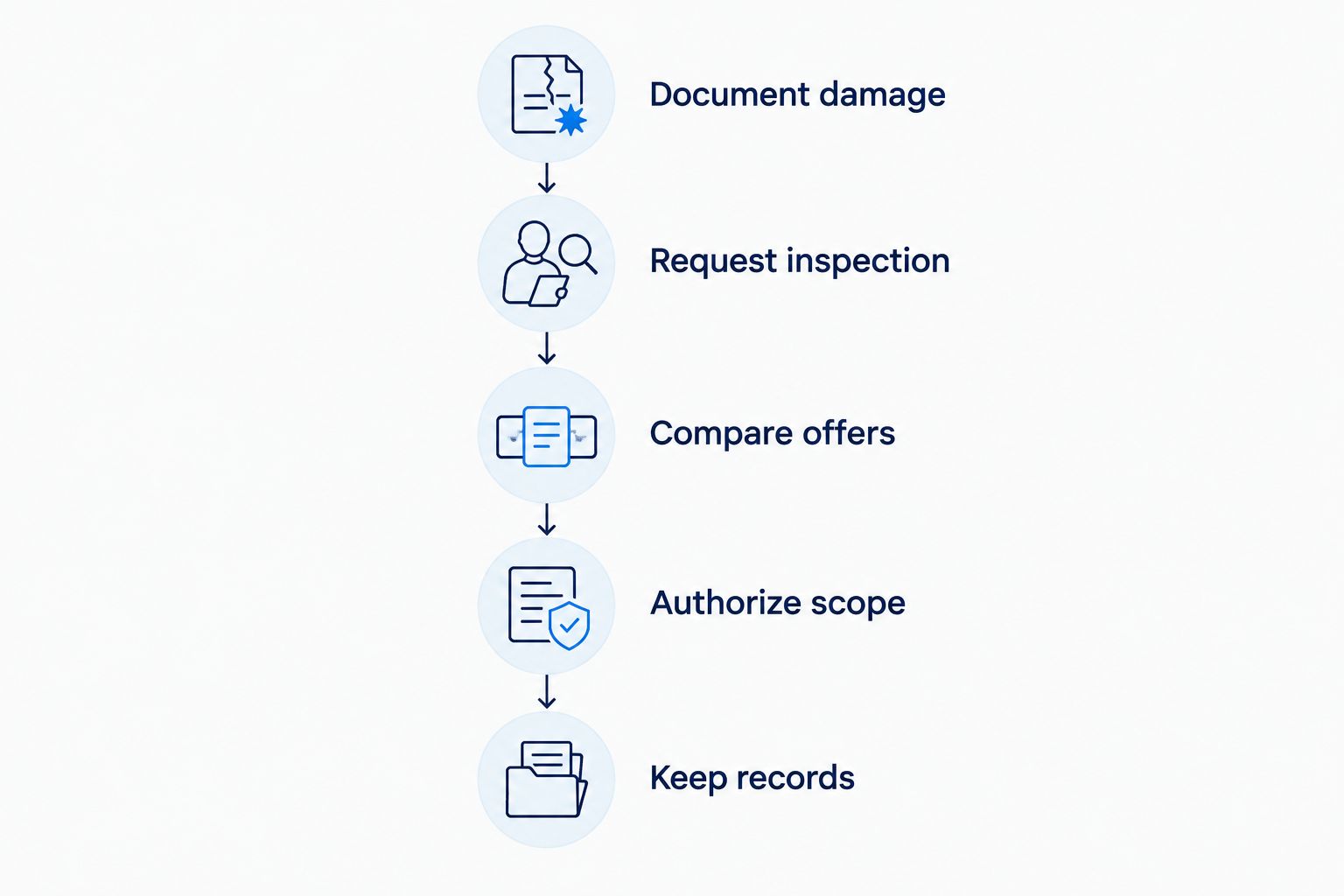
Compare selling options after the inspection establishes the proposed repair scope.
Ask where the initial estimate ends and where further investigation begins. An estimate based on visible damage is not the same as a final repair plan after disassembly.
Before work starts, agree on how the shop will contact you about additional findings. That prevents a resale plan based on an incomplete scope from becoming an open-ended authorization.
Can paint correction replace body repair before a sale?
Paint correction addresses certain surface defects in existing paint; it does not straighten a panel, repair a crack or replace missing paint. Treat surface polishing and collision repair as different services.
When comparing paint correction options, first establish whether the defect is in the existing finish or requires body and paint repair. That distinction determines whether polishing addresses the problem or merely leaves the underlying damage untouched.
Ask the person assessing the finish to explain what will remain visible. A scratch that extends through the paint needs a different discussion from light surface marking, and aggressive polishing is not a substitute for replacing missing material.
Do not authorize a cosmetic treatment to make unresolved collision damage less noticeable to a buyer. If you choose presentation work before selling, keep its description accurate: improving the finish does not establish that the vehicle has received a complete collision repair.
What should you ask a Los Angeles body shop before selling?
Choose a shop that explains the repair requirements before discussing how the finished car will look. Ask which manufacturer procedures apply, what parts the estimate specifies and what documentation you will receive.
Use direct questions:
- What damage is confirmed, and what still requires investigation?
- What manufacturer procedures support the proposed work?
- Does this location hold the relevant certification for my vehicle?
- Does the estimate specify genuine OEM parts, meaning parts supplied through the vehicle manufacturer?
- What scans, measurements or calibrations apply to this repair?
- What records will show that the authorized work was completed?
Crashfix is best suited to Los Angeles County owners seeking an OEM-certified collision repair center rather than cosmetic preparation alone. Crashfix operates collision repair centers offering auto body, paint, structural and EV body repair services; confirm the specific location’s manufacturer credentials and proposed repair scope for your vehicle.
The limitation is important: certification does not predict resale value, guarantee coverage or establish a completion date. Start with Crashfix to discuss the damage assessment, not a promise that repairs will increase your sale proceeds.
Does fixing body damage remove accident history?
Fixing body damage does not erase accident history. A completed repair and an accident record describe different things: one concerns the work performed, while the other concerns the vehicle’s past.
Keep before-and-after photos and repair documents for your 2026 sale. Explain the repair accurately without promising that a vehicle-history report will change or that every buyer will value the repair equally.
Should you file an insurance claim before selling?
A planned sale does not determine whether an insurance claim is covered or worthwhile. Review your policy, deductible and claim circumstances separately from the repair recommendation.
An estimate helps define the damage; it does not establish coverage. Ask your insurer how the policy applies before assuming the claim will fund the work, and keep the coverage conversation separate from authorization to repair.
FAQ
Should I fix a dent before selling my car in Los Angeles?
Fix a dent before selling only when the assessed repair supports your selling plan. Compare the written repair scope with an actual as-is offer rather than assuming the expense will return at sale.
Is selling a car with body damage better than repairing it?
Selling with body damage is better when you prefer the documented as-is transaction to arranging repairs. Disclose the known condition and let the buyer evaluate unresolved damage.
Can a cracked bumper be just cosmetic?
A cracked bumper needs assessment before you describe it as cosmetic. The visible cover does not establish the condition of its attachments or components behind it.
What should I ask an auto body shop in Los Angeles before selling?
Ask for the damage findings, manufacturer-based repair scope, specified parts and completion records. Verify the relevant location’s certification for your vehicle rather than relying on a general certification claim.
Will repairing my car guarantee a higher resale value?
Repairing your car does not guarantee a higher resale value. Evaluate actual offers and keep the repair decision separate from an unsupported prediction about the sale.
Do I need calibration before selling a repaired car?
Calibration is required when the applicable manufacturer procedure calls for it for the vehicle and repair. Selling the car does not replace or remove a required repair procedure.
What paperwork should I give a buyer after body repairs?
Provide relevant repair invoices and available documentation explaining the completed work. Include applicable measurement, scan or calibration records, and describe any known damage that remains unrepaired.
Related guides
- What records should you get after collision repair in Los Angeles?
- Can you get a repair estimate before deciding to file a claim?
- Can a cracked bumper be repaired, or does it need replacing?
One last thing
Ask for two clear lists: work the damage requires and appearance improvements you are considering for the sale. Keeping those lists separate prevents a presentation decision from obscuring an unresolved repair requirement.
Before booking with Crashfix, gather damage photos, vehicle details and any existing estimate. Request an assessment that explains the proposed scope, then compare that scope with your selling options before authorizing repairs.