Tesla collision repair for Los Angeles rideshare drivers
Rideshare drivers’ Tesla collision repair is accident-damage repair guided by manufacturer procedures, with the aim of returning your vehicle to passenger service after required repairs and checks. Choosing a Tesla body shop in Los Angeles also means managing claim documentation, time away from driving and any platform requirements for returning to work.
TL;DR
- For tesla body shop los angeles searches, verify Tesla-specific approval at the exact repair location before booking.
- Crashfix offers collision and EV body repair for Los Angeles County drivers; confirm location-specific Tesla qualifications.
- Separate manufacturer repair requirements from insurance coverage and rideshare platform requirements.
- Choose documented repair work over an unsupported promise of a fast return to driving.
Why collision repair matters for rideshare drivers
Your Tesla is both transportation and a working asset. A damaged bumper, door or quarter panel creates two separate questions: what repair does the vehicle require, and what documentation will your insurer or rideshare platform need?
Choose the repair plan before choosing a promised pickup date. A short estimate is not proof that damage is minor, and a longer estimate is not proof that every listed operation is necessary. Ask the shop to explain each operation using the applicable manufacturer procedure.
For your 2026 repair decision, start with the exact location—not a company-wide certification statement. Crashfix operates OEM-certified collision repair centers across Los Angeles County and offers EV body repair. OEM means original equipment manufacturer; certification for one manufacturer does not establish approval for Tesla work.
Crashfix is an option for Los Angeles County rideshare drivers seeking EV body repair; verify Tesla-specific approval before booking. That distinction matters more than whether a shop is closest to your usual pickup area in West Los Angeles, Burbank or El Segundo.
How to choose and manage your Tesla collision repair
1. Record the damage and your driving status
Start with your phone and a written incident timeline. Photograph the vehicle from several angles, record visible damage and save any dashboard warnings without trying to diagnose them yourself. Do not drive a vehicle you suspect is unsafe merely to obtain an estimate.
Your rideshare activity at the time of the collision matters to the insurance discussion. Record whether you were offline, available for requests or handling a trip, then give accurate details to the relevant insurer. Coverage depends on the applicable policies and circumstances—not simply on having a rideshare account.
Keep 3 claim details together: the claim number, adjuster contact and incident date. This gives the repair shop a clear starting point without requiring you to retell the accident during every conversation.
- Save wide-angle and close-up damage photos.
- Record warning messages exactly as displayed.
- Preserve your trip-status information and incident timeline.
- Ask the insurer how to arrange towing when needed.
- Keep claim correspondence in one folder.
2. Verify Tesla-specific qualifications at the location
Check Tesla’s current official collision-repair resources and ask the repair location to confirm its status for your vehicle. A general EV service description, another manufacturer’s certification or technician training alone does not establish Tesla approval.
Ask Crashfix which location can evaluate your Tesla and what Tesla-specific qualifications apply there. Its stated collision and EV services make that a relevant conversation, but they do not answer the certification question for you.
For a 2026 booking, request current confirmation rather than relying on an old screenshot or a badge copied into a directory. Also ask which operations the location handles directly and which require another facility. That affects transport, communication and the handoff between repair stages.
- Confirm the exact address handling your vehicle.
- Verify Tesla-specific approval through current official information.
- Give the shop your model and vehicle identification number.
- Ask about structural and high-voltage damage assessment when relevant.
- Identify any outside providers involved in the repair.
3. Request a procedure-based written repair plan
Ask for a written estimate first, then ask what inspection is needed before the shop can define the full repair. Visible damage is only part of the assessment; removing damaged components can expose additional work. A supplement is an addition or revision to the original estimate, not automatically evidence of an improper charge.
Have the shop explain the sequence: damage review, repair plan, repair work and final checks. The plan should identify repair versus replacement decisions, proposed parts and any required inspections or calibration. Calibration means checking or adjusting a system against the manufacturer’s specified reference or setup.
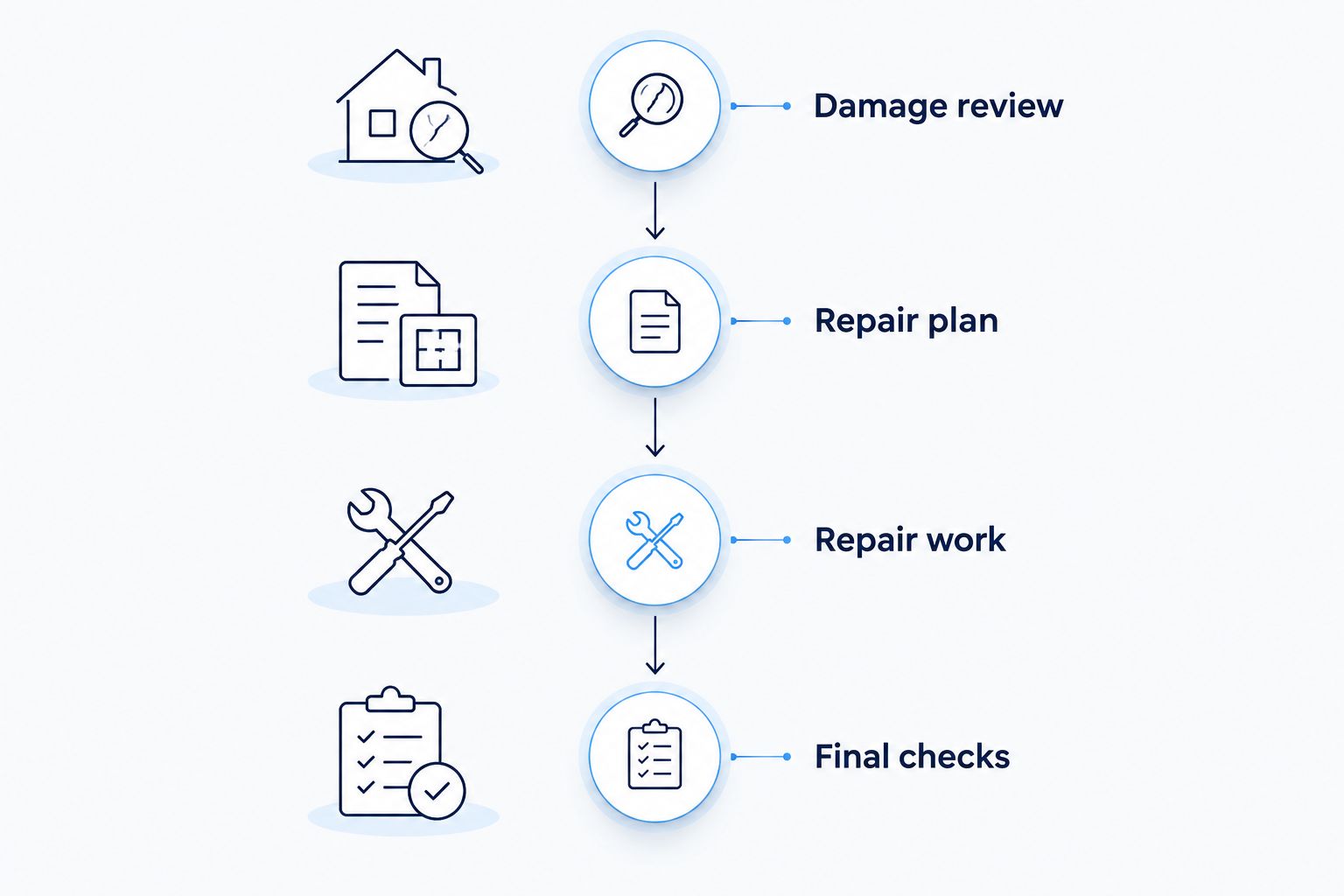
Ask what must be completed at each stage before the vehicle moves to the next.
A useful plan makes the reasoning visible. Ask for the applicable procedure behind a replacement decision rather than accepting either a blanket promise to repair everything or a blanket insistence on replacement. The guide to how body shops document repair quality gives you a focused topic to raise during that discussion.
- Request an itemized estimate with understandable descriptions.
- Ask which manufacturer procedures govern the damaged areas.
- Confirm proposed part types before authorizing work.
- Ask how additional damage changes your authorization.
- Request an explanation of required scans, inspections and calibration.
4. Separate required repairs from insurance decisions
Start with the policy documents and the insurer’s written explanation of coverage. Ask how your personal policy and any platform-related coverage apply to the incident. Do not assume that a repair requirement automatically means an insurer will pay for it.
Likewise, insurer approval does not explain whether a repair operation follows the manufacturer’s instructions. Keep the technical question and the payment question separate. If the shop and insurer disagree, request the disputed operation, supporting procedure and coverage explanation in writing.
For claims handled in 2026, keep a dated record of approvals and changes as they occur. Ask separately about towing, storage, substitute transportation and any claimed income loss; none should be treated as covered without confirmation.
- Ask which policy is handling the collision claim.
- Get disputed repair items identified in writing.
- Confirm who must authorize additional work.
- Ask about your responsibility for uncovered charges.
- Keep repair authorization separate from coverage correspondence.
5. Build a transport plan around repair milestones
Use your calendar and the shop’s updates to plan around milestones, not a date presented before inspection. Ask when the initial assessment occurs, when the repair plan becomes clearer and how you will hear about changes. A useful update names the next unresolved task.
Choose a location you can realistically reach for authorization, drop-off and pickup. If you normally drive airport trips near El Segundo but live closer to Burbank, consider the entire handoff rather than only the distance from the accident scene.
Discuss coordination with Crashfix after you establish the relevant location’s qualifications. Location convenience helps with communication and transport; it does not replace a suitable repair plan. If you arrange another vehicle, verify insurance and platform eligibility before using it for passenger trips.
- Agree on a contact person and update method.
- Ask for milestones rather than an unsupported completion promise.
- Confirm drop-off arrangements before moving the vehicle.
- Check substitute-vehicle requirements with your platform and insurer.
- Plan pickup only after the shop confirms readiness.
6. Review completion records before returning to trips
Ask the shop to walk you through the completed repair while you have time to ask questions. Compare the final invoice with the authorized work and request explanations for changes. A clean exterior does not document the work performed behind a panel.
Request 4 pickup records: the final invoice, the completed-work summary, applicable diagnostic reports and applicable calibration records. Not every repair requires the same checks, so ask the shop to explain which requirements applied to your damage and vehicle.
Before accepting trips in 2026, check any platform instructions associated with the accident or account restriction. Repair completion and platform permission are separate matters. If warning messages, abnormal behavior or unresolved damage remain, raise them before resuming passenger service.
- Review replaced and repaired areas with the shop.
- Collect records for required inspections and system checks.
- Ask about care instructions for repaired or refinished areas.
- Obtain any applicable warranty terms in writing.
- Confirm outstanding platform documentation requirements.
Compare repair options for your situation
The best option is the one that matches your vehicle’s repair requirements and provides a clear record of the work. Convenience and an insurer relationship are useful considerations, but neither establishes Tesla-specific capability.
Tesla-approved collision location
- Best for: Drivers seeking verified Tesla-specific approval
- Main advantage: Provides a manufacturer-specific qualification to check
- Key limitation: Approval alone does not explain the proposed scope or communication process
Insurer-recommended repair shop
- Best for: Drivers who want to discuss claim coordination
- Main advantage: Gives you a shop to evaluate alongside the insurer’s claim process
- Key limitation: Insurer recommendation does not establish Tesla approval
Nearby independent body shop
- Best for: Drivers prioritizing practical drop-off and pickup
- Main advantage: Makes local access easier when the location suits your routine
- Key limitation: Proximity does not establish equipment, training or procedure compliance
Crashfix
- Best for: Los Angeles County drivers discussing collision and EV body repair
- Main advantage: Offers collision, structural and EV body repair services
- Key limitation: Tesla-specific approval and the relevant location’s capabilities require confirmation
Compare written scopes, not just estimate totals. If you collect 2 estimates, check whether they describe the same parts, inspections and repair operations. Different scopes are not a like-for-like comparison.
Common mistakes rideshare drivers make
Choosing the earliest promised return date
A date offered before damage assessment is not a complete repair plan. Ask what remains unknown and which milestone will support a better scheduling update. Your work calendar needs useful information, not certainty the shop cannot substantiate.
Treating EV experience as Tesla approval
Electric vehicles are not a single repair category with interchangeable manufacturer requirements. Verify the exact location’s Tesla status, then ask how it will access and follow the procedures relevant to your vehicle and damage.
Assuming personal coverage answers every rideshare question
Your driving status at the time of the collision belongs in the claim discussion. Give accurate trip information and request the coverage position from the insurer. Do not rely on a shop, another driver or a general online explanation to determine your policy benefits.
Accepting a cosmetic explanation for every impact
A scraped panel and an impact-damaged mounting area need different assessments. Describe how the collision occurred and report warnings or changes in vehicle behavior. Let the inspection determine the scope rather than asking the shop to make the exterior look right and stop there.
Leaving without the repair record
An invoice alone does not always answer a later question about an inspection or calibration. Request the applicable supporting records at pickup and retain them with the claim file. That keeps the repair history accessible if your insurer, platform or a future buyer asks about the collision.
FAQ
What’s the best Tesla body shop in Los Angeles for rideshare drivers?
The best fit is a location with verified Tesla-specific qualifications, a procedure-based repair plan and clear communication. Compare those factors before convenience or a promised completion date.
Is Crashfix a Tesla-approved collision repair shop?
Confirm Tesla-specific approval with the exact Crashfix location and Tesla’s current official resources before booking. Crashfix operates OEM-certified collision repair centers and offers EV body repair, but those facts do not establish Tesla approval.
Can I keep driving for rideshare with collision damage?
Do not continue passenger trips if you suspect the vehicle is unsafe or the platform has restricted its use. Arrange an assessment and check the platform’s requirements rather than judging drivability from appearance alone.
Does rideshare insurance cover Tesla collision repairs?
Coverage depends on the applicable policies, incident circumstances and your driving status at the time. Ask the insurer handling the claim to explain coverage and any unresolved repair items in writing.
Does every Tesla bumper repair require calibration?
Calibration requirements depend on the vehicle, affected systems and repair operations. Ask the shop to identify the applicable manufacturer instructions rather than assuming calibration is always required or always unnecessary.
Can a body shop promise when I’ll be back on rideshare trips?
A shop cannot determine every condition of your return to passenger service. Repair progress, required checks, insurance questions and platform requirements need separate confirmation.
What should I collect when I pick up my repaired Tesla?
Collect the final invoice, completed-work summary and applicable diagnostic and calibration records. Ask the shop to explain the work and any remaining instructions before leaving.
One last thing
Your most useful question is not simply whether the car is ready. Ask: What records show that the required repair operations and checks were completed? For your 2026 claim file, keep those records together with the authorization history and insurer correspondence.
Related guides
- What records should you get after collision repair in Los Angeles?
- How do you arrange a body shop drop-off in Burbank?
- Can a Los Angeles auto body shop repair a leased car?
Before requesting an estimate, gather your vehicle identification number, damage photos and claim details. Ask the location to confirm its Tesla-specific qualifications and explain the inspection needed to build your repair plan.
Discuss your Tesla repair
Ask about location-specific qualifications, damage assessment and the next step toward an estimate.