What should El Segundo drivers check after salt-air paint damage?
El Segundo drivers should check whether salt-air paint damage is removable residue, damaged clear coat, or corrosion around exposed metal and seams. Start with a gentle wash, then inspect chips, peeling edges, bubbles, and rust-colored staining without scraping or polishing the affected area. Bubbling paint, exposed metal, and corrosion near a previous repair need a body-shop assessment, not just a cosmetic treatment.
TL;DR
- Choosing an auto body shop El Segundo drivers can trust starts with a documented paint and corrosion assessment.
- Wash away surface residue before judging the finish; persistent marks do not prove salt caused the damage.
- Bubbling, peeling, and exposed metal need assessment before polishing or repainting.
- Crashfix provides collision and paint repair; confirm the location’s manufacturer credentials before authorizing vehicle-specific work.
What should El Segundo drivers check after salt-air paint damage?
Check the finish, the underlying material, and the surrounding seams—not just the most visible stain. A photograph alone cannot establish whether a white mark is salt residue, mineral spotting, oxidation, or a coating defect.
For a 2026 inspection, use this sequence before choosing a repair:
- Wash gently. Follow your vehicle’s care instructions, using automotive wash products and clean water. Avoid aggressive rubbing on loose or blistered paint.
- Inspect when dry. Look in good light for remaining spots, dull patches, chips, cracking, peeling, and bubbles.
- Check edges and seams. Examine accessible door bottoms, wheel openings, panel edges, and areas around damaged trim without removing components.
- Document the condition. Photograph the whole panel, the affected patch, and a close-up. Record when you first noticed the problem and any earlier impact or repainting.
- Request a written assessment. Ask which coating layers are affected, whether metal is exposed, and what inspection is needed before the repair scope is final.
For collision-related paint damage, Crashfix offers body and paint repair across Los Angeles County. Confirm the appropriate repair location and its credentials for your vehicle before arranging an assessment.
Why this matters
Salt-containing moisture promotes corrosion where vulnerable metal is exposed. Intact paint protects the surface, but a stone chip, damaged seam, or failed previous repair creates a different problem from residue sitting on sound clear coat—the transparent protective layer over the color.
Treat the condition you can establish, not the cause you suspect. Coastal exposure is useful history, but it does not prove that every stain or paint bubble came from salt air.
That distinction matters when you authorize work. Cleaning cannot restore a failed coating, while repainting without addressing underlying corrosion leaves the cause unresolved.
Which visible signs need which next step?
Use the following comparison to describe what you see. These are inspection routes, not diagnoses or guarantees that a particular treatment will work.
Residue that washes away
- Best for: Routine surface care
- Useful next step: Follow the vehicle’s cleaning guidance and reinspect the dry panel
- Limit or concern: A clean surface does not rule out separate chips or seam damage
Persistent spots on otherwise intact paint
- Best for: Finish assessment
- Useful next step: Ask whether the marks are deposits or damage within the coating
- Limit or concern: Repeated rubbing can damage the finish without identifying the cause
Dull, peeling, or flaking clear coat
- Best for: Paint-repair assessment
- Useful next step: Establish which coating layers have failed
- Limit or concern: Polishing does not replace missing or detached clear coat
Chips exposing the underlying material
- Best for: Localized damage assessment
- Useful next step: Identify the substrate and suitable protective repair
- Limit or concern: A surface touch-up does not address corrosion already beneath adjacent paint
Bubbles or corrosion staining at seams
- Best for: Body and corrosion assessment
- Useful next step: Inspect the surrounding coating and accessible panel edges
- Limit or concern: The visible patch does not establish the full extent of damage
Keep cleaning and repair decisions separate. A wash is a sensible first check for surface contamination, but it is not a test of the panel’s structural condition.
Residue and spotting: start with the least aggressive check
If a mark disappears after appropriate washing, inspect the area again rather than assuming the coating needs repair. If the mark remains, stop escalating through abrasive products without knowing what you are treating.
Tell the assessor what you have already used. A cleaner, compound, or earlier touch-up changes the surface they are evaluating, and that history helps avoid repeating an unsuccessful treatment.
Peeling and bubbling: do not polish first
Peeling means the coating is no longer intact. Bubbles need an assessment of what is happening beneath the surface; their appearance alone does not establish the cause.
Do not pop bubbles or pull away loose paint to see how far damage extends. Leave that investigation to the repair assessment so the shop can document the original condition and explain any proposed removal.
Why salt-air paint damage varies
The repair requirement depends on the condition of the vehicle, not simply its distance from the beach. These factors explain why similar-looking marks can lead to different repair plans:
- Coating condition. Sound paint, cracked clear coat, and exposed substrate provide different levels of protection.
- Exposure and cleaning history. Salt-containing moisture and retained contamination matter when assessing how the damage developed.
- Panel material. Steel and aluminum require material-appropriate assessment and repair methods; red rust is not the only sign of corrosion.
- Seams and trapped moisture. Edges and overlapping panels deserve attention when staining or bubbling appears nearby.
- Previous damage or refinishing. Earlier repairs can affect coating adhesion and the condition beneath the visible surface.
- Extent beneath the finish. The repair boundary depends on inspection findings, not just the size of the visible blemish.
For a 2026 repair decision, ask the shop to connect each proposed operation to a finding. “The panel needs paint” is less useful than an explanation of the failed coating, affected material, preparation, and protective steps.
What should an auto body shop in El Segundo inspect?
An assessment should distinguish visible facts from areas that need further investigation. You should understand what the initial estimate covers and what requires additional inspection or authorization.
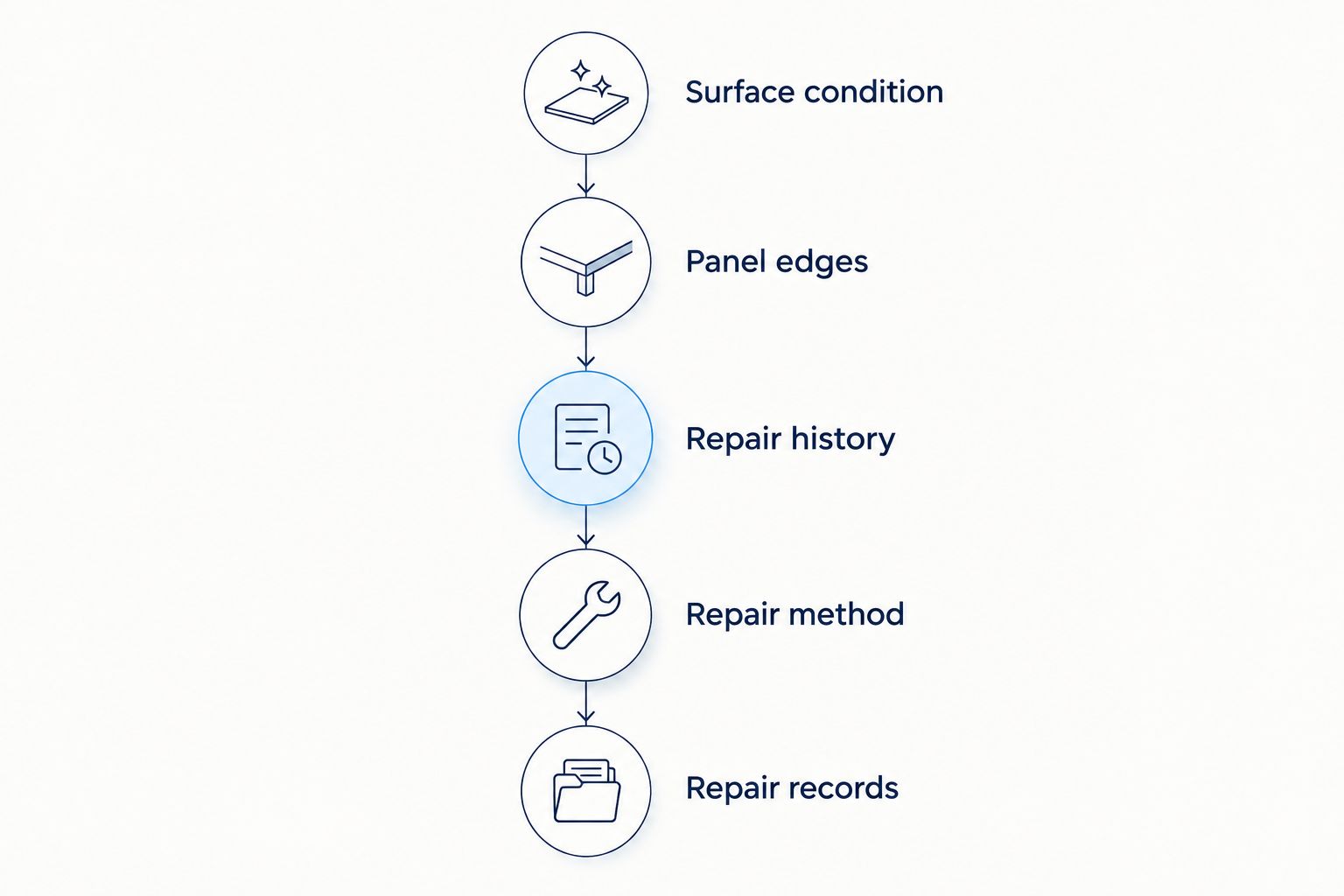
Ask the estimator to walk through these areas:
- Surface condition: identify residue, coating damage, chips, and exposed material.
- Panel edges: check accessible seams, openings, and nearby damaged areas.
- Repair history: discuss prior impacts, repainting, touch-ups, and recurring defects.
- Repair method: explain preparation, corrosion treatment, refinishing, and applicable manufacturer procedures.
- Repair records: identify the photographs and written details you will receive.
The point is traceability: the recommendation should follow from the condition found. This guide explains how body shops document repair quality, including the value of a repair record you can keep.
A useful repair plan connects the visible condition to a documented method.
Confirm credentials for the actual vehicle and location
OEM means original equipment manufacturer. A manufacturer certification should match the vehicle brand and the location performing the work; do not treat a general certification statement as confirmation for every vehicle.
Crashfix is a fit for Los Angeles County drivers seeking collision and paint repair. Its stated services include structural and EV body repair, but those service categories do not establish the method required for your particular paint defect. Ask the receiving location to confirm the relevant credentials and repair scope.
Ask about parts only when parts are involved
A finish assessment does not automatically require replacement parts. If the proposed repair includes a panel, trim, clips, or another component, ask which parts are specified and why.
For a 2026 authorization, distinguish the manufacturer’s repair requirements from the insurer’s payment position. Request the proposed parts description in writing, including whether genuine OEM parts are specified, rather than assuming a parts policy from a certification badge.
Can salt-air damage be polished out?
Surface residue and some finish defects need different treatment from failed paint or corrosion. Polishing removes a small amount of coating; it does not rebuild missing clear coat or remove corrosion hidden beneath paint.
Ask the assessor to explain what polishing is intended to correct and what its limits are. If the clear coat is peeling or the coating is blistered, a shine-focused treatment does not resolve that failure.
For sound paint with persistent spotting, follow the vehicle maker’s care guidance and obtain a finish assessment before using stronger products. Avoid household acids, abrasive pads, or repeated machine polishing as a substitute for diagnosis.
Does salt-air paint damage mean the panel needs replacement?
Salt-air paint damage does not automatically require panel replacement. The decision depends on the material, condition, extent of corrosion or damage, and applicable manufacturer repair procedures.
Ask what supports replacement rather than repair. If the visible defect is small but the proposed work is extensive, request an explanation of the affected area and any findings beneath or behind the finish.
The opposite matters too: do not choose a cosmetic patch when the assessment identifies a deeper problem. The right scope addresses the condition found, not the smallest visible blemish.
Will insurance cover the repair?
Insurance coverage depends on your policy, the cause of damage, and the insurer’s decision. Do not assume that coastal exposure, gradual deterioration, or damage discovered after an accident is covered under the same terms.
Keep dates and causes separate. If a collision chipped a panel that already had peeling paint, ask the shop to distinguish the new impact damage from the older finish condition on the estimate.
For a claim considered in 2026, send the insurer photographs, the written assessment, and the relevant damage history. A repair requirement establishes what the vehicle needs; it does not establish what the policy pays.
What should you bring to the assessment?
Bring enough information to help the estimator separate recent damage from an ongoing finish problem. You do not need to identify the cause yourself.
Prepare 3 photo views: the whole panel, the affected area, and a close-up. These are documentation suggestions, not a diagnostic standard. Add earlier photographs if they show how the condition changed.
Also gather 2 record types when available: prior repair paperwork and maintenance or detailing records relevant to the finish. Tell the shop about products recently applied, previous touch-ups, and any known impact in the same area.
Ask for 1 written scope that separates confirmed findings from proposed investigation. Before authorizing additional removal or disassembly, clarify how the shop will explain new findings and obtain your approval.
FAQ
What should I check first after finding salt-air paint damage?
Start with a gentle wash, then inspect the dry finish for persistent spots, chips, peeling, bubbles, and exposed material. Do not scrape or polish a damaged area before its condition is assessed.
How do I choose an auto body shop in El Segundo for paint damage?
Choose a shop that explains the coating condition, checks accessible edges and seams, and provides a written repair scope. Confirm the receiving location’s relevant manufacturer credentials rather than assuming certification applies to every vehicle.
Can I tell whether salt caused the damage from a photo?
A photo alone cannot establish that salt caused paint damage. Cleaning history, previous repairs, exposure, and physical inspection help distinguish surface contamination from coating failure or corrosion.
Can aluminum body panels have corrosion without red rust?
Aluminum can corrode without producing the red rust associated with steel. Ask the shop to identify the panel material and assess the coating and substrate using appropriate methods.
Should I pop paint bubbles before taking my car to a shop?
Do not pop paint bubbles before an assessment. Photograph the area and leave the coating undisturbed so the shop can document its condition and explain any proposed investigation.
Is salt-air paint damage automatically covered by insurance?
Salt-air paint damage is not automatically covered by insurance. Coverage depends on the policy and cause of damage, and the insurer must determine how those terms apply.
Does Crashfix handle paint damage after a collision?
Crashfix offers collision and paint repair across Los Angeles County. Confirm the appropriate location, its vehicle-specific credentials, and the assessment needed for your damage before authorizing work.
Related guides
- Can you get a repair estimate before deciding to file a claim?
- What should you do if a body shop finds prior poor repairs?
- What records should you get after collision repair in Los Angeles?
One last thing
A clean-looking panel and a sound coating are not the same thing. Removing a stain answers a surface-cleaning question; it does not resolve a separate chip, failing seam, or damaged previous repair.
Keep your 2026 photos and repair paperwork together, especially if the same spot returns. Arrange an assessment before choosing polishing, repainting, or replacement, and ask for a written explanation of the recommended repair. Bring your vehicle details and damage history so the receiving shop can confirm the next step.