Can a nearby body shop match faded paint on an older car?
Yes—a nearby body shop can match faded paint on an older car when the remaining finish is sound, using color adjustment, test panels and blending rather than the factory paint code alone. Peeling clear coat, unstable previous repairs or severely deteriorated paint can require a larger refinishing area before the repair can look consistent.
TL;DR
- An auto body shop near me should assess existing paint before promising a color match.
- The factory paint code starts the process; test panels and blending help match the car’s current appearance.
- Peeling clear coat needs repair, not just polishing or a different color formula.
- CrashFix serves Los Angeles County drivers seeking collision repair and paint services after an accident.
Can a nearby body shop match faded paint on an older car?
Yes, but matching the paint means matching its current appearance—not simply reproducing its original color. Sun exposure, surface condition and previous refinishing can leave an older car looking different from the factory formula.
A credible repair plan explains what needs painting, whether adjacent panels need blending and which existing defects fall outside the collision repair. Ask how the shop will record those decisions; how body shops document repair quality matters as much as the initial color conversation.
These approaches solve different problems. None is a substitute for inspecting the finish.
Paint correction
- Best for: Sound paint with surface oxidation or fine scratches
- What it accomplishes: Improves the existing finish through controlled polishing
- Main limitation: Cannot replace missing color or repair peeling clear coat
Panel refinishing with blending
- Best for: Collision damage surrounded by usable paint
- What it accomplishes: Repairs the damaged area and softens the color transition
- Main limitation: Can require work beyond the visibly damaged panel
Broader refinishing
- Best for: Deteriorated paint extending beyond the collision area
- What it accomplishes: Addresses a larger area of failed or inconsistent finish
- Main limitation: Expands the repair scope and requires separate authorization
Why this matters
A freshly painted fender can look wrong beside an older door even when both correspond to the same factory color code. Gloss, texture and the way metallic particles reflect light also affect the result.
For a repair you authorize in 2026, ask for an explanation of both color matching and finish condition. A promise to use the correct paint code does not answer whether the existing clear coat can support the proposed work.
If your car also has collision damage, appearance is only part of the decision. The repair plan must address damage beneath the paint using applicable manufacturer repair procedures; a good-looking panel does not establish that the underlying repair is correct.
How a shop matches the paint that is actually on your car
The matching process should work from the vehicle’s present condition toward a tested refinishing plan. Ask the estimator to explain these steps in plain language before you authorize painting.
- Inspect the finish. The shop checks the damaged panel and neighboring panels for oxidation, peeling, checking, previous repairs and differences in color. Checking means small cracks in the paint film; those cracks need attention before new material goes over them.
- Identify the color. The factory paint code identifies the original color family. Formula variants and color-measuring equipment can help narrow the selection, but neither replaces checking the result against the vehicle.
- Make test panels. A spray-out is a sample panel painted with the proposed formula and application method. Comparing that sample with the car gives the painter a way to adjust the color before refinishing the vehicle.
- Plan the blend. Blending gradually transitions the color into surrounding paint instead of ending the new color abruptly at a panel edge. The shop should identify any neighboring panels included in that plan.
- Inspect the result. Color, gloss and texture need evaluation together. Ask to view the repair in daylight and from different angles, especially when the finish contains metallic or pearl effects.
A color-measuring device is an aid, not proof of a finished match. The practical question is whether the painter checks the proposed formula against your car and adjusts it when necessary.
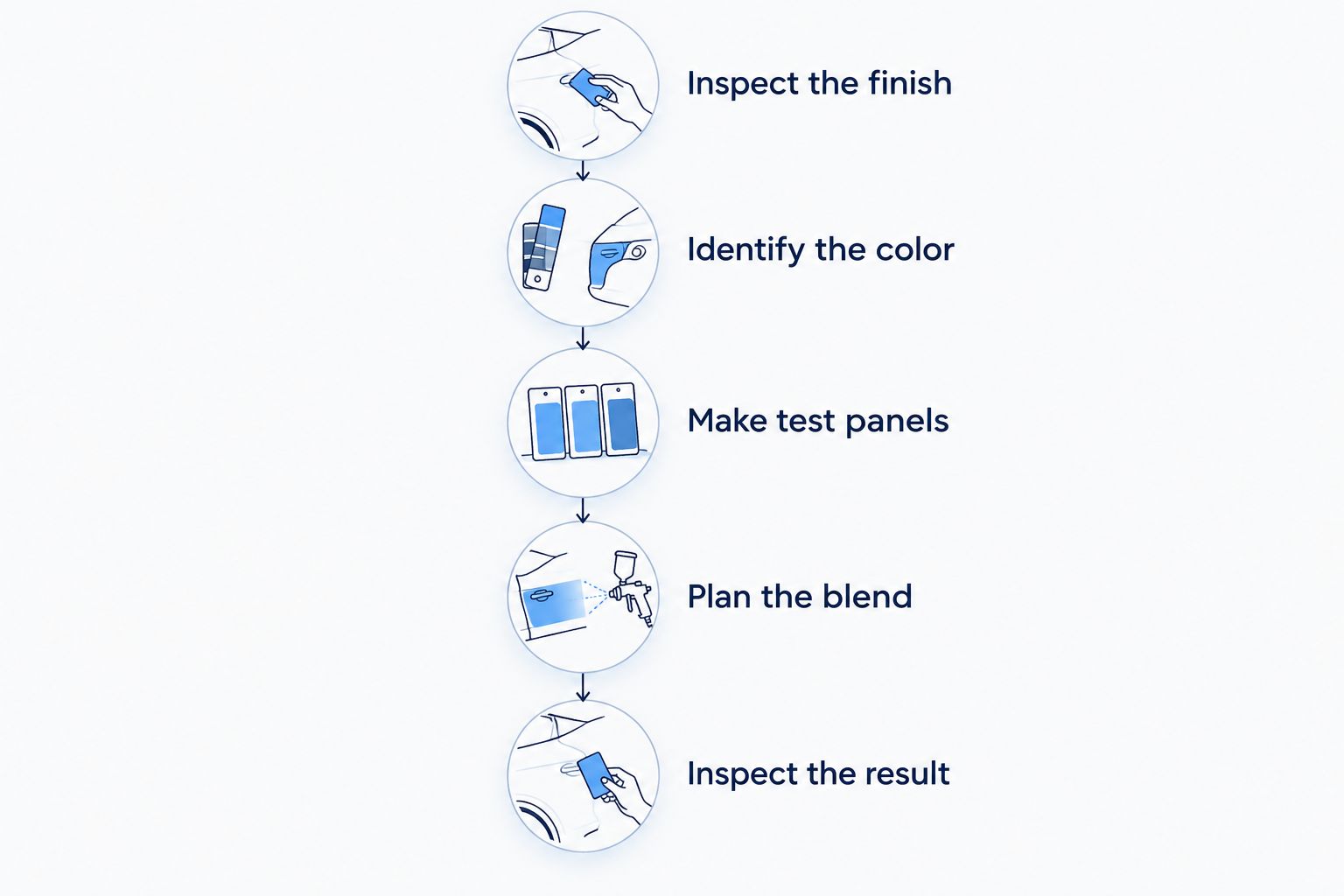
The paint code identifies a starting point; a test panel checks it against the car.
When blending helps—and where its limits begin
Blending helps manage the visible transition between new paint and an existing finish. It is particularly relevant when a sharp panel-to-panel comparison would expose a slight difference in shade or metallic appearance.
Blending color and applying clear coat are separate operations. The color can fade gradually across part of a panel, while clear-coat application must follow the selected paint system’s requirements. Ask the shop to explain both operations rather than describing everything as a touch-up.
Blending cannot make a failing paint surface stable. If the adjacent panel has peeling clear coat or cracking, the shop needs to address that condition before relying on it as part of the repair.
For your 2026 estimate, request a clear distinction between the damaged panel, any blend panels and any additional panels needing finish restoration. That separation makes it easier to understand what you are authorizing and what belongs to the accident claim.
Why faded-paint matching varies
The difficulty comes from the finish on the vehicle, not simply its age. These factors explain why similar-looking repairs can need different plans:
- Uneven exposure. Sunlight and weather can change exposed surfaces differently, leaving the hood, roof and side panels with different appearances.
- Clear-coat condition. Haze, scratches and peeling affect reflected light. A color formula cannot correct a physically failing protective layer.
- Previous refinishing. An earlier repair can have a different shade, film thickness or surface texture from neighboring factory paint.
- Metallic or pearl effects. Reflective particles change appearance with viewing angle, making application technique part of the match.
- Panel material. Adjacent plastic and metal parts can show appearance differences. The shop should assess the actual panels rather than promise identical appearance from the code alone.
- Repair boundaries. A small damaged area near a panel edge can create a different blending decision from damage near the center of a large panel.
Ask which factors apply to your vehicle. A useful explanation points to visible conditions on your car rather than relying on a blanket statement that older paint is difficult.
Does faded paint need repainting or just polishing?
Sound paint with surface defects can benefit from polishing; peeling paint needs a different repair. The distinction is whether the problem sits in a usable paint surface or involves deterioration that polishing cannot remove safely.
Oxidized single-stage paint and damaged clear-coated paint are not interchangeable conditions. Single-stage paint carries color without a separate clear layer; a basecoat-and-clearcoat finish separates the color from the protective clear coating. The shop should identify the finish before deciding how to treat it.
Do not confuse those paint constructions with polishing terminology. In detailing, single-stage versus multi-stage paint correction describes the correction process, not whether the vehicle has single-stage paint or a separate clear coat.
Ask whether the surrounding finish should receive an assessment or a controlled polishing test before final color evaluation. That question matters when surface haze makes otherwise usable paint look duller than its underlying color.
Polishing also has limits: it removes material and cannot continue indefinitely. It cannot rebuild missing clear coat, fill exposed damage with new color or eliminate a failing underlying repair.
What if the older car has already been repainted?
Previous paintwork does not automatically rule out a good match. It does mean the shop needs to assess what is already on the vehicle instead of assuming every panel still carries its original finish.
Ask the estimator to identify mismatched panels, sanding marks, lifting edges or other visible signs of earlier work. Some conditions become apparent only during preparation, so discuss how the shop will handle discoveries before work begins.
The next step is documentation, not automatically painting over the problem. Understanding what happens when a body shop finds prior poor repairs helps you ask for photographs, an explanation and authorization of any added work.
Keep the collision repair and older deterioration distinct on your 2026 paperwork. A newly damaged quarter panel and an unrelated peeling roof can require different decisions even though both involve paint.
What should you ask before approving the estimate?
Bring the vehicle for an in-person inspection when practical. Photographs can show damage, but they do not reliably capture every difference in color, texture or clear-coat condition.
Use these questions to turn a general promise into a clear repair discussion:
- Which panels need repair, refinishing or blending, and why?
- Is the existing finish stable enough for the proposed work?
- Will you compare a spray-out with the vehicle before painting?
- Does the plan address existing peeling, or does that remain outside the repair?
- What happens if preparation reveals an unstable previous repair?
- Which manufacturer procedures apply to the collision damage beneath the finish?
- How will additional work be documented and authorized?
CrashFix is best suited to Los Angeles County vehicle owners seeking collision repair and paint services after an accident. The relevant next step is an inspection of your particular vehicle, not an assumption that every faded finish can receive the same treatment.
For a driver arranging repairs around work in West Los Angeles, Burbank or El Segundo, location is one part of the choice. Confirm the proposed repair scope and any vehicle-specific certification at the relevant location before authorizing work.
Does insurance cover matching faded paint?
Insurance coverage depends on your policy, the claim and the repair circumstances. A refinishing operation needed for covered collision damage is a different issue from restoring unrelated, pre-existing paint deterioration.
Ask the shop to distinguish necessary collision refinishing from optional appearance work. If blending is part of the proposed repair, request the reason in writing; do not assume that either approval or denial follows automatically.
Before authorizing a 2026 repair, clarify how claim decisions affect your responsibility for the work. Neither a paint-match discussion nor a shop’s estimate guarantees coverage.
FAQ
Can an auto body shop near me match paint that has faded in the sun?
Yes, a body shop can match faded paint when the remaining finish is sound, using color adjustment, test panels and blending. Peeling or unstable paint requires additional assessment before refinishing.
Is the factory paint code enough to match my older car?
No, the factory paint code is a starting point rather than proof of a match. The painter needs to compare the proposed color with the vehicle’s current finish.
Will the shop have to paint the whole car?
A faded finish does not automatically require painting the whole car. The decision depends on the condition of surrounding paint and how far deterioration extends beyond the damaged area.
Can polishing fix peeling clear coat?
No, polishing cannot replace clear coat that has peeled away. The shop needs to assess the failed coating and explain the necessary surface preparation and refinishing.
Why does metallic paint look different from different angles?
Metallic particles reflect light differently as your viewing angle changes. That makes both the color formula and the application technique relevant to the match.
Should I choose the nearest shop for an older car’s paint repair?
Choose a nearby shop that explains finish condition, color testing, blending and the applicable collision repair procedures. Convenience alone does not establish how the shop will handle faded or previously repaired paint.
What should I bring to a paint-repair estimate?
Bring the vehicle when practical, along with damage photographs and any records of previous paintwork. Tell the estimator about peeling, prior repairs and the appearance concerns you want addressed.
One last thing
A paint match is also a texture match. A panel can have the right shade but still stand out because its gloss or surface texture differs from the surrounding finish.
At pickup, look along the side of the car as well as directly at the repaired panel. Ask about any visible difference before leaving, and keep the final repair documents with your vehicle records.
Related guides
- Can you get a repair estimate before deciding to file a claim?
- What records should you get after collision repair in Los Angeles?
- How do you keep old damage separate on a new repair estimate?
For your 2026 paint repair, ask CrashFix to assess the damaged panel and surrounding finish together. Bring your previous repair records and request an estimate that separates collision damage, blending and existing paint deterioration.
Start your paint repair assessment
Discuss the damaged panel, surrounding paint condition and proposed repair scope.